Assessing the influence of gastrocnemius reconstruction on stress distribution of femoral tumor rotating hinge knee prosthesis via finite element analysis
Jie Jiang, Fanwei Zeng, Xiaodong Tang

TL;DR
This study shows that reconstructing the gastrocnemius muscle can reduce stress on a knee prosthesis, potentially lowering the risk of fractures and extending its lifespan.
Contribution
The study introduces a novel biomechanical analysis of gastrocnemius reconstruction's impact on stress distribution in a femoral tumor rotating hinge knee prosthesis.
Findings
Gastrocnemius reconstruction altered stress distribution around the rotating axis, reducing stress in fracture-prone areas.
Peak stress in the rotating axis, bending axis, prosthesis stem, and femoral condyles decreased after reconstruction.
Rebuilding the gastrocnemius improved prosthesis stress distribution, potentially reducing fractures and increasing durability.
Abstract
After femoral oncological knee arthroplasty, some patients suffer from rotating axis fracture, which significantly impacts the life span of the rotating hinge knee (RHK) prosthesis. This research aimed to analyze the biomechanical response of anatomical gastrocnemius reconstruction and assess whether it could reduce the risk of rotating axis breakage by finite element (FE) analysis. A femur-prosthesis-tibia FE model was established using the data from CT scans. The mechanical properties of the RHK implant were quantitatively compared before and after gastrocnemius reconstruction at 6 angles: 10°, 20°, 30°, 40°, 50°, and 60°. Our results showed that gastrocnemius reconstruction effectively altered the stress distribution around the rotating axis, considerably relieving the stress in the fracture-prone region. In addition, the peak stress in the rotating axis, bending axis, prosthesis…
Genes, proteins, chemicals, diseases, species, mutations and cell lines named across the full text — each resolved to its canonical identifier and authoritative record.
Click any figure to enlarge with its caption.
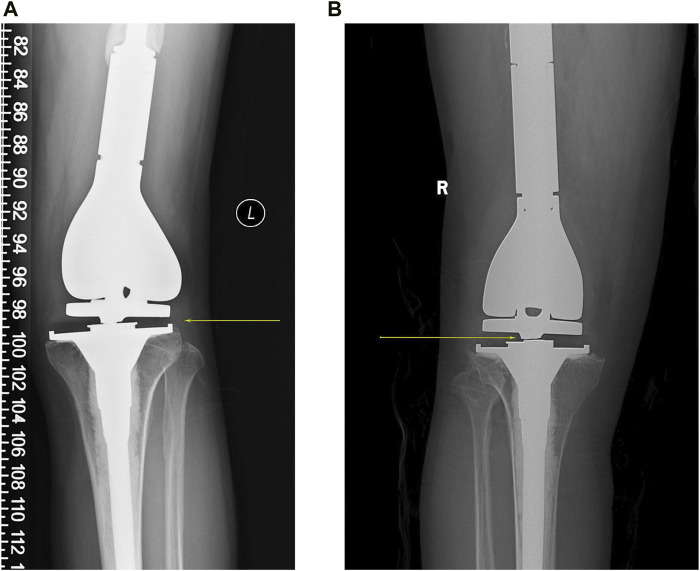 Figure 1
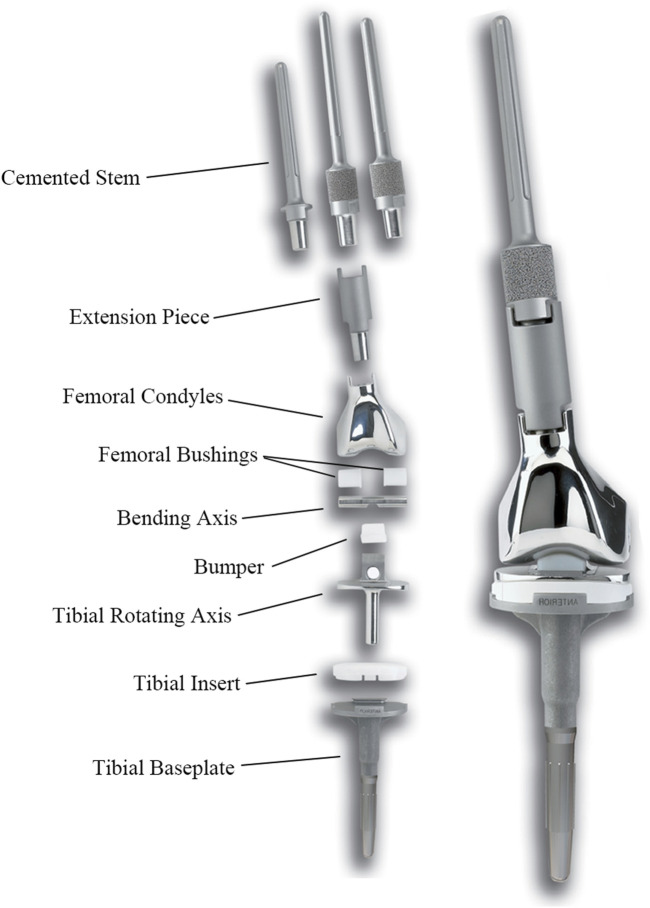 Figure 2
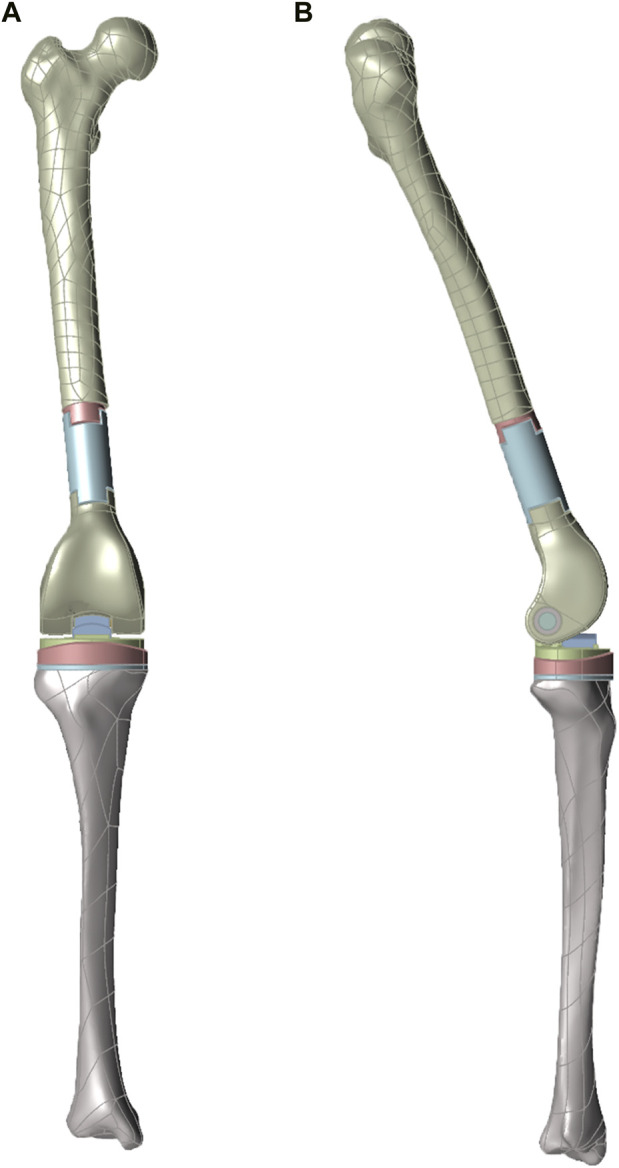 Figure 3
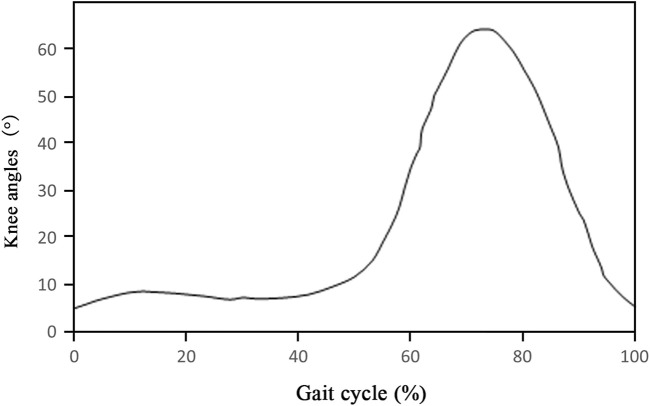 Figure 4
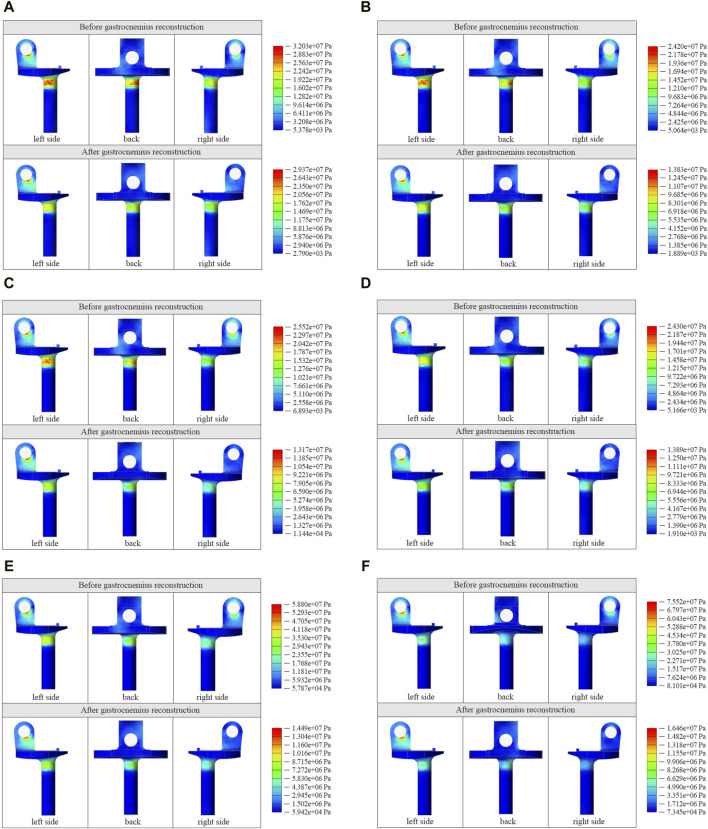 Figure 5
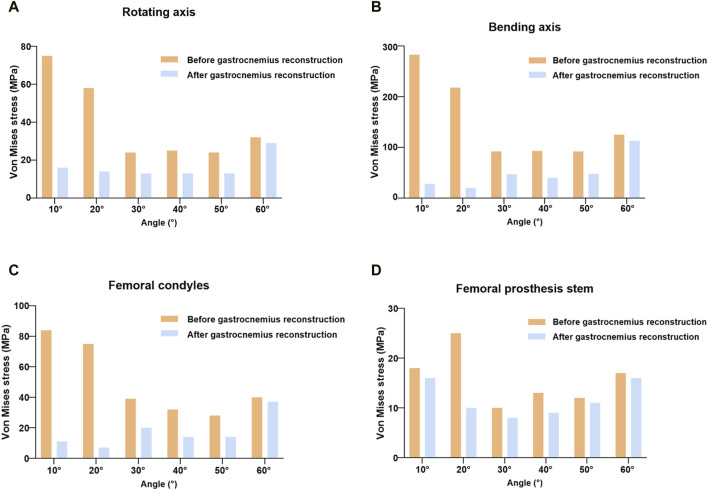 Figure 6
Peer Reviews
No public reviews on file for this paper yet. If you reviewed it on a platform where reviews are public (OpenReview, ICLR, NeurIPS, ICML), you can paste yours below so the community can read it here.
Videos
No videos yet. Explain this paper in a talk, walkthrough, or lecture? Add one.
Taxonomy
TopicsKnee injuries and reconstruction techniques · Metal and Thin Film Mechanics · Sarcoma Diagnosis and Treatment