The role of traditional Chinese medicine on fracture surgery, hospitalization, and total mortality risks in diabetic patients with osteoporosis
Yi-Chen Liu, Chi-Hsiang Chung, Chien-Jung Lin, Sheng-Chiang Su, Feng-Chih Kuo, Jhih-Syuan Liu, Peng-Fei Li, Chia-Luen Huang, Li-Ju Ho, Chun-Yung Chang, Ming-Shiun Lin, Chih-Ping Lin, An-Che Cheng, Chien-Hsing Lee, Chang-Hsun Hsieh, Yi-Jen Hung, Hsin-Ya Liu, Chieh-Hua Lu

TL;DR
This study shows that traditional Chinese medicine may reduce surgery, hospitalization, and mortality risks in diabetic patients with osteoporosis.
Contribution
The study provides longitudinal evidence of TCM's effectiveness in reducing health risks for patients with type 2 diabetes and osteoporosis.
Findings
TCM treatment was associated with significantly lower fracture surgery rates compared to the control group.
Patients receiving TCM had reduced risks of hospitalization and all-cause mortality.
Kaplan-Meier analysis confirmed significant differences in cumulative risk between TCM and control groups.
Abstract
Studies have confirmed that osteoporosis has been considered as one of the complications of diabetes, and the health hazards to patients are more obvious. This study is mainly based on the Taiwan National Health Insurance Database (TNHID). Through the analysis of TNHID, it is shown that the combined treatment of traditional Chinese medicine (TCM) medicine in patients of diabetes with osteoporosis (T2DOP) with lower related risks. According to the study design, 3131 patients selected from TNHID who received TCM treatment were matched by 1-fold propensity score according to gender, age, and inclusion date as the control group. Cox proportional hazards analyzes were performed to compare fracture surgery, hospitalization, and all-cause mortality during a mean follow-up from 2000 to 2015. A total of 1055/1469/715 subjects (16.85%/23.46%/11.42%) had fracture surgery/inpatient/all-cause…
Genes, proteins, chemicals, diseases, species, mutations and cell lines named across the full text — each resolved to its canonical identifier and authoritative record.
Click any figure to enlarge with its caption.
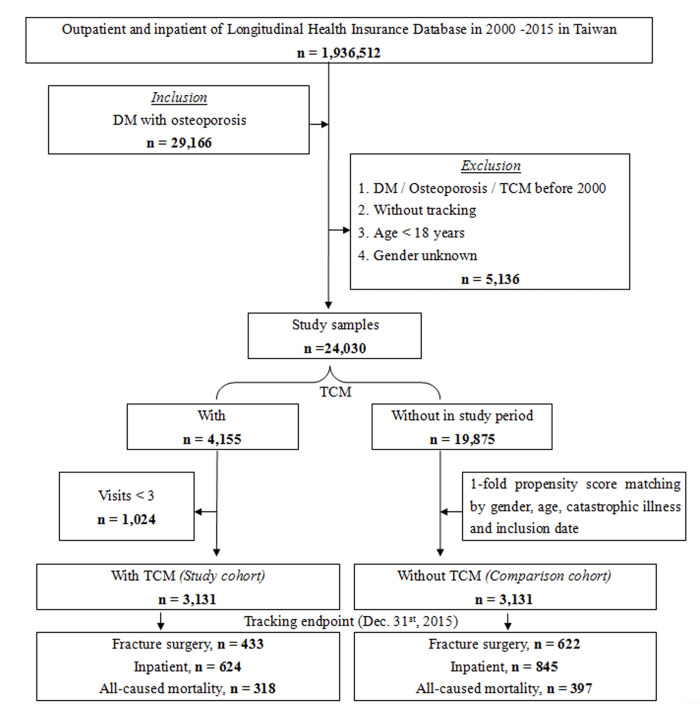 Figure 1
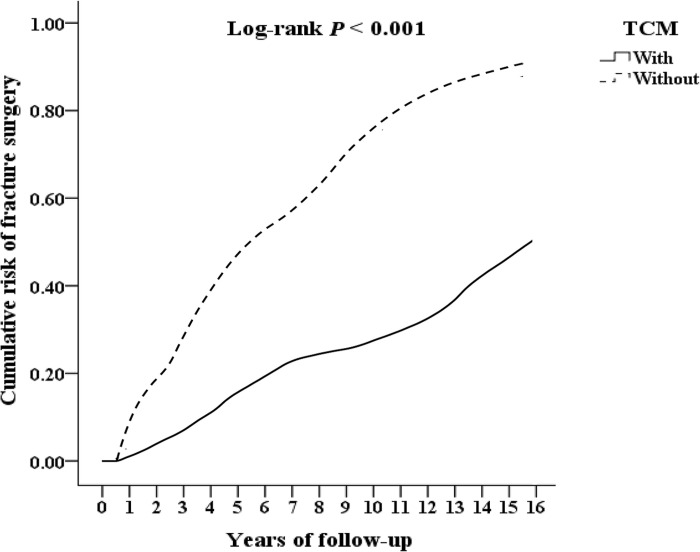 Figure 2
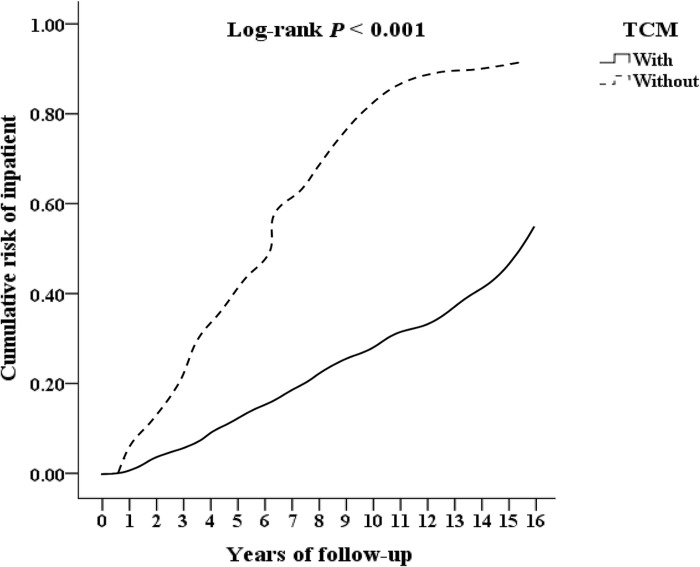 Figure 3
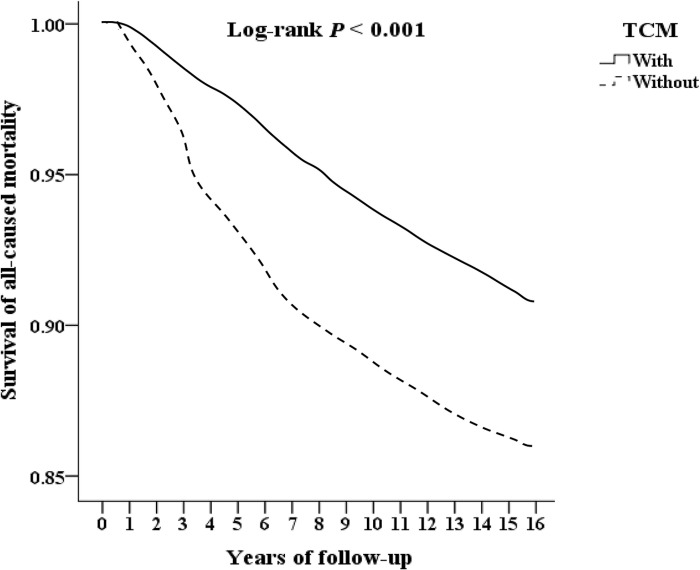 Figure 4
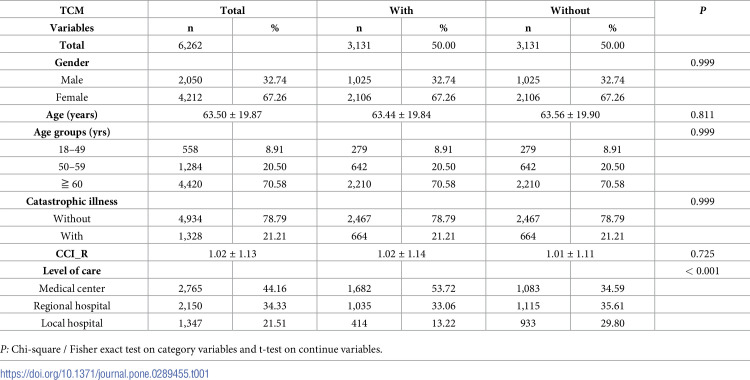 Figure 5
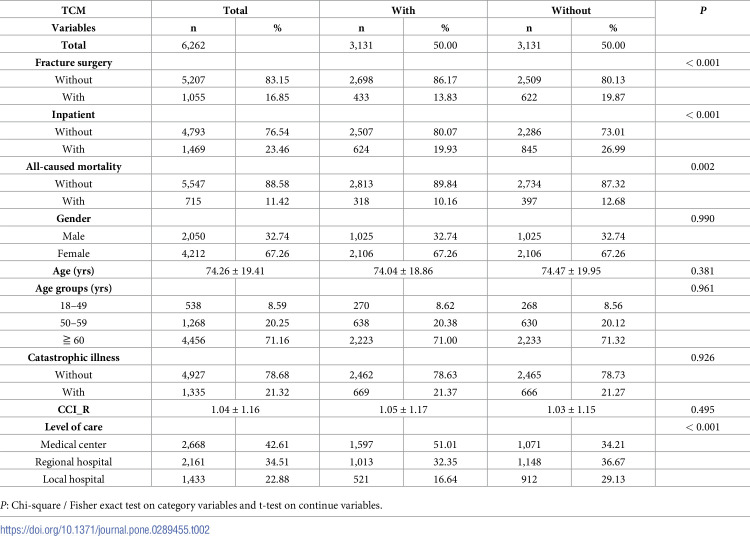 Figure 6
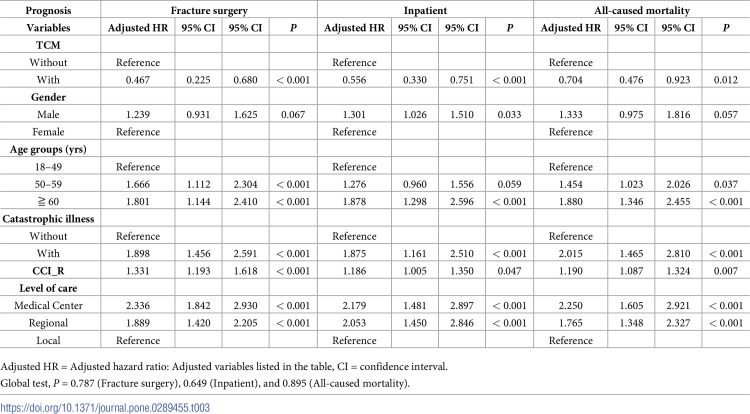 Figure 7
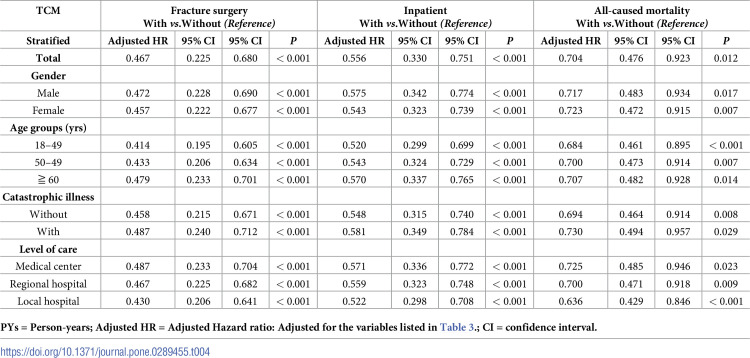 Figure 8
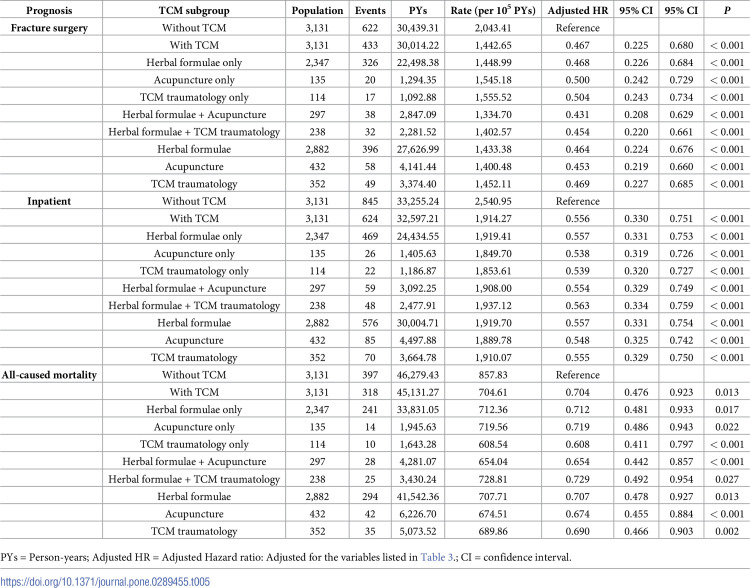 Figure 9
Peer Reviews
No public reviews on file for this paper yet. If you reviewed it on a platform where reviews are public (OpenReview, ICLR, NeurIPS, ICML), you can paste yours below so the community can read it here.
Videos
No videos yet. Explain this paper in a talk, walkthrough, or lecture? Add one.
Taxonomy
TopicsBone health and osteoporosis research · Bone Metabolism and Diseases · Bone and Joint Diseases