A first comprehensive analysis of Transcribed Ultra Conserved Regions uncovers important regulatory functions of novel non-coding transcripts in gliomas
Myron K Gibert, Ying Zhang, Shekhar Saha, Pawel Marcinkiewicz, Collin Dube, Kadie Hudson, Yunan Sun, Sylwia Bednarek, Bilhan Chagari, Aditya Sarkar, Christian Roig-Laboy, Natalie Neace, Karim Saoud, Initha Setiady, Farina Hanif, David Schiff, Pankaj Kumar, Benjamin Kefas

TL;DR
This study explores non-coding RNA regions called TUCRs in brain tumors and finds one, uc.110, acts as an oncogene promoting tumor growth.
Contribution
The first comprehensive analysis of TUCRs in gliomas, identifying uc.110 as a novel oncogene with a specific mechanism of action.
Findings
Uc.110 is highly overexpressed in glioblastoma and low-grade gliomas.
Uc.110 promotes malignancy by activating the WNT pathway through MFRP upregulation.
Uc.110 sponges miR-544, a tumor suppressor microRNA.
Abstract
Transcribed Ultra-Conserved Regions (TUCRs) represent a severely understudied class of putative non-coding RNAs (ncRNAs) that are 100% conserved across multiple species. We performed the first-ever analysis of TUCRs in glioblastoma (GBM) and low-grade gliomas (LGG). We leveraged large human datasets to identify the genomic locations, chromatin accessibility, transcription, differential expression, correlation with survival, and predicted functions of all 481 TUCRs, and identified TUCRs that are relevant to glioma biology. Of these, we investigated the expression, function, and mechanism of action of the most highly upregulated intergenic TUCR, uc.110, identifying it as a new oncogene. Uc.110 was highly overexpressed in GBM and LGG, where it promoted malignancy and tumor growth. Uc.110 activated the WNT pathway by upregulating the expression of membrane frizzled-related protein (MFRP),…
Genes, proteins, chemicals, diseases, species, mutations and cell lines named across the full text — each resolved to its canonical identifier and authoritative record.
Click any figure to enlarge with its caption.
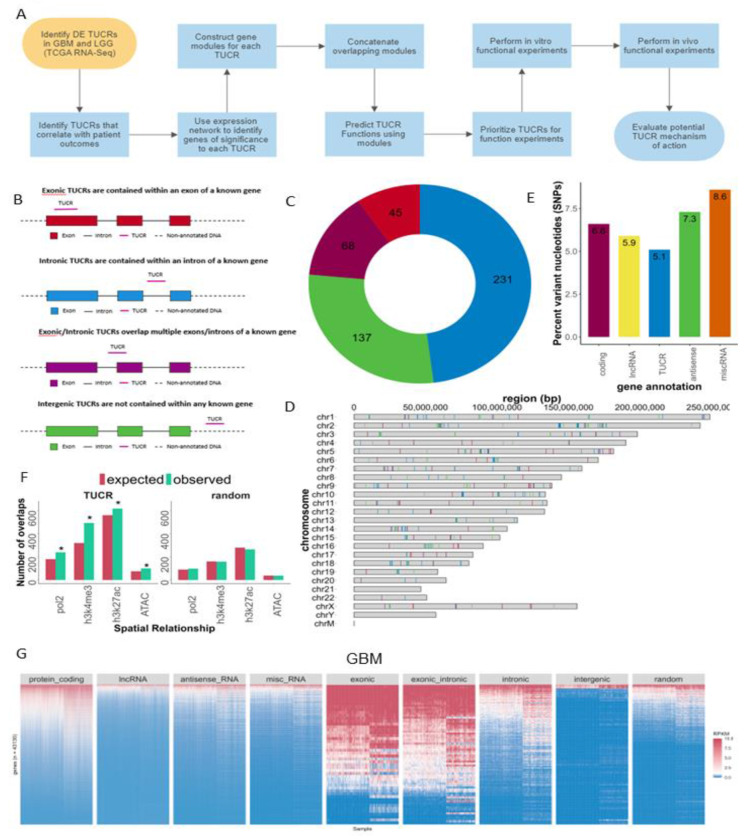 Figure 1
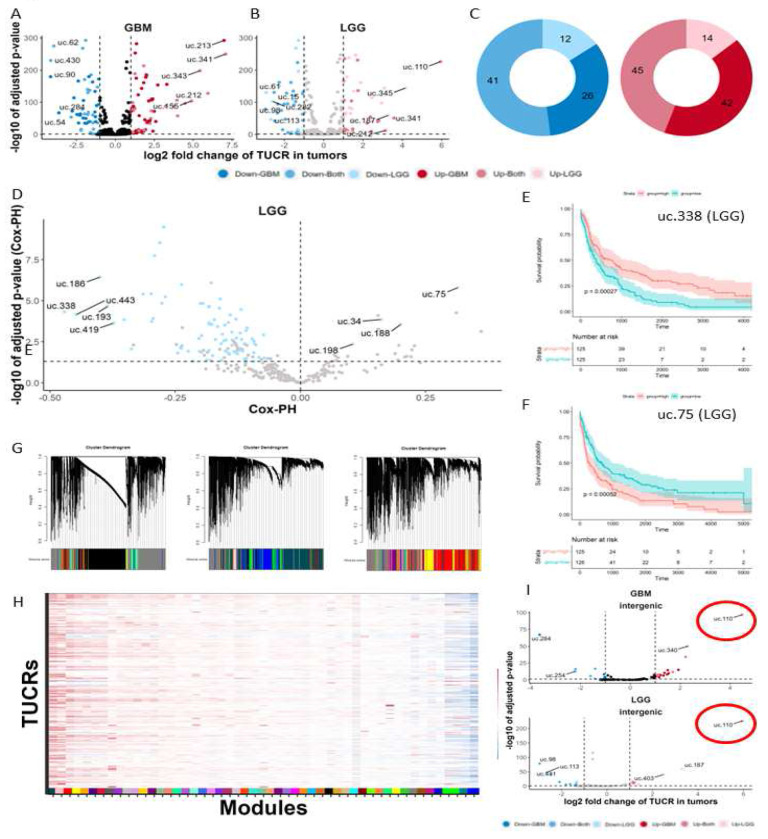 Figure 2
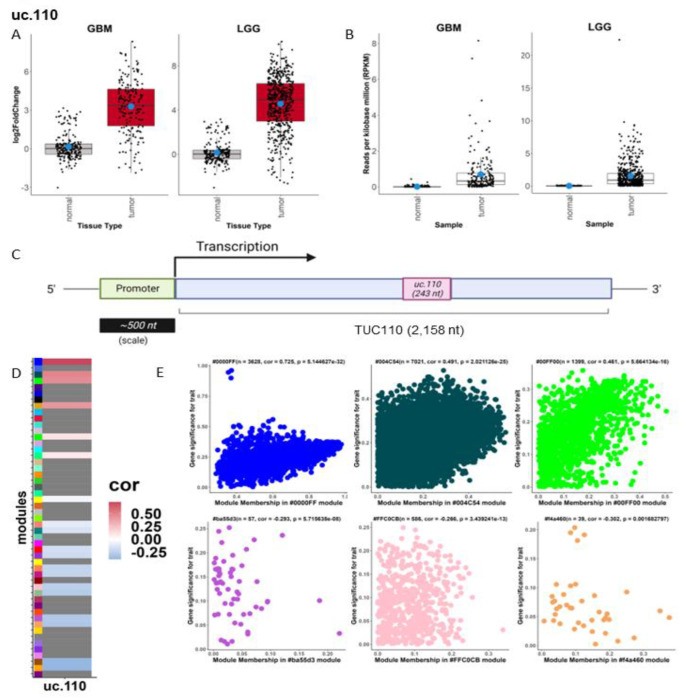 Figure 3
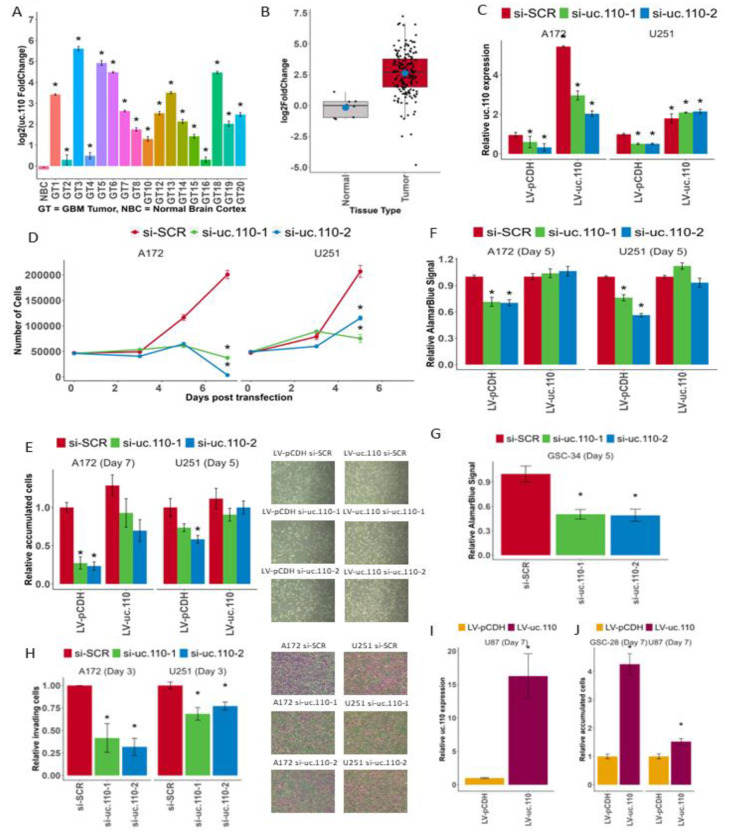 Figure 4
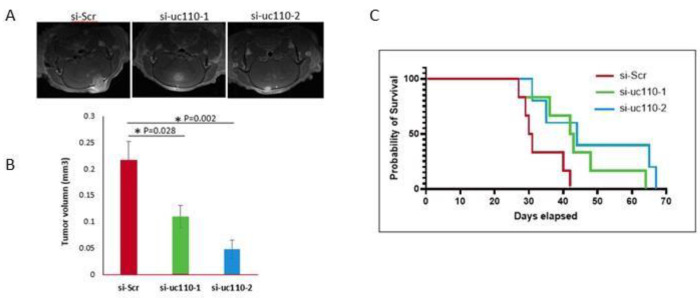 Figure 5
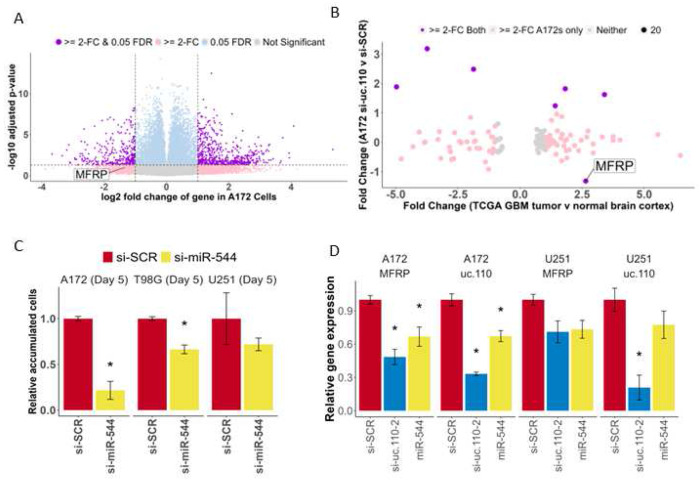 Figure 6
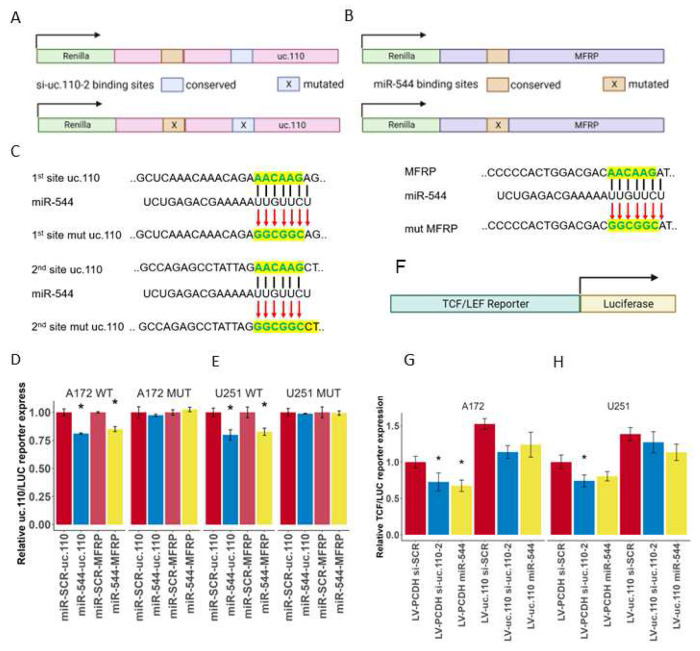 Figure 7
Peer Reviews
No public reviews on file for this paper yet. If you reviewed it on a platform where reviews are public (OpenReview, ICLR, NeurIPS, ICML), you can paste yours below so the community can read it here.
Videos
No videos yet. Explain this paper in a talk, walkthrough, or lecture? Add one.
Taxonomy
TopicsCancer-related molecular mechanisms research · RNA modifications and cancer · Circular RNAs in diseases