Replication-independent change in the frequencies of distinct genome segments of a multipartite virus during its transit within aphid vectors
Mathilde Villegas, Michel Yvon, Sophie Le Blaye, Laura Mathieu, Stéphane Blanc, Jean-Louis Zeddam

TL;DR
This study shows that the genome composition of a multipartite virus changes as it passes through aphid vectors, likely due to differential degradation of virus particles.
Contribution
The paper identifies replication-independent changes in viral genome segment frequencies during aphid transit, driven by differential particle stability.
Findings
Genome segment frequencies of the virus change in the aphid gut lumen and saliva but not in internal tissues.
Viral particles containing different segments show varying resistance to physicochemical factors like pH and salt.
The changes in genome composition within aphids are not adaptive but result from differential degradation.
Abstract
Multipartite viruses exhibit a fragmented genome composed of several nucleic acid segments individually packaged in distinct viral particles. The genome of all species of the genus Nanovirus holds eight segments, which accumulate at a very specific and reproducible relative frequency in the host plant tissues. In a given host species, the steady state pattern of the segments’ relative frequencies is designated the genome formula and is thought to have an adaptive function through the modulation of gene expression. Nanoviruses are aphid-transmitted circulative non-propagative viruses, meaning that the virus particles are internalized into the midgut cells, transferred to the hemolymph, and then to the saliva, with no replication during this transit. Unexpectedly, a previous study on the faba bean necrotic stunt virus revealed that the genome formula changes after ingestion by aphids. We…
Genes, proteins, chemicals, diseases, species, mutations and cell lines named across the full text — each resolved to its canonical identifier and authoritative record.
Click any figure to enlarge with its caption.
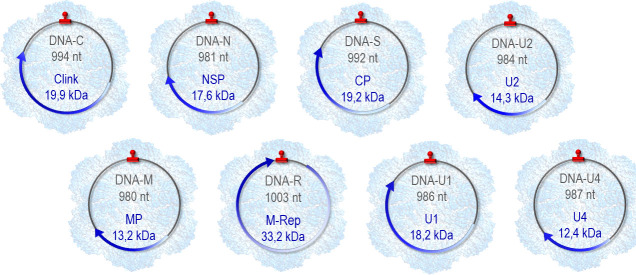 Figure 1
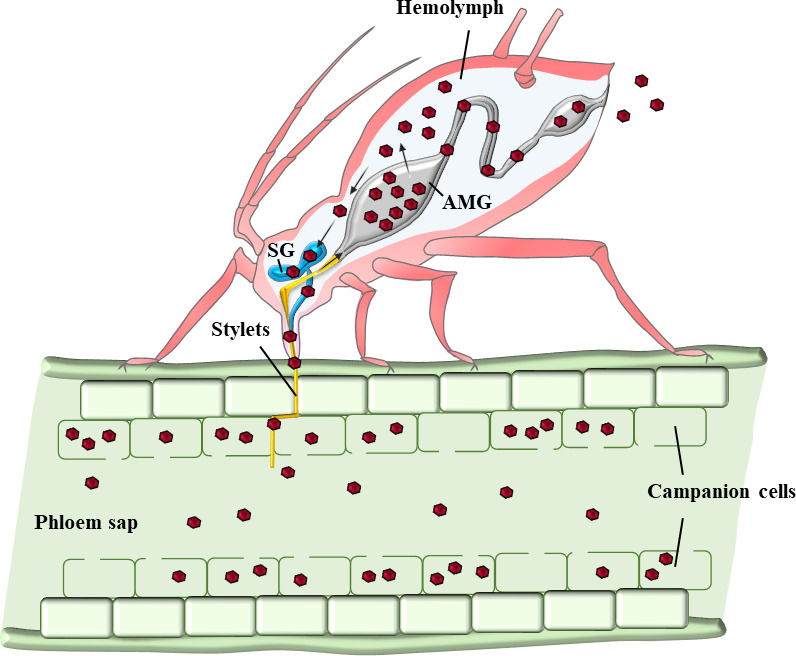 Figure 2
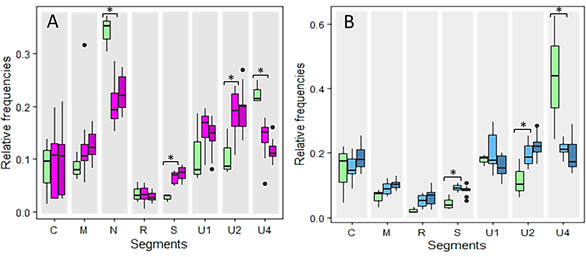 Figure 3
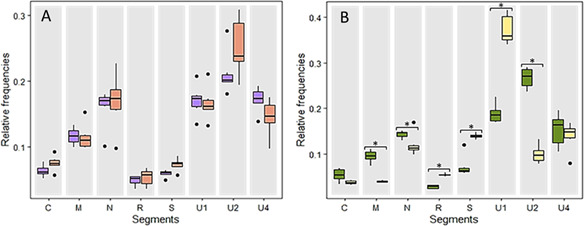 Figure 4
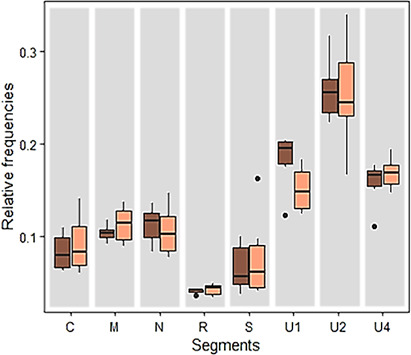 Figure 5
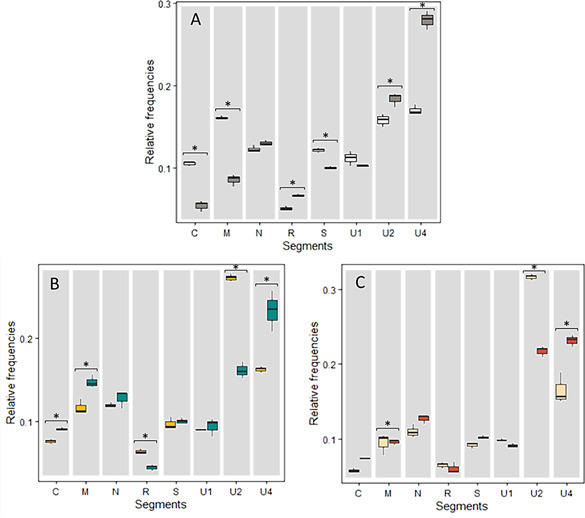 Figure 6
Peer Reviews
No public reviews on file for this paper yet. If you reviewed it on a platform where reviews are public (OpenReview, ICLR, NeurIPS, ICML), you can paste yours below so the community can read it here.
Videos
No videos yet. Explain this paper in a talk, walkthrough, or lecture? Add one.
Taxonomy
TopicsPlant Virus Research Studies · Insect-Plant Interactions and Control · CRISPR and Genetic Engineering