Loss of LpqM proteins in Mycobacterium abscessus is associated with impaired intramacrophage survival
Yves-Marie Boudehen, Wassim Daher, Françoise Roquet-Baneres, Laurent Kremer

TL;DR
This study shows that two specific proteins in Mycobacterium abscessus are crucial for the bacteria's survival inside human immune cells, even though they don't affect the bacteria's physical appearance.
Contribution
The study experimentally confirms that LpqM-related proteins MAB_1470c and MAB_1466c are essential for intracellular survival, not morphotype transition, in M. abscessus.
Findings
Deletion of MAB_1470c and MAB_1466c genes did not change the colony morphotype of M. abscessus.
Mutants lacking these genes showed significantly reduced survival in human macrophages.
The intracellular survival defect was more severe in a double mutant lacking both genes.
Abstract
Mycobacterium abscessus, an emerging pathogen responsible for severe pulmonary infections in cystic fibrosis patients, displays either a smooth (S) or a rough (R) morphotype. Infections with M. abscessus R are associated with increased pathogenicity in animal models and humans. While the S-to-R transition correlating with reduced glycopeptidolipid (GPL) production is well-documented, the recent screening of a transposon library revealed additional gene candidates located outside of the GPL locus involved in this transition. These genes include MAB_1470c, encoding the putative lipoprotein peptidase LpqM. However, experimental confirmation of the implication of this gene in the morphotype switch is lacking. Herein, we re-examined the role of MAB_1470c, and its homolog MAB_1466c, in colonial morphotype changes by generating unmarked deletion mutants in M. abscessus S. Our results indicate…
Genes, proteins, chemicals, diseases, species, mutations and cell lines named across the full text — each resolved to its canonical identifier and authoritative record.
Click any figure to enlarge with its caption.
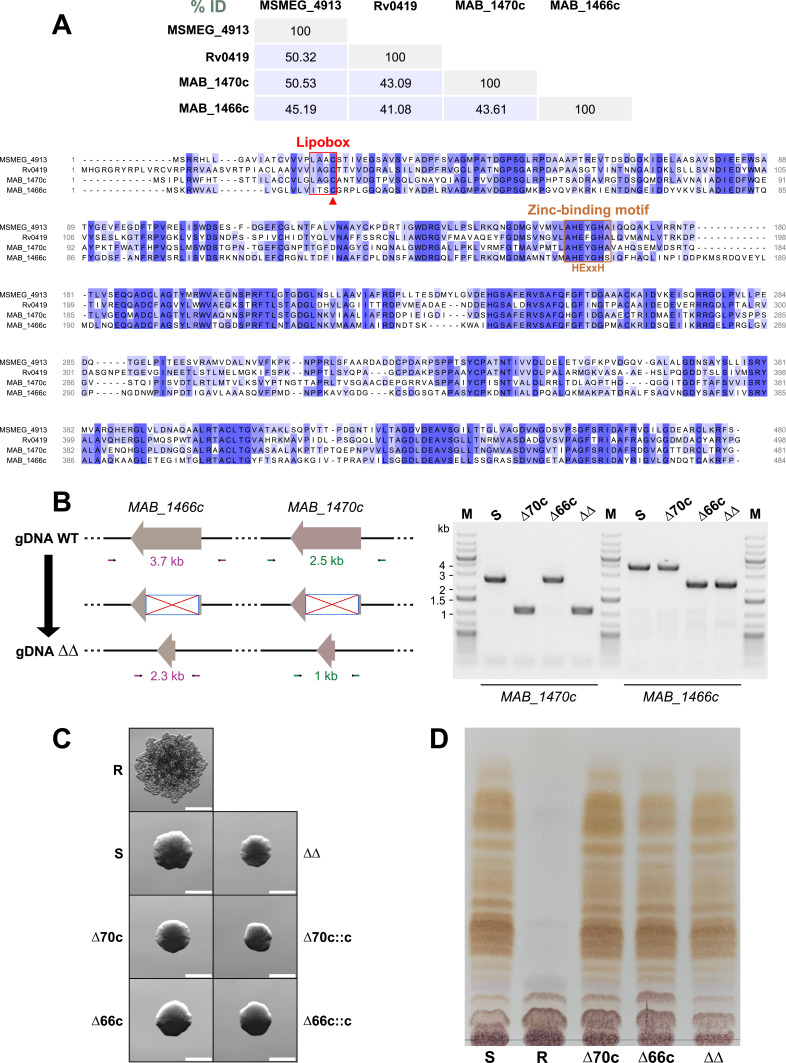 Figure 1
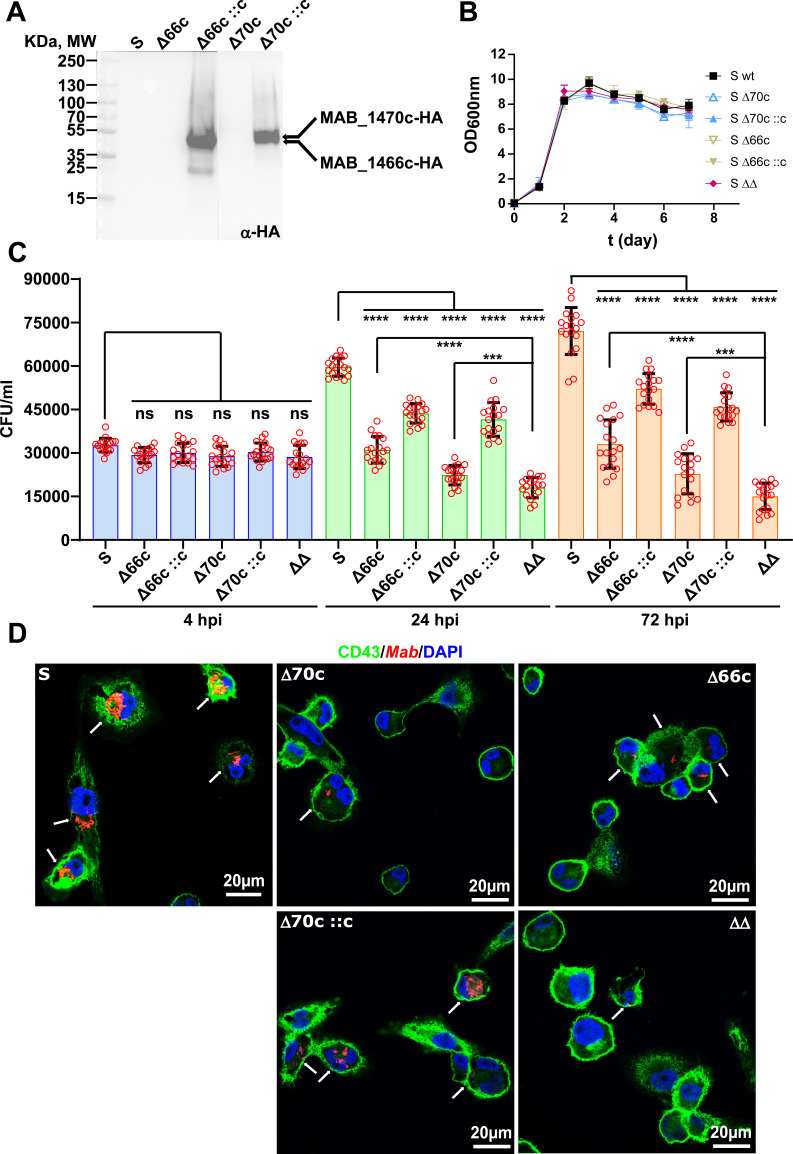 Figure 2
Peer Reviews
No public reviews on file for this paper yet. If you reviewed it on a platform where reviews are public (OpenReview, ICLR, NeurIPS, ICML), you can paste yours below so the community can read it here.
Videos
No videos yet. Explain this paper in a talk, walkthrough, or lecture? Add one.
Taxonomy
TopicsMycobacterium research and diagnosis · Tuberculosis Research and Epidemiology · Helicobacter pylori-related gastroenterology studies