18S rDNA sequence-structure phylogeny of the eukaryotes simultaneously inferred from sequences and their individual secondary structures
Eva Rapp, Matthias Wolf

TL;DR
This study improves understanding of eukaryotic evolution by combining DNA sequences and their structures to build better phylogenetic trees.
Contribution
A novel method combining 18S rDNA sequences and secondary structures enhances phylogenetic analysis accuracy.
Findings
Sequence-structure approaches provided higher bootstrap support compared to sequence-only methods.
More subgroups of eukaryotic supergroups were identified as monophyletic.
Sister group relations matched multi-marker analysis results more closely.
Abstract
The eukaryotic tree of life has been subject of numerous studies ever since the nineteenth century, with more supergroups and their sister relations being decoded in the last years. In this study, we reconstructed the phylogeny of eukaryotes using complete 18S rDNA sequences and their individual secondary structures simultaneously. After the sequence-structure data was encoded, it was automatically aligned and analyzed using sequence-only as well as sequence-structure approaches. We present overall neighbor-joining trees of 211 eukaryotes as well as the respective profile neighbor-joining trees, which helped to resolve the basal branching pattern. A manually chosen subset was further inspected using neighbor-joining, maximum parsimony, and maximum likelihood analyses. Additionally, the 75 and 100 percent consensus structures of the subset were predicted. All sequence-structure…
Genes, proteins, chemicals, diseases, species, mutations and cell lines named across the full text — each resolved to its canonical identifier and authoritative record.
Click any figure to enlarge with its caption.
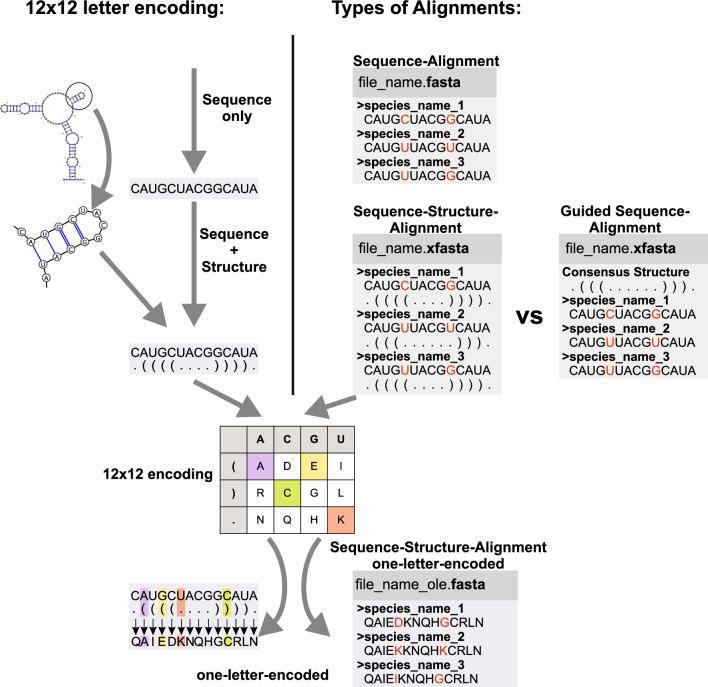 Figure 1
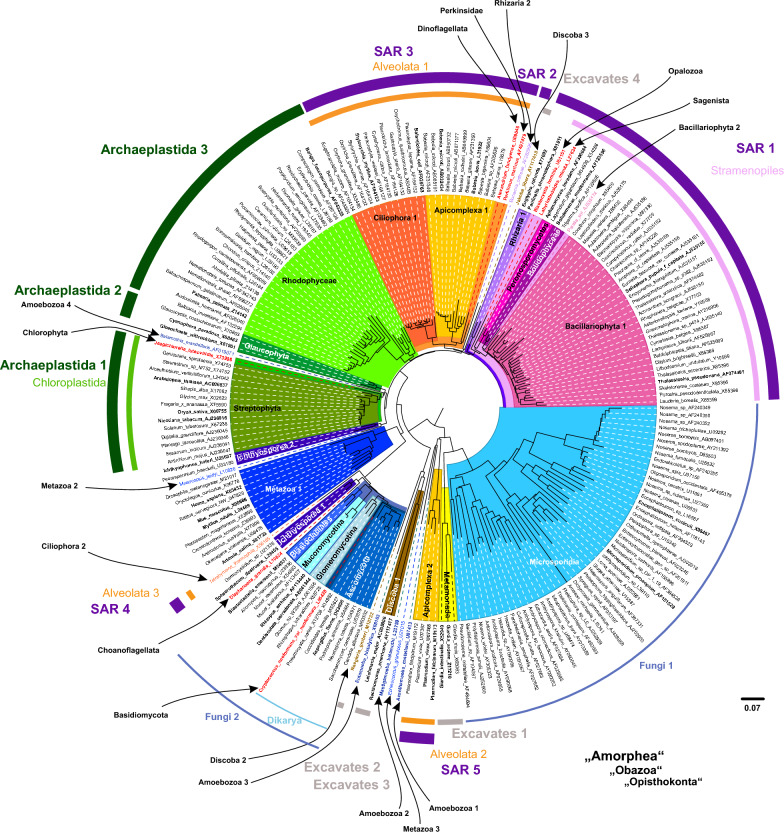 Figure 2
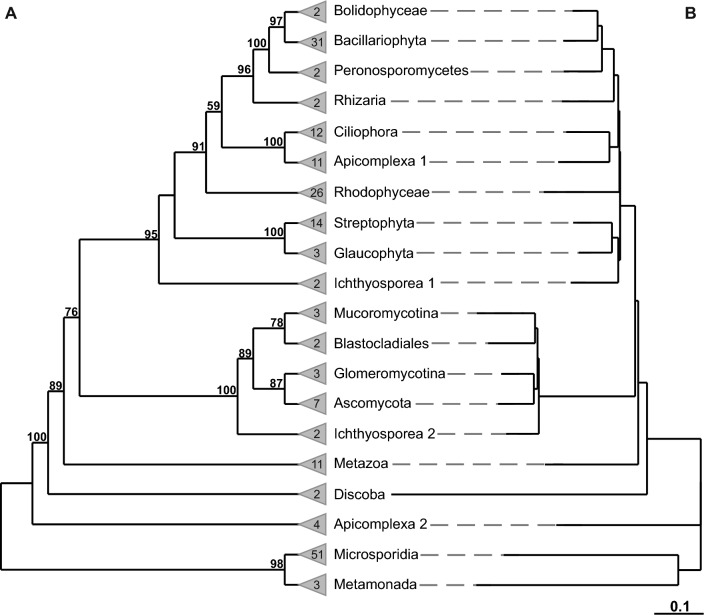 Figure 3
Peer Reviews
No public reviews on file for this paper yet. If you reviewed it on a platform where reviews are public (OpenReview, ICLR, NeurIPS, ICML), you can paste yours below so the community can read it here.
Videos
No videos yet. Explain this paper in a talk, walkthrough, or lecture? Add one.
Taxonomy
TopicsParasitic Infections and Diagnostics · Genomics and Phylogenetic Studies · Protist diversity and phylogeny