Myofilament-based physiological regulatory compensation preserves diastolic function in failing hearts with severe Ca2+ handling deficits
Frazer I. Heinis, Brian R. Thompson, Rishi Gulati, Matthew Wheelwright, Joseph M. Metzger

TL;DR
This study shows that heart muscle filaments can help maintain heart relaxation in failing hearts with severe calcium handling issues.
Contribution
The study identifies a myofilament-based compensatory mechanism preserving diastolic function in severe cardiac Ca2+ dysfunction.
Findings
Serca2a-deficient hearts show increased cTnI phosphorylation and retain normal β-adrenergic stimulation responses.
Removing phospholamban in Serca2a-deficient hearts causes severe diastolic dysfunction.
Blocking cTnI phosphorylation blunts β-adrenergic stimulation's effect on diastolic performance.
Abstract
Severe dysfunction in cardiac muscle intracellular Ca2+ handling is a common pathway underlying heart failure. Here we used an inducible genetic model of severe Ca2+ cycling dysfunction by the targeted temporal gene ablation of the cardiac Ca2+ ATPase, SERCA2, in otherwise normal adult mice. In this model, in vivo heart performance was minimally affected initially, even though Serca2a protein was markedly reduced. The mechanism underlying the sustained in vivo heart performance in the weeks prior to complete heart pump failure and death is not clear and is important to understand. Studies were primarily focused on understanding how in vivo diastolic function could be relatively normal under conditions of marked Serca2a deficiency. Interestingly, data show increased cardiac troponin I (cTnI) serine 23/24 phosphorylation content in hearts upon Serca2a ablation in vivo. We report that…
Genes, proteins, chemicals, diseases, species, mutations and cell lines named across the full text — each resolved to its canonical identifier and authoritative record.
Click any figure to enlarge with its caption.
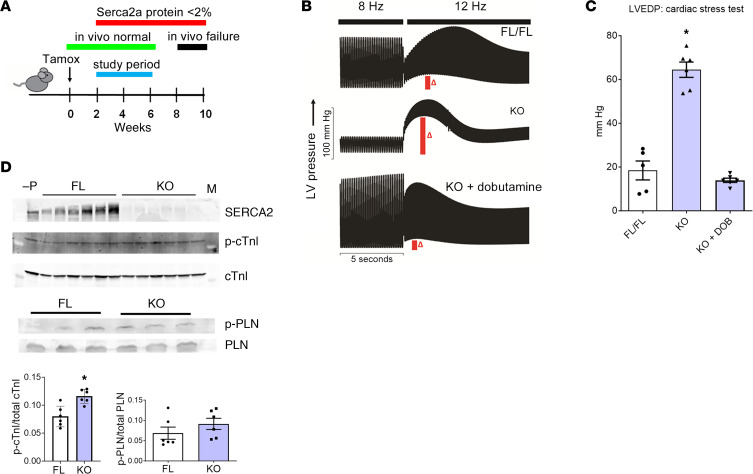 Figure 1
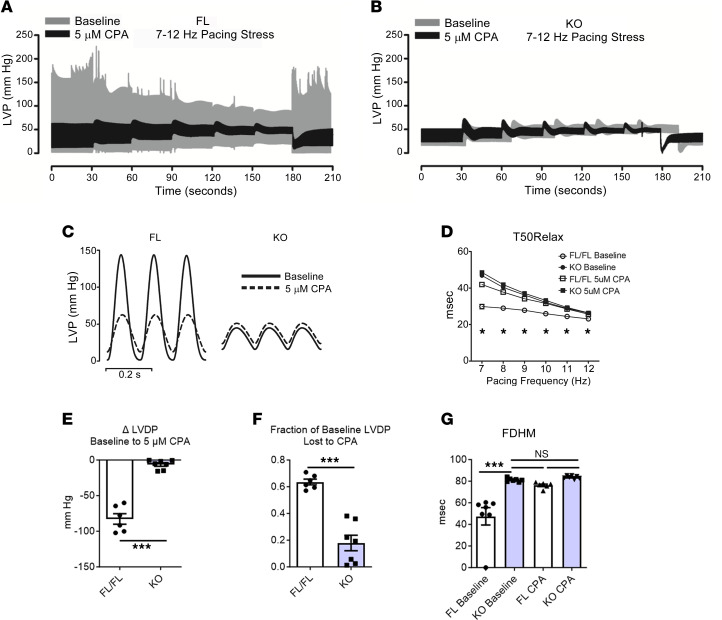 Figure 2
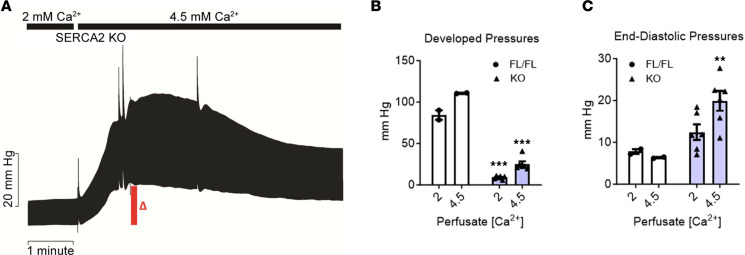 Figure 3
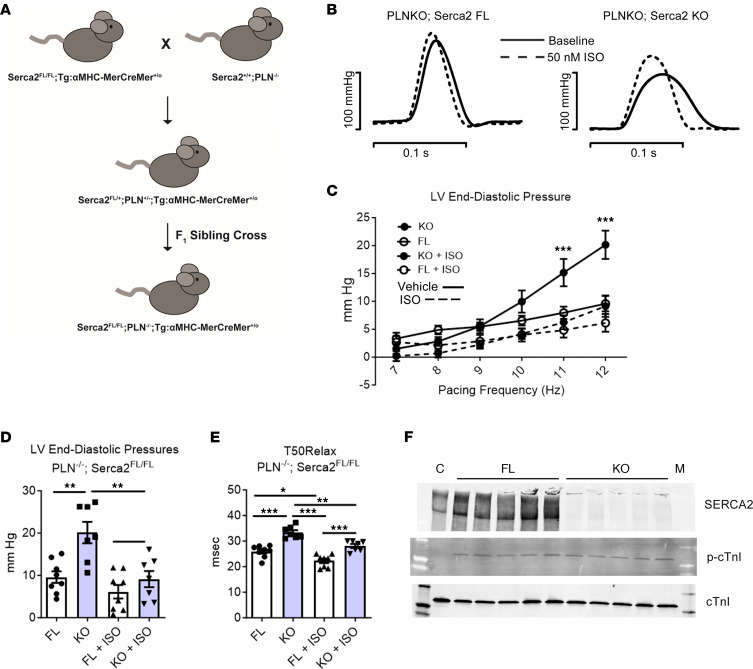 Figure 4
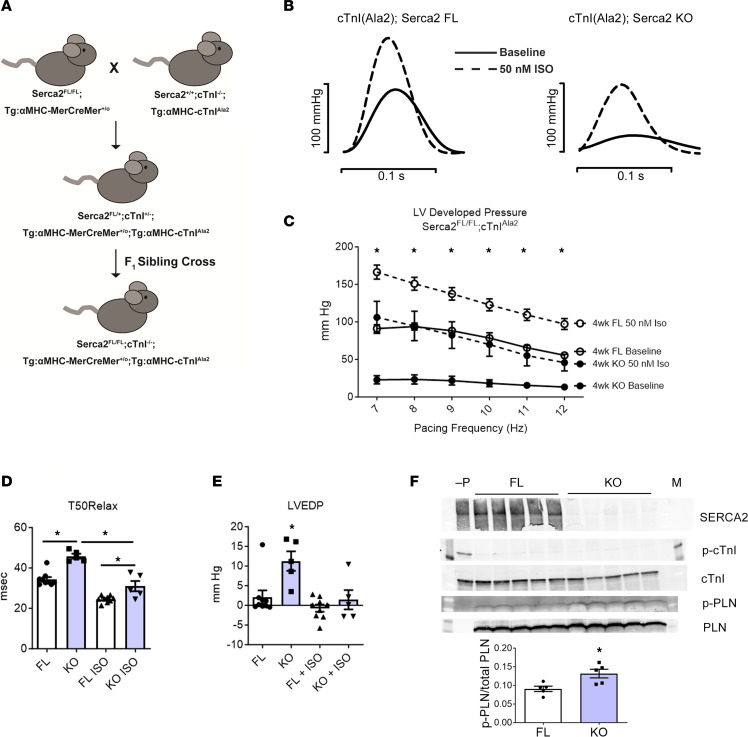 Figure 5
 Figure 6
Peer Reviews
No public reviews on file for this paper yet. If you reviewed it on a platform where reviews are public (OpenReview, ICLR, NeurIPS, ICML), you can paste yours below so the community can read it here.
Videos
No videos yet. Explain this paper in a talk, walkthrough, or lecture? Add one.
Taxonomy
TopicsCardiac electrophysiology and arrhythmias · Cardiomyopathy and Myosin Studies · Ion channel regulation and function