Generic orphan drug substitution: a critical analysis of global practices and Saudi Arabia’s perspective
Yousif S. Alakeel, Emmanouil Rampakakis, Ali AlRumaih, Rana AlRuwaisan, Maha Abushal, Abdullah M. AlDalaan, Majdy M. Idrees, Zaid D. Alanazi, Hanouf AlKoait, Abdulrahman Muaadi, Majed Ali M. AlAfra, Shaya A. AlShaya, Suliman AlHomida

TL;DR
This paper reviews the challenges and risks of substituting generic versions of orphan drugs, highlighting concerns about bioequivalence and safety, especially in vulnerable populations.
Contribution
The paper critically analyzes global practices and proposes regulatory refinements for safer generic substitution of orphan drugs.
Findings
Generic bioequivalence studies often exclude children and the elderly, despite their being key populations for orphan drugs.
Differences in excipients and manufacturing can affect the safety and efficacy of generic/biosimilar products.
Biocreep and interchangeability issues raise concerns about the therapeutic equivalence of substituted drugs.
Abstract
In an era of cost pressure, substituting generic drugs represents one of the main cost-containment strategies of healthcare systems. Despite the obvious financial benefits, in a minority of cases, substitution may require caution or even be contraindicated. In most jurisdictions, to obtain approval, the bioequivalence of generic products with the brand-name equivalent needs to be shown via bioavailability studies in healthy subjects. Rare diseases, defined as medical conditions with a low prevalence, are a group of heterogenous diseases that are typically severe, disabling, progressive, degenerative, and life-threatening or chronically debilitating, and disproportionally affect the very young and elderly. Despite these unique features of rare diseases, generic bioequivalence studies are typically carried out with single doses and exclude children or the elderly. Furthermore, the…
Genes, proteins, chemicals, diseases, species, mutations and cell lines named across the full text — each resolved to its canonical identifier and authoritative record.
Click any figure to enlarge with its caption.
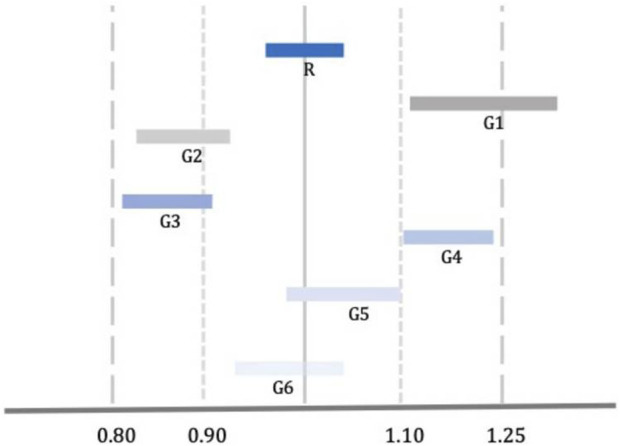 Figure 1
Peer Reviews
No public reviews on file for this paper yet. If you reviewed it on a platform where reviews are public (OpenReview, ICLR, NeurIPS, ICML), you can paste yours below so the community can read it here.
Videos
No videos yet. Explain this paper in a talk, walkthrough, or lecture? Add one.
Taxonomy
TopicsPharmaceutical Economics and Policy · Pharmaceutical studies and practices · Health Systems, Economic Evaluations, Quality of Life