Nanocage-incorporated engineered destabilized 3'UTR ARE of ERBB2 inhibits tumor growth and liver and lung metastasis in EGFR T790M osimertinib- and trastuzumab-resistant and ERBB2-expressing NSCLC via the reduction of ERBB2
Chidiebere U. Awah, Joo Sun Mun, Aloka Paragodaarachchi, Baris Boylu, Martin Nzegwu, Hiroshi Matsui, Olorunseun Ogunwobi

TL;DR
A new treatment using nanocages and engineered RNA reduces tumor growth and metastasis in drug-resistant lung cancer by targeting the ERBB2 gene.
Contribution
A novel therapeutic approach using destabilized 3'UTR ERBB2 constructs and nanocages to inhibit ERBB2 in resistant NSCLC.
Findings
The treatment significantly reduced primary tumor volume and inhibited liver and lung metastasis in mice.
The constructs were safely distributed in multiple organs without causing genome rearrangement or toxicity.
DesARE3'UTRERBB2-30 achieved 50% complete tumor lysis and 90% inhibition of lung metastasis.
Abstract
Non-small cell lung cancer (NSCLC) caused more deaths in 2017 than breast cancer, prostate, and brain cancers combined. This is primarily due to their aggressive metastatic nature, leading to more fatal rates of cancer patients. Despite this condition, there are no clinically approved drugs that can target metastasis. The NSCLC with EGFR T790M-overexpressing HER2 shows the resistance to osimertinib and trastuzumab starting 10–18 months after the therapy, and thus prospects are grim to these patients. To target the recalcitrant ERBB2 driver oncogene, we developed two engineered destabilizing 3'UTR ERBB2 constructs that degrade the endogenous ERBB2 transcript and proteins by overwriting the encoded endogenous ERBB2 mRNA with the destabilizing message. When iron oxide nanocages (IO nanocages) were used as vehicles to deliver them to tumors and whole tissues in mice bearing tumors, it was…
Genes, proteins, chemicals, diseases, species, mutations and cell lines named across the full text — each resolved to its canonical identifier and authoritative record.
Click any figure to enlarge with its caption.
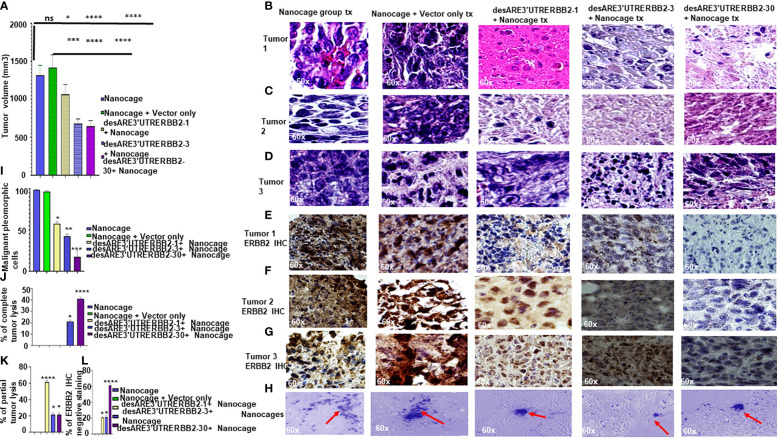 Figure 1
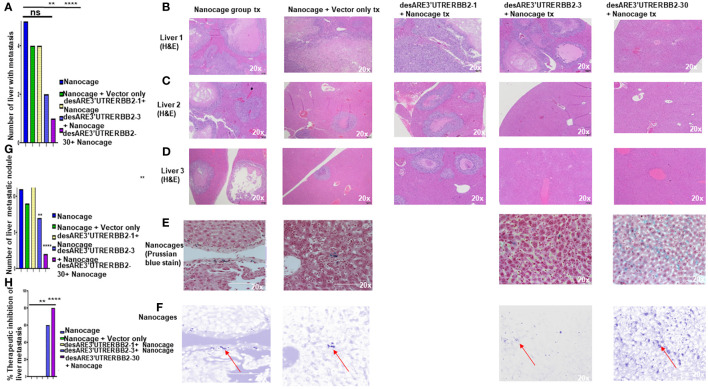 Figure 2
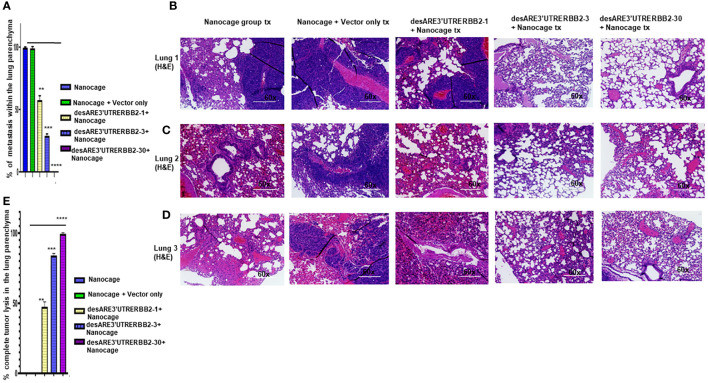 Figure 3
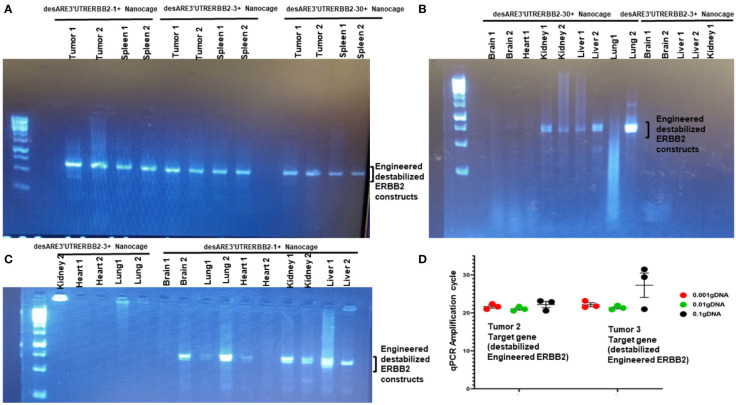 Figure 4
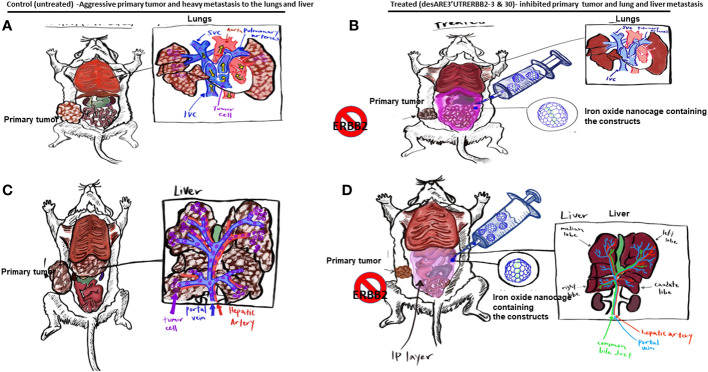 Figure 5
Peer Reviews
No public reviews on file for this paper yet. If you reviewed it on a platform where reviews are public (OpenReview, ICLR, NeurIPS, ICML), you can paste yours below so the community can read it here.
Videos
No videos yet. Explain this paper in a talk, walkthrough, or lecture? Add one.
Taxonomy
TopicsLung Cancer Treatments and Mutations · RNA modifications and cancer · Colorectal Cancer Treatments and Studies