Social inequalities in pregnancy metabolic profile: findings from the multi-ethnic Born in Bradford cohort study
Ahmed Elhakeem, Gemma L. Clayton, Ana Goncalves Soares, Kurt Taylor, Léa Maitre, Gillian Santorelli, John Wright, Deborah A. Lawlor, Martine Vrijheid

TL;DR
This study finds that lower socioeconomic status in pregnant women is linked to worse metabolic profiles, with differences observed between White European and South Asian groups.
Contribution
The study reveals ethnic differences in socioeconomic associations with pregnancy metabolic traits, using a novel composite SEP measure and targeted NMR spectroscopy.
Findings
Lower socioeconomic position was associated with 113 adverse metabolic traits in pregnant women.
Ethnic differences were observed, with stronger associations in White European women for traits like HDL cholesterol.
Lower SEP was linked to higher levels of triglycerides and VLDL particles.
Abstract
Lower socioeconomic position (SEP) associates with adverse pregnancy and perinatal outcomes and with less favourable metabolic profile in nonpregnant adults. Socioeconomic differences in pregnancy metabolic profile are unknown. We investigated association between a composite measure of SEP and pregnancy metabolic profile in White European (WE) and South Asian (SA) women. We included 3,905 WE and 4,404 SA pregnant women from a population-based UK cohort. Latent class analysis was applied to nineteen individual, household, and area-based SEP indicators (collected by questionnaires or linkage to residential address) to derive a composite SEP latent variable. Targeted nuclear magnetic resonance spectroscopy was used to determine 148 metabolic traits from mid-pregnancy serum samples. Associations between SEP and metabolic traits were examined using linear regressions adjusted for…
Genes, proteins, chemicals, diseases, species, mutations and cell lines named across the full text — each resolved to its canonical identifier and authoritative record.
Click any figure to enlarge with its caption.
 Figure 1
 Figure 2
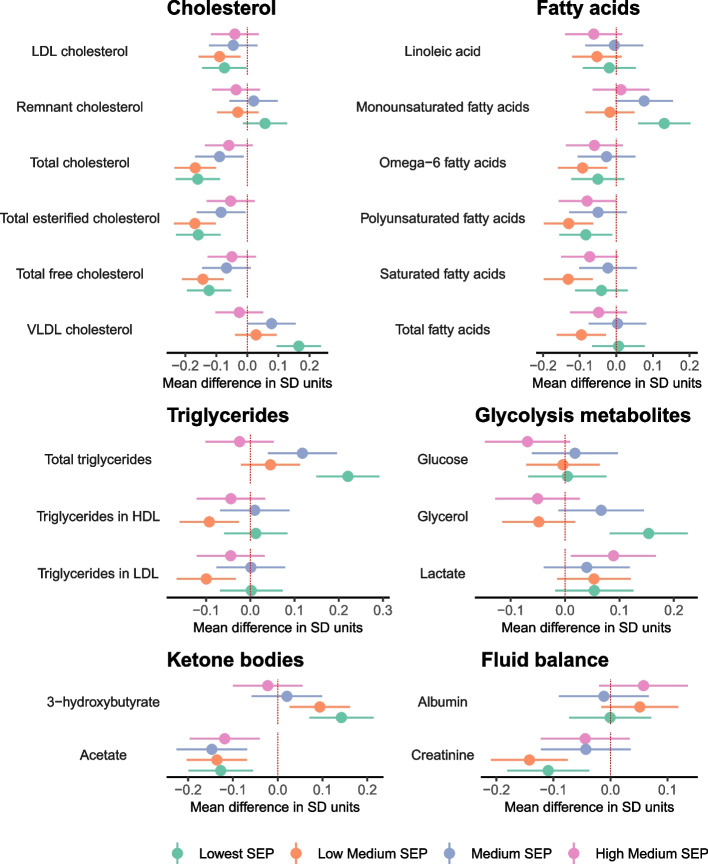 Figure 3
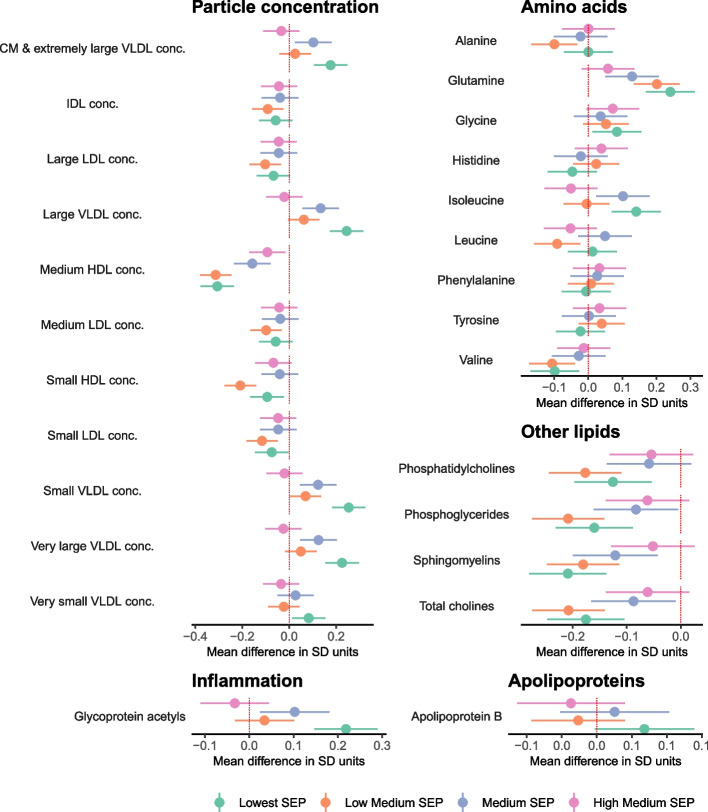 Figure 4
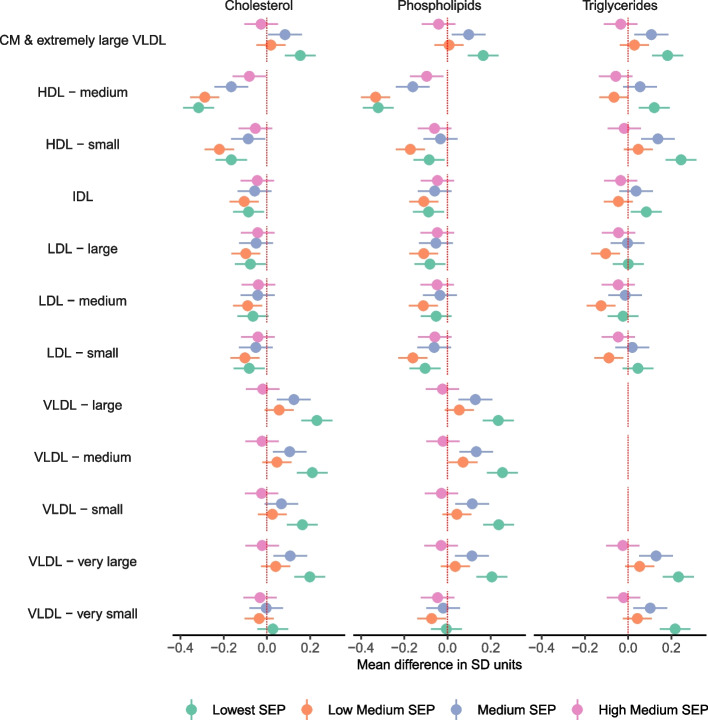 Figure 5
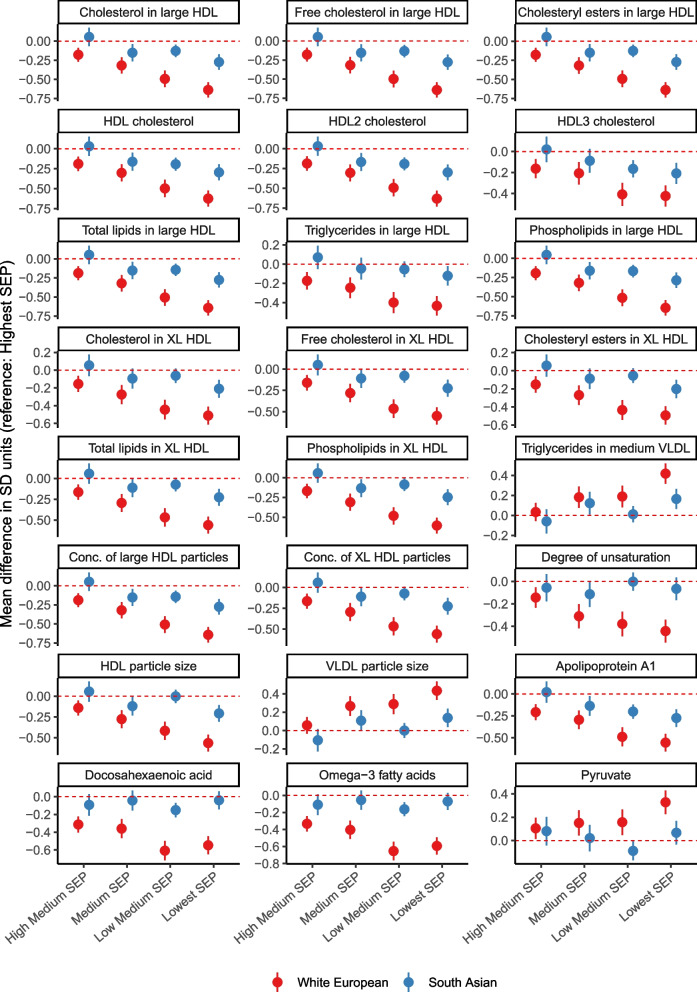 Figure 6
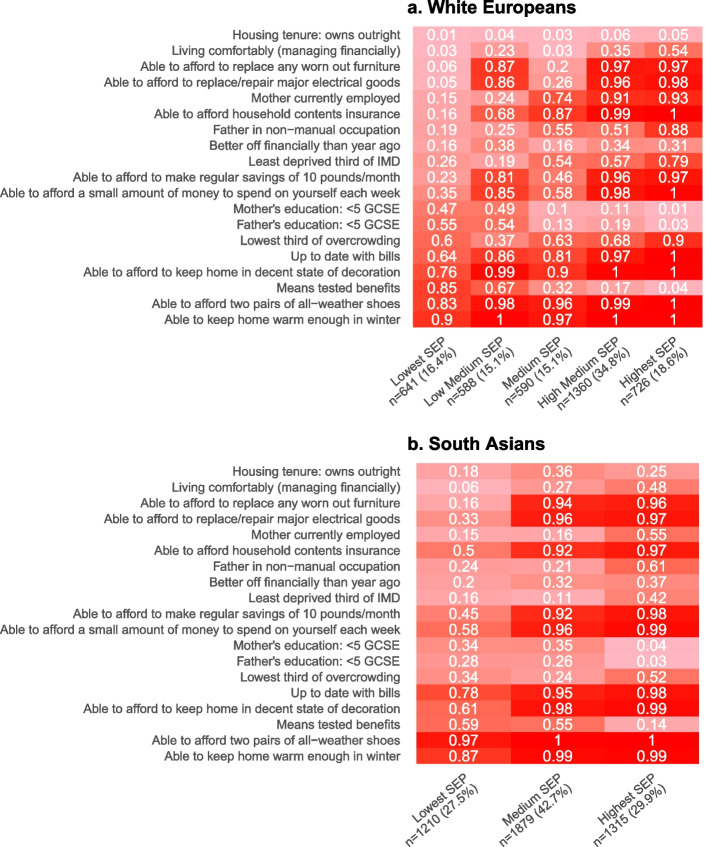 Figure 7
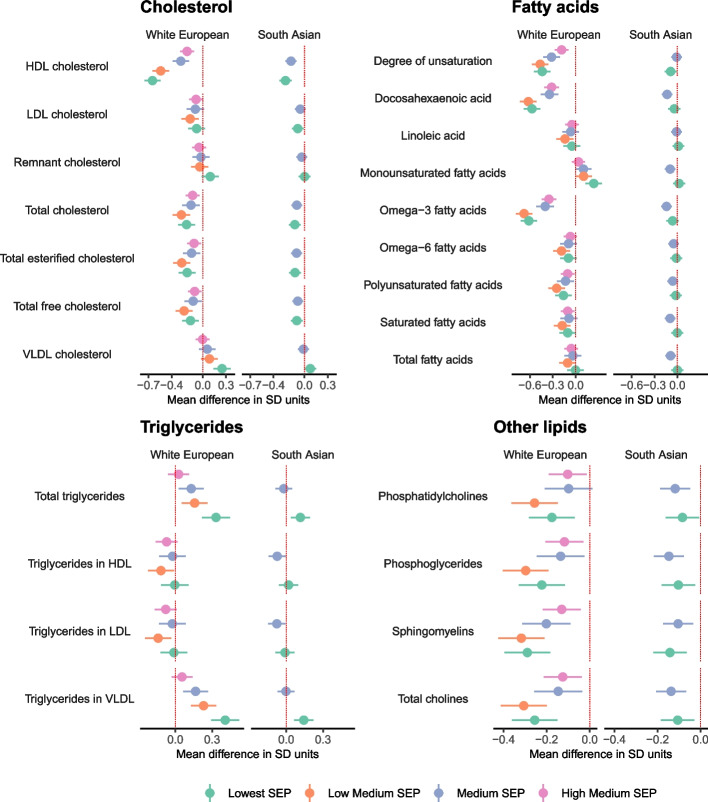 Figure 8
Peer Reviews
No public reviews on file for this paper yet. If you reviewed it on a platform where reviews are public (OpenReview, ICLR, NeurIPS, ICML), you can paste yours below so the community can read it here.
Videos
No videos yet. Explain this paper in a talk, walkthrough, or lecture? Add one.
Taxonomy
TopicsBirth, Development, and Health · Gestational Diabetes Research and Management · Health disparities and outcomes