Onychoscopic Analysis of Cyclophosphamide-Induced Polydactylic Bluish-Gray Discoloration in a Case of Pemphigus Foliaceus
Priya Garg, Ashwini D Mundhe, Avinash Jadhav, Nishtha Mishra, Kirti S Deo

TL;DR
A rare case of bluish-gray nail discoloration caused by cyclophosphamide treatment in a pemphigus foliaceus patient is described and differentiated from melanoma.
Contribution
Reports a rare onychoscopic finding of cyclophosphamide-induced nail discoloration in pemphigus foliaceus.
Findings
Bluish-gray nail discoloration occurred in a patient receiving cyclophosphamide for pemphigus foliaceus.
Onychoscopic analysis helped distinguish the discoloration from nail apparatus melanoma.
The case highlights the importance of recognizing rare drug-induced nail changes.
Abstract
Cyclophosphamide, an alkylating agent, has rarely been observed to cause a bluish discoloration of nails, an occurrence that is typically underreported. We describe the case of a middle-aged male undergoing dexamethasone-cyclophosphamide pulse therapy for pemphigus foliaceus, who exhibited bluish-gray discoloration of the nails. It is crucial to differentiate this presentation from other conditions such as nail apparatus melanoma (NAM), which may manifest in a slightly different manner. We also report the onychoscopic findings observed in this case.
Genes, proteins, chemicals, diseases, species, mutations and cell lines named across the full text — each resolved to its canonical identifier and authoritative record.
Click any figure to enlarge with its caption.
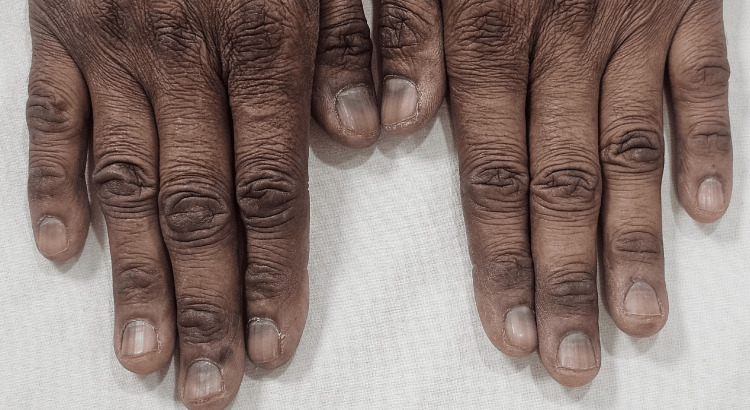 Figure 1
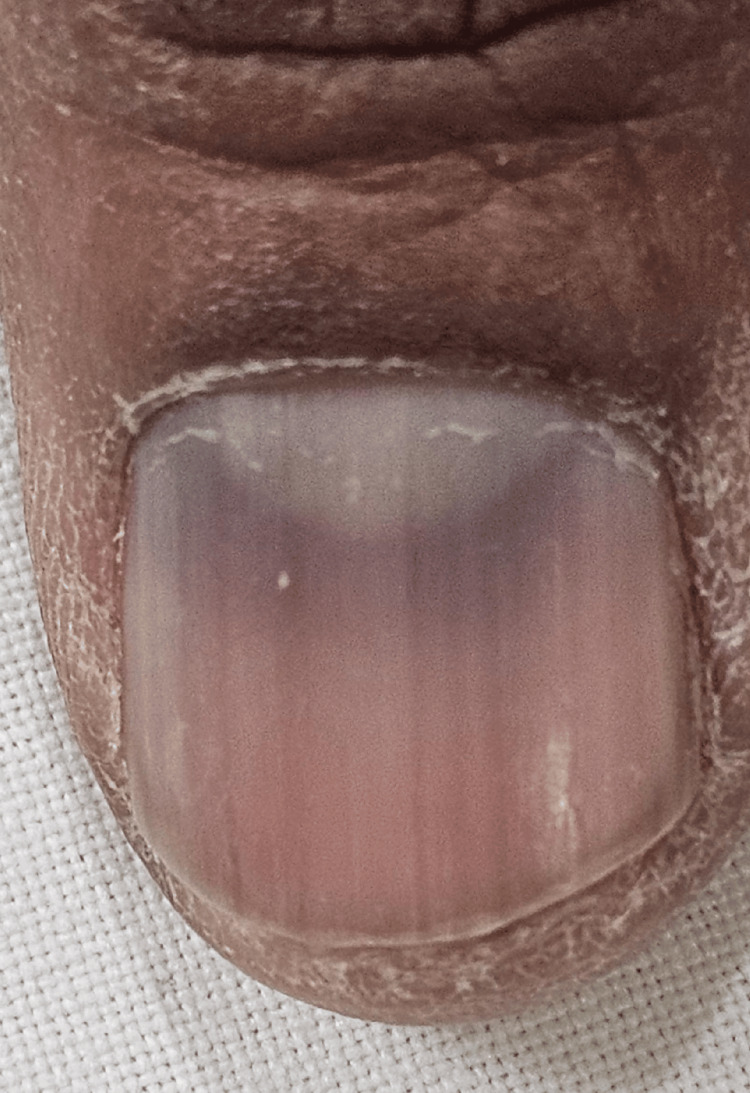 Figure 2
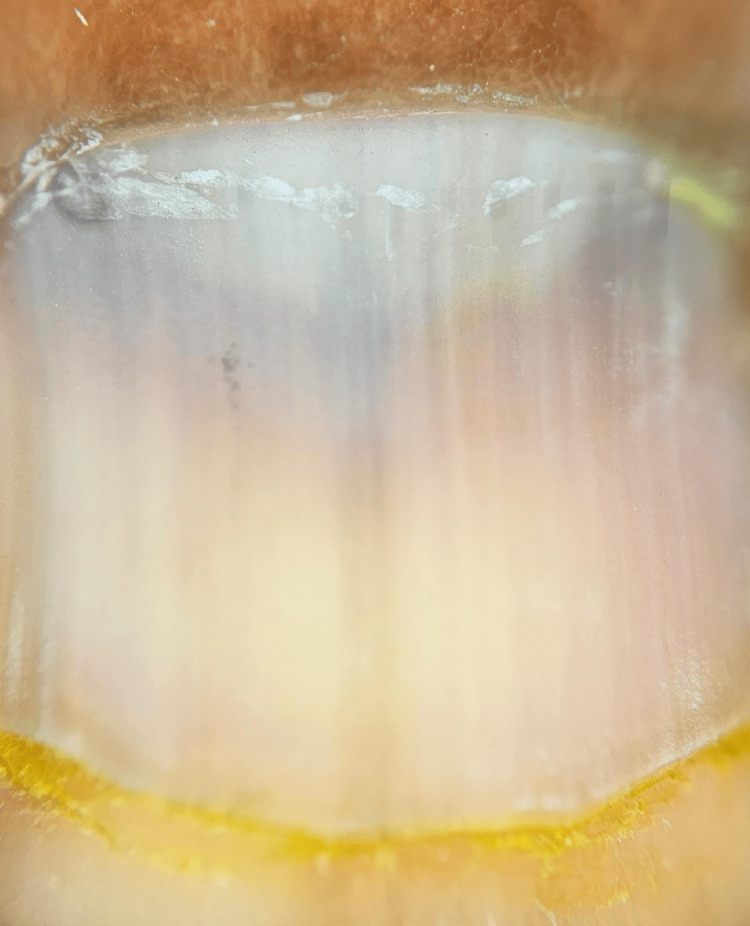 Figure 3
Peer Reviews
No public reviews on file for this paper yet. If you reviewed it on a platform where reviews are public (OpenReview, ICLR, NeurIPS, ICML), you can paste yours below so the community can read it here.
Videos
No videos yet. Explain this paper in a talk, walkthrough, or lecture? Add one.
Taxonomy
TopicsNail Diseases and Treatments · Chemotherapy-related skin toxicity · Autoimmune Bullous Skin Diseases