Physiological changes after fluid bolus therapy in cardiac surgery patients: A propensity score matched case–control study
Martin Faltys, Ary Serpa Neto, Luca Cioccari

TL;DR
This study finds that fluid bolus therapy after heart surgery leads to small increases in heart output but often fails to significantly improve blood pressure or oxygen delivery.
Contribution
The study uses propensity score matching to isolate physiological effects of fluid bolus therapy in cardiac surgery patients.
Findings
Fluid bolus therapy increased cardiac output by up to 4% within 40 minutes.
Nearly half of fluid bolus episodes failed to induce a significant positive response in cardiac output or blood pressure.
Fluid bolus therapy did not affect acid-base status or oxygen delivery.
Abstract
Fluid bolus therapy (FBT) is ubiquitous in intensive care units (ICUs) after cardiac surgery. However, its physiological effects remain unclear. : We performed an electronic health record–based quasi-experimental ICU study after cardiac surgery. We applied propensity score matching and compared the physiological changes after FBT episodes to matched control episodes where despite equivalent physiology no fluid bolus was given. The study was conducted in a multidisciplinary ICU of a tertiary-level academic hospital. The study included 2,736 patients who underwent Coronary Artery Bypass Grafting and/or heart valve surgery. Changes in cardiac output (CO) and mean arterial pressure (MAP) during the 60 minutes following FBT. We analysed 3572 matched fluid bolus (FB) episodes. After FBT, but not in control episodes, CO increased within 10 min, with a maximum increase of 0.2 l/min (95%CI…
Genes, proteins, chemicals, diseases, species, mutations and cell lines named across the full text — each resolved to its canonical identifier and authoritative record.
Click any figure to enlarge with its caption.
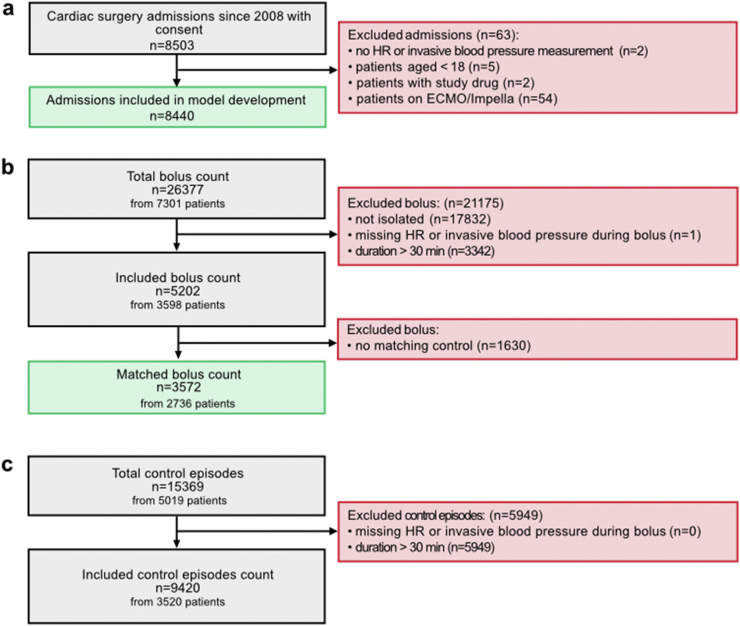 Figure 1
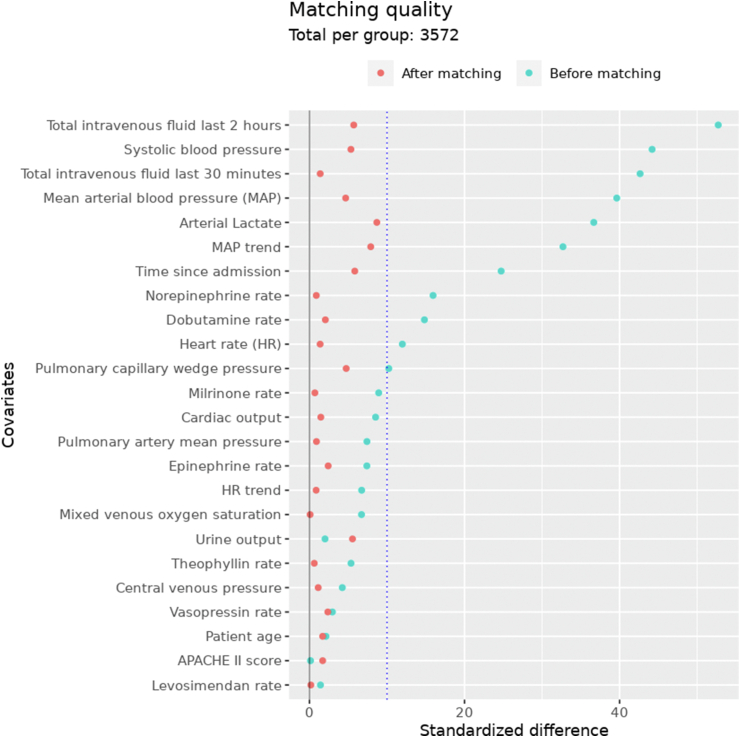 Figure 2
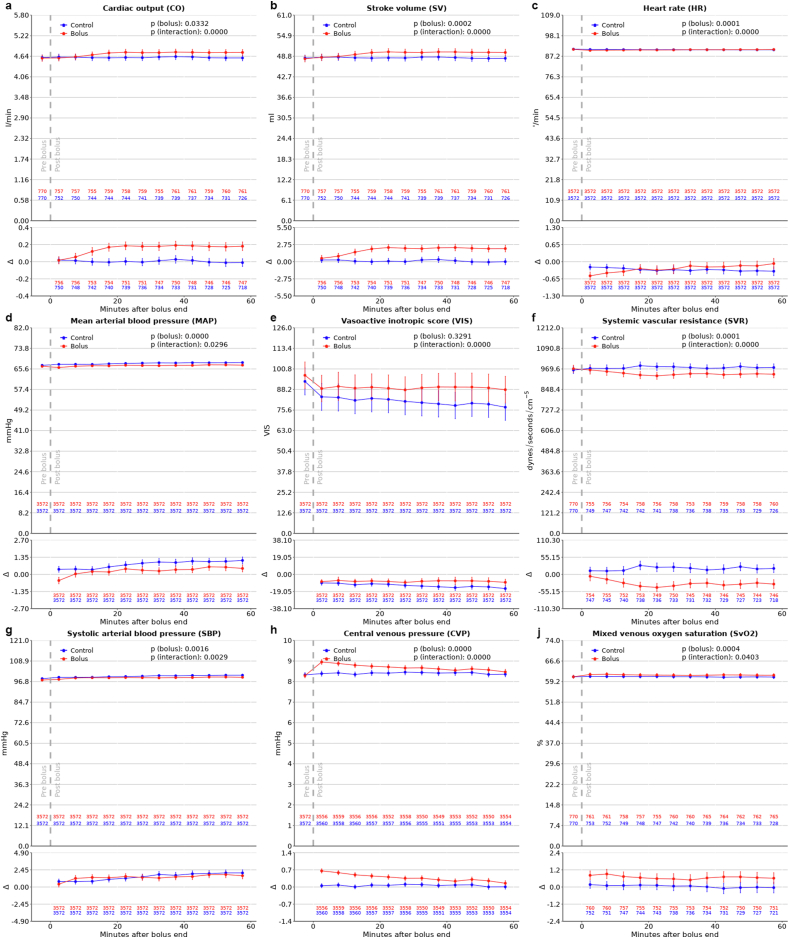 Figure 3
Peer Reviews
No public reviews on file for this paper yet. If you reviewed it on a platform where reviews are public (OpenReview, ICLR, NeurIPS, ICML), you can paste yours below so the community can read it here.
Videos
No videos yet. Explain this paper in a talk, walkthrough, or lecture? Add one.
Taxonomy
TopicsHemodynamic Monitoring and Therapy · Cardiac, Anesthesia and Surgical Outcomes · Renal function and acid-base balance