Serial assessment of computed tomography angiography for pulmonary and systemic arteries using a reduced contrast agent dose for the diagnosis of systemic artery-to-pulmonary artery shunts
Fumiaki Fukamatsu, Akira Yamada, Keiichi Yamada, Tomofumi Nonaka, Takanori Aonuma, Yoshinori Tsukahara, Satoshi Kawakami, Hiroyuki Sasaki, Yasunari Fujinaga

TL;DR
This study shows that a modified CT scan protocol with reduced contrast agent improves the diagnosis of abnormal blood vessel connections between systemic and pulmonary arteries.
Contribution
The study introduces a reduced contrast CT protocol (CTA-PS) that enhances diagnostic accuracy for systemic artery-to-pulmonary artery shunts.
Findings
CTA-PS achieved higher sensitivity (81.0%) and accuracy (84.0%) compared to CTA-P for diagnosing shunts.
CTA-PS showed better visualization of shunt-related findings than individual CTA-P or CTA-S assessments.
The AUC for CTA-PS (0.911) was higher than for CTA-P (0.835), though not statistically significant.
Abstract
To evaluate the diagnostic performance and feasibility of a modified computed tomography (CT) scan protocol, we performed a serial assessment of the computed tomography angiography for pulmonary artery (CTA-P) and systemic artery (CTA-S) (CTA-PS) using a reduced contrast agent dose to diagnose systemic artery-to-pulmonary artery shunts (SPSs). Twenty-five patients who underwent multiphase contrast-enhanced chest CT and conventional chest angiography were included. Three image sets (CTA-P, CTA-S, and CTA-PS) were evaluated by two board-certified radiologists. The visualization of the CT image findings associated with SPSs, such as filling defects and enhancement in the pulmonary arteries, was evaluated using a 5-point scale. The diagnostic performance (sensitivity, specificity, and accuracy) of CT imaging findings associated with SPSs in CTA-P and CTA-PS were as follows: CTA-P, 57.1%,…
Genes, proteins, chemicals, diseases, species, mutations and cell lines named across the full text — each resolved to its canonical identifier and authoritative record.
Click any figure to enlarge with its caption.
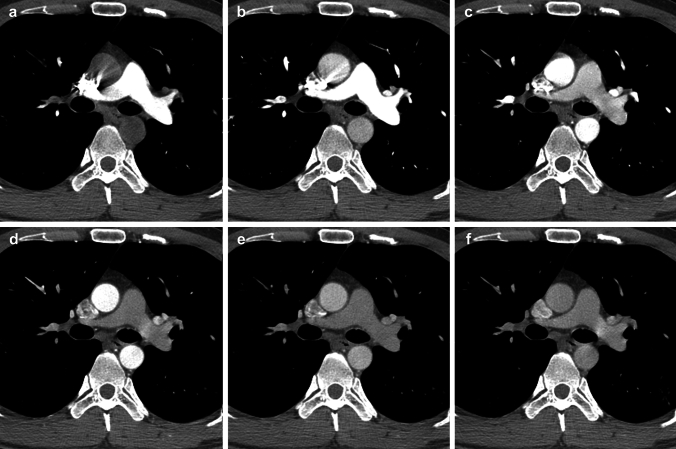 Figure 1
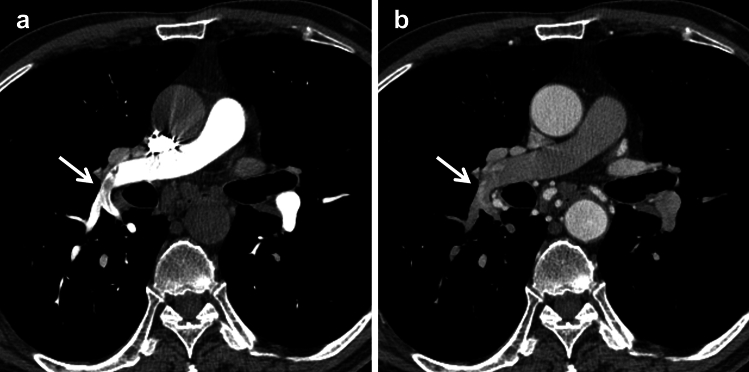 Figure 2
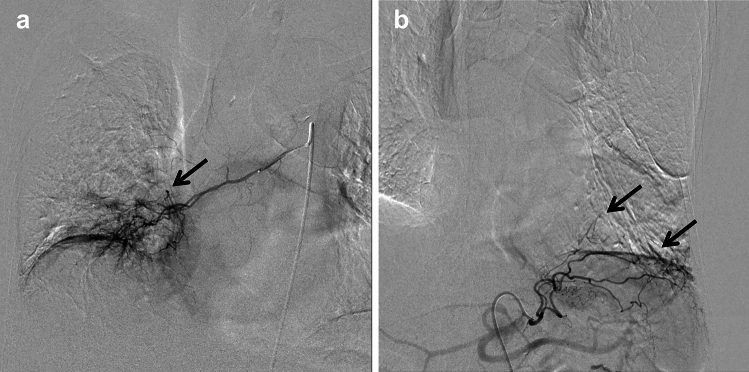 Figure 3
Peer Reviews
No public reviews on file for this paper yet. If you reviewed it on a platform where reviews are public (OpenReview, ICLR, NeurIPS, ICML), you can paste yours below so the community can read it here.
Videos
No videos yet. Explain this paper in a talk, walkthrough, or lecture? Add one.
Taxonomy
TopicsVascular Anomalies and Treatments · Renal and Vascular Pathologies · Pulmonary Hypertension Research and Treatments