Transcatheter Closure of Secundum Atrial Septal Defects in Pediatric Patients: A 15-Year Single-Center Experience
Eser Doğan, Ertürk Levent

TL;DR
This study reviews 15 years of transcatheter closure procedures for heart defects in children, showing it is a safe and effective treatment.
Contribution
The paper provides a long-term, single-center analysis of transcatheter ASD closure outcomes in pediatric patients.
Findings
Transcatheter closure was successful in 96.7% of patients with secundum ASDs.
Major complications occurred in 1.3% of cases, primarily due to device embolization or improper positioning.
Long-term follow-up showed no new major complications, supporting the safety of the procedure.
Abstract
Purpose: Transcatheter closure is the first-line treatment option for hemodynamically significant secundum atrial septal defects (ASDs). This study examines our center’s experience with this procedure over the last 15 years. Materials and methods: Pediatric patients aged 0-18 years with secundum ASDs who were planned for transcatheter closure in our clinic between January 2007 and January 2023 were retrospectively evaluated. Results: Transcatheter secundum ASD closure was planned for a total of 334 patients during the study period: 191 girls (57.2%) and 143 boys (42.8%). Their mean age was 8.08±3.9 years, and their mean weight was 30±15.6 kg. Defect diameter measured transesophageally ranged from 5 to 35 mm, with a mean of 12.56±4.02 mm. Transesophageal echocardiographic examination revealed a single secundum ASD in 319 patients (95.5%) and multiple secundum ASDs in 15 patients…
Genes, proteins, chemicals, diseases, species, mutations and cell lines named across the full text — each resolved to its canonical identifier and authoritative record.
Click any figure to enlarge with its caption.
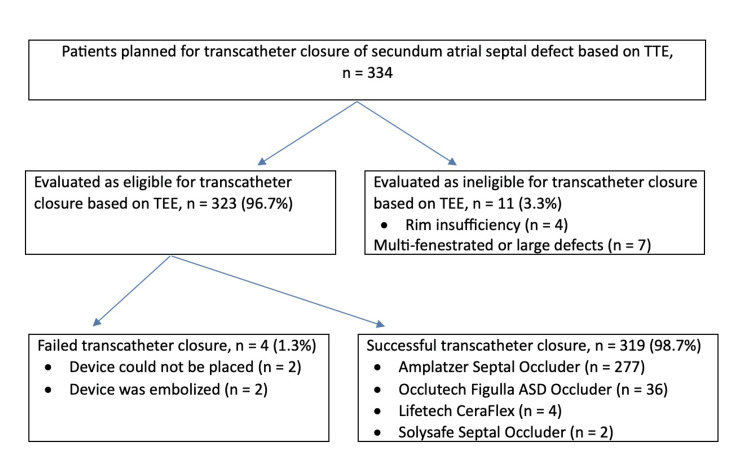 Figure 1
Peer Reviews
No public reviews on file for this paper yet. If you reviewed it on a platform where reviews are public (OpenReview, ICLR, NeurIPS, ICML), you can paste yours below so the community can read it here.
Videos
No videos yet. Explain this paper in a talk, walkthrough, or lecture? Add one.
Taxonomy
TopicsCardiovascular and Diving-Related Complications · Congenital Heart Disease Studies · Coronary Artery Anomalies