Sequences Related to Chimay Rhabdovirus Are Widely Distributed in Ixodes ricinus Ticks across England and Wales
Mirjam Schilling, Megan Golding, Ben P. Jones, Karen L. Mansfield, Sara Gandy, Jolyon Medlock, Nicholas Johnson

TL;DR
This study found that Chimay rhabdovirus is widely present in ticks across England and Wales, suggesting it is more common than previously known.
Contribution
The discovery of Chimay rhabdovirus in UK ticks expands understanding of its geographic distribution and tick microbiomes.
Findings
Chimay rhabdovirus sequences were detected in Ixodes ricinus ticks from multiple UK locations.
The virus showed high sequence identity with previously identified Chimay rhabdovirus in Belgian ticks.
Phlebo-like and nairo-like viruses were also prevalent in the tick microbiome.
Abstract
Ticks are the main arthropod vector of pathogens to humans and livestock in the British Isles. Despite their role as a vector of disease, many aspects of tick biology, ecology, and microbial association are poorly understood. To address this, we investigated the composition of the microbiome of adult and nymphal Ixodes ricinus ticks. The ticks were collected on a dairy farm in Southwest England and RNA extracted for whole genome sequencing. Sequences were detected from a range of microorganisms, particularly tick-associated viruses, bacteria, and nematodes. A majority of the viruses were attributed to phlebo-like and nairo-like virus groups, demonstrating a high degree of homology with the sequences present in I. ricinus from mainland Europe. A virus sharing a high sequence identity with Chimay rhabdovirus, previously identified in ticks from Belgium, was detected. Further…
Genes, proteins, chemicals, diseases, species, mutations and cell lines named across the full text — each resolved to its canonical identifier and authoritative record.
Click any figure to enlarge with its caption.
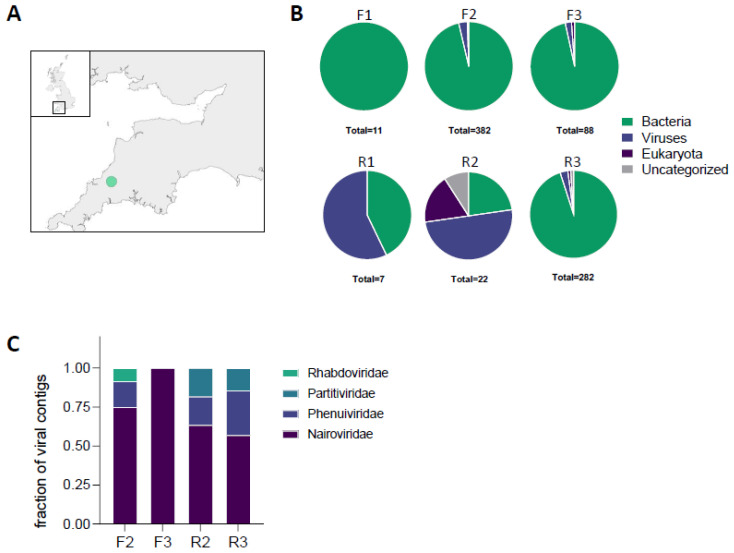 Figure 1
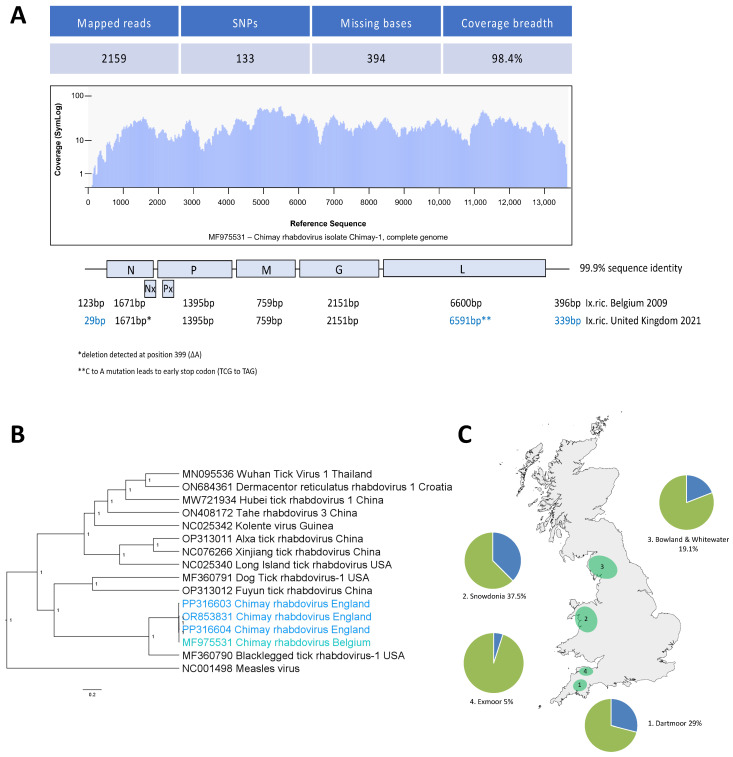 Figure 2
Peer Reviews
No public reviews on file for this paper yet. If you reviewed it on a platform where reviews are public (OpenReview, ICLR, NeurIPS, ICML), you can paste yours below so the community can read it here.
Videos
No videos yet. Explain this paper in a talk, walkthrough, or lecture? Add one.
Taxonomy
TopicsViral Infections and Vectors · Vector-borne infectious diseases · Vector-Borne Animal Diseases