A Population Pharmacokinetic Study to Compare a Novel Empagliflozin L-Proline Formulation with Its Conventional Formulation in Healthy Subjects
Xu Jiang, Kyung-Sang Yu, Dong Hyuk Nam, Jaeseong Oh

TL;DR
This study compares a new empagliflozin formulation with the conventional one in healthy subjects using pharmacokinetic analysis to assess absorption and drug behavior differences.
Contribution
The study introduces a novel empagliflozin L-proline cocrystal formulation and evaluates its pharmacokinetics using population modeling.
Findings
A two-compartment model with transit compartments adequately described empagliflozin's pharmacokinetics.
Body weight significantly influenced systemic clearance and peripheral volume of distribution.
The cocrystal formulation did not alter absorption or pharmacokinetic parameters compared to the conventional form.
Abstract
Empagliflozin is a sodium–glucose cotransporter 2 (SGLT2) inhibitor that is commonly used for the treatment of type 2 diabetes mellitus (T2DM). CKD-370 was newly developed as a cocrystal formulation of empagliflozin with co-former L-proline, which has been confirmed to be bioequivalent in South Korea. This study aimed to quantify the differences in the absorption phase and pharmacokinetic (PK) parameters of two empagliflozin formulations in healthy subjects by using population PK analysis. The plasma concentration data of empagliflozin were obtained from two randomized, open-label, crossover, phase 1 clinical studies in healthy Korean subjects after a single-dose administration. A population PK model was constructed by using a nonlinear mixed-effects (NLME) approach (Monolix Suite 2021R1). Interindividual variability (IIV) and interoccasion variability (IOV) were investigated. The final…
Genes, proteins, chemicals, diseases, species, mutations and cell lines named across the full text — each resolved to its canonical identifier and authoritative record.
Click any figure to enlarge with its caption.
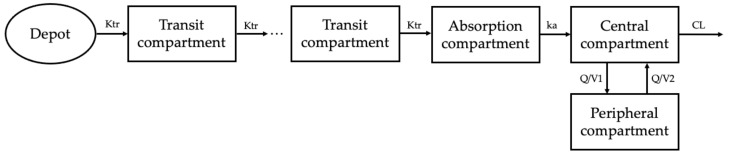 Figure 1
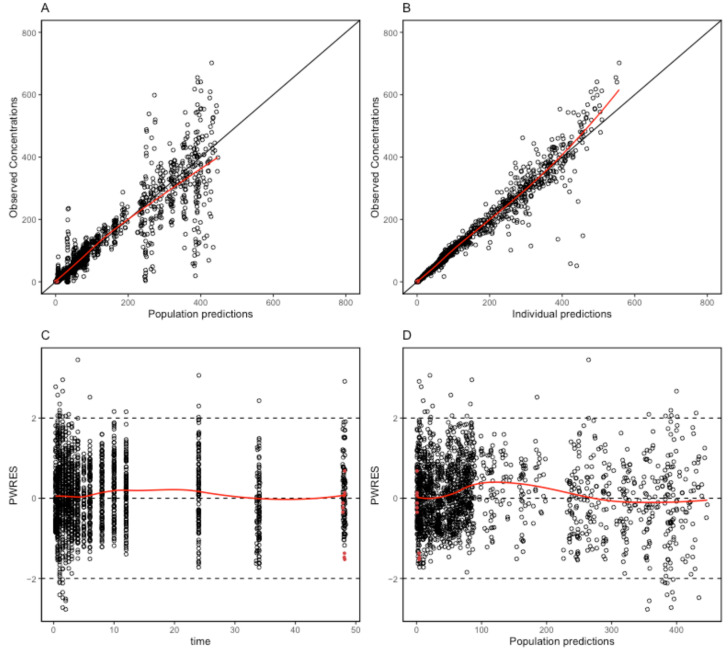 Figure 2
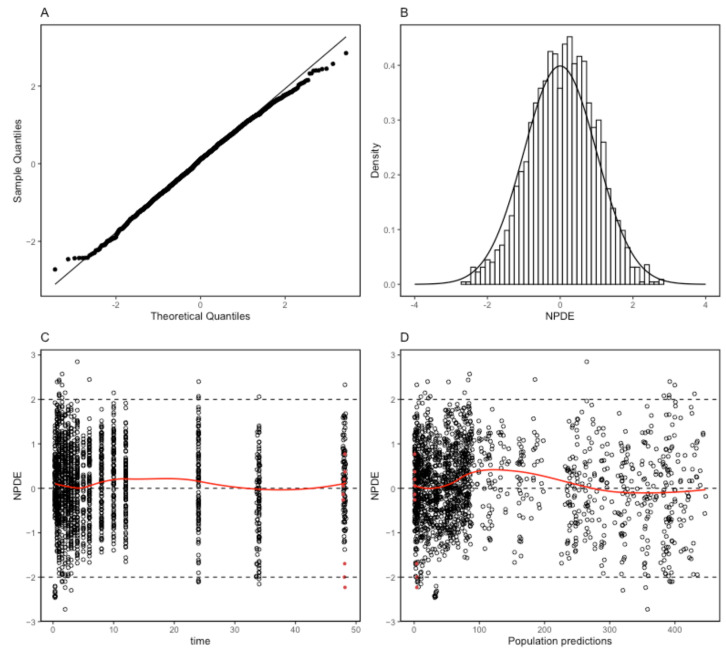 Figure 3
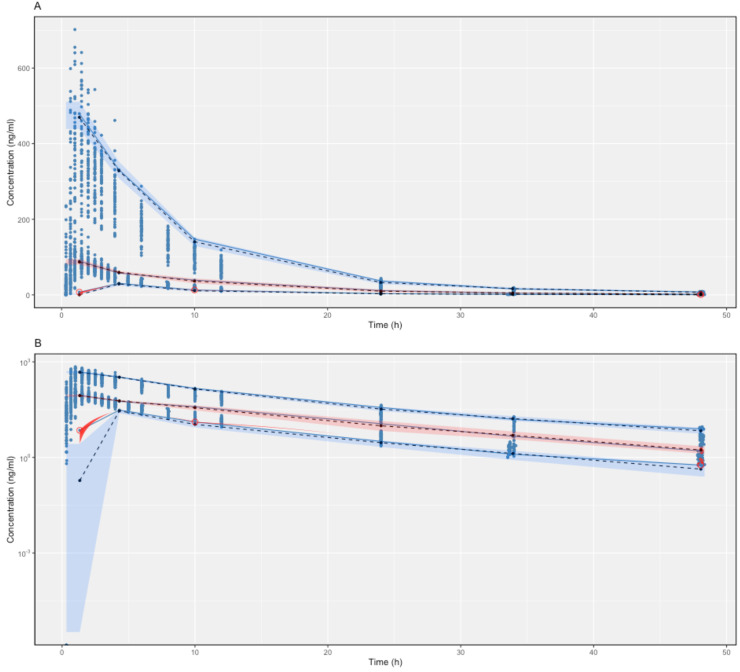 Figure 4
Peer Reviews
No public reviews on file for this paper yet. If you reviewed it on a platform where reviews are public (OpenReview, ICLR, NeurIPS, ICML), you can paste yours below so the community can read it here.
Videos
No videos yet. Explain this paper in a talk, walkthrough, or lecture? Add one.
Taxonomy
TopicsDiabetes Treatment and Management · Helicobacter pylori-related gastroenterology studies · Pancreatic function and diabetes