Molecular Characterization of Non-H5 and Non-H7 Avian Influenza Viruses from Non-Mallard Migratory Waterbirds of the North American Flyways, 2006–2011
Shahan Azeem, John Baroch, Deepanker Tewari, Kristy L. Pabilonia, Mary Killian, Birgit Bradel-Tretheway, Dong Sun, Sara Ghorbani-Nezami, Kyoung-Jin Yoon

TL;DR
This study characterizes non-H5 and non-H7 avian influenza viruses in non-mallard migratory waterbirds across North America to better understand their role in AIV ecology.
Contribution
The study provides new insights into AIV diversity and distribution in non-mallard migratory waterbirds, highlighting the Central Flyway as a key surveillance area.
Findings
The Central Flyway had the highest virus isolation positive rate (57.5%) compared to other flyways.
Common H and N combinations included H3N8, H4N6, and H4N8, with high genetic similarity between non-mallard and mallard isolates.
Hatch-year birds contributed to 70.1% of isolates, emphasizing their role in AIV transmission.
Abstract
The surveillance of migratory waterbirds (MWs) for avian influenza virus (AIV) is indispensable for the early detection of a potential AIV incursion into poultry. Surveying AIV infections and virus subtypes in understudied MW species could elucidate their role in AIV ecology. Oropharyngeal–cloacal (OPC) swabs were collected from non-mallard MWs between 2006 and 2011. OPC swabs (n = 1158) that molecularly tested positive for AIV (Cts ≤ 32) but tested negative for H5 and H7 subtypes were selected for virus isolation (VI). The selected samples evenly represented birds from all four North American flyways (Pacific, Central, Mississippi, and Atlantic). Eighty-seven low pathogenic AIV isolates, representing 31 sites in 17 states, were recovered from the samples. All isolates belonged to the North American lineage. The samples representing birds from the Central Flyway had the highest VI…
Genes, proteins, chemicals, diseases, species, mutations and cell lines named across the full text — each resolved to its canonical identifier and authoritative record.
Click any figure to enlarge with its caption.
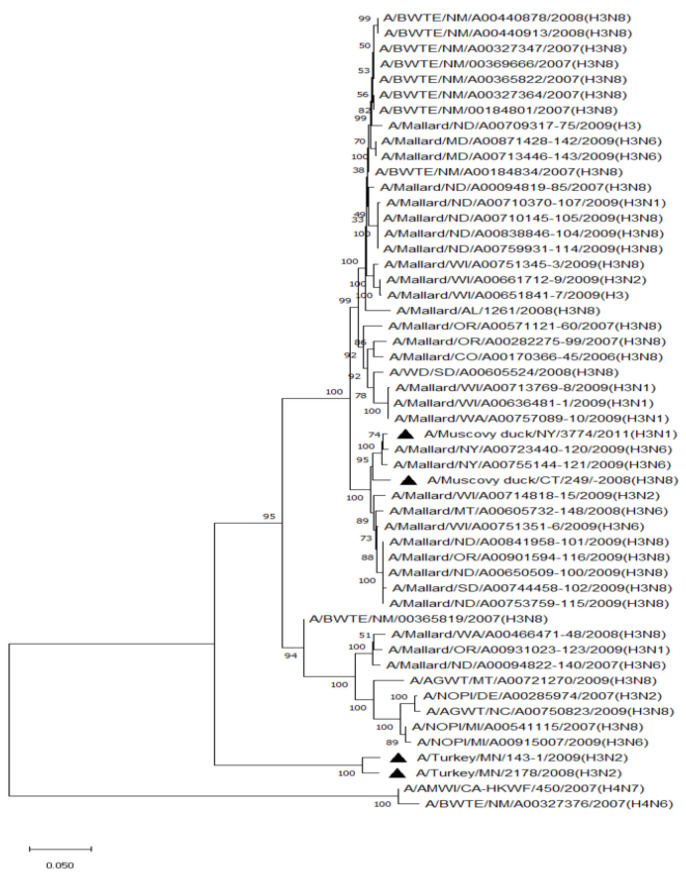 Figure 1
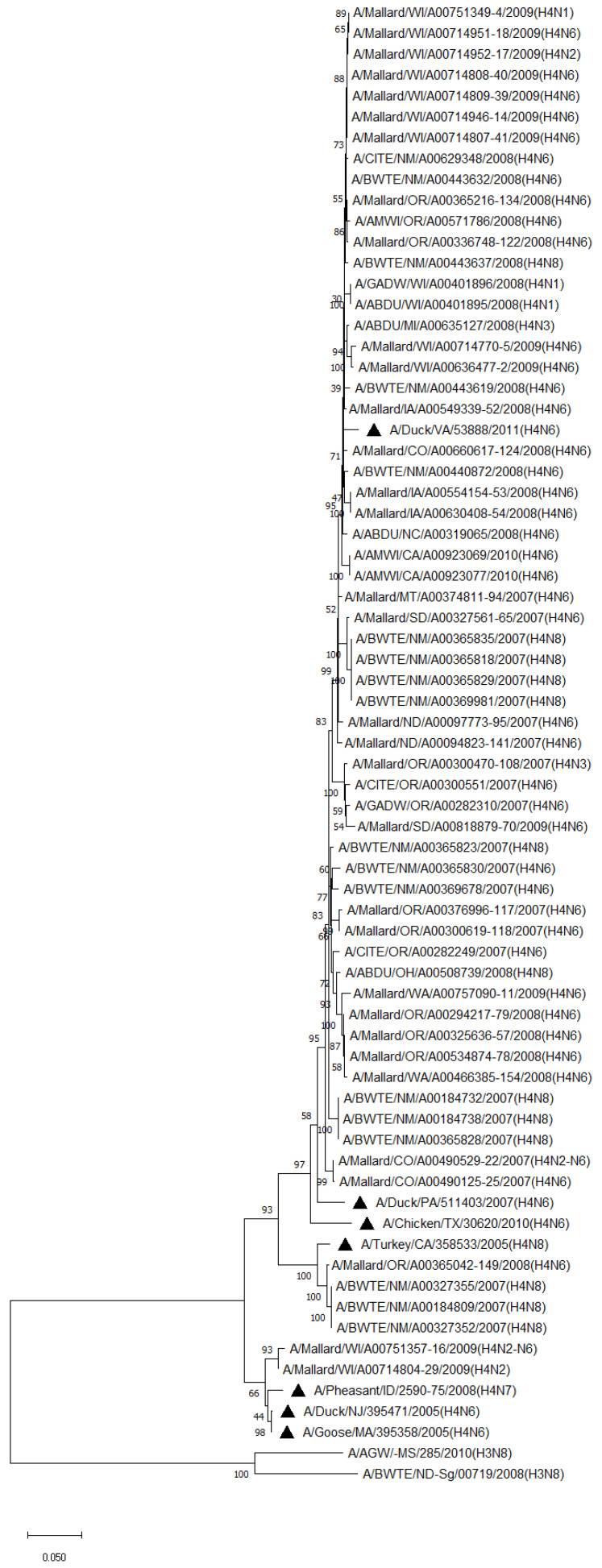 Figure 2
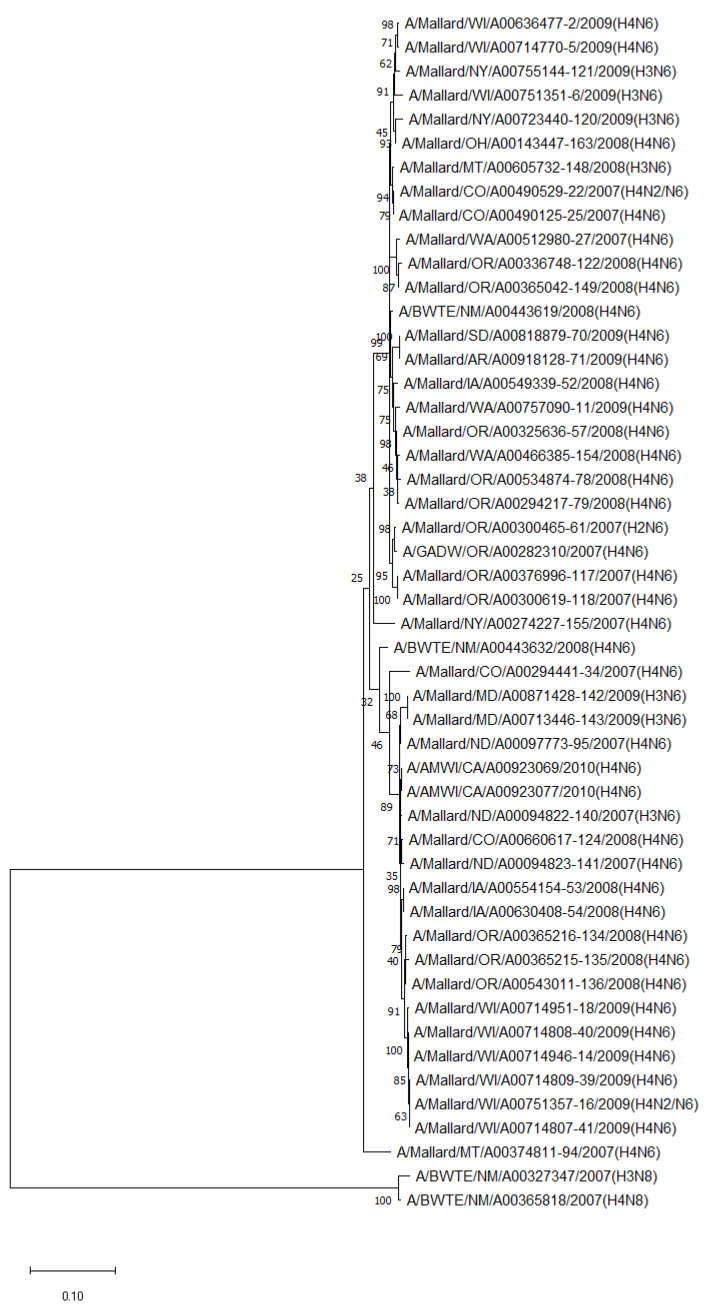 Figure 3
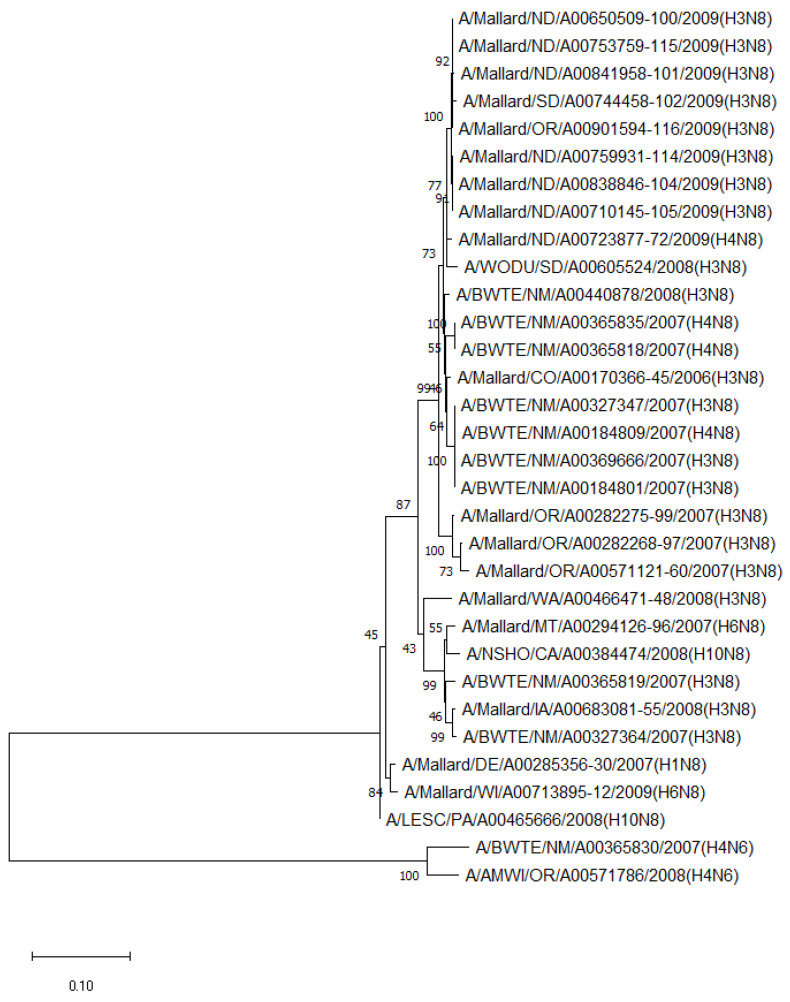 Figure 4
Peer Reviews
No public reviews on file for this paper yet. If you reviewed it on a platform where reviews are public (OpenReview, ICLR, NeurIPS, ICML), you can paste yours below so the community can read it here.
Videos
No videos yet. Explain this paper in a talk, walkthrough, or lecture? Add one.
Taxonomy
TopicsInfluenza Virus Research Studies · Viral Infections and Vectors · Animal Disease Management and Epidemiology