Role of TAM Receptors in Antimalarial Humoral Immune Response
Lijo John, Rahul Vijay

TL;DR
This review explores why the immune system's response to malaria is often ineffective, focusing on factors like hemolysis and plasmablast accumulation.
Contribution
The paper connects host intrinsic features to immune response gaps in malaria, offering new insights into suboptimal immunity.
Findings
Malaria's immune response is hindered by factors like hemolysis and hypoxia.
Short-lived plasmablasts may contribute to ineffective anti-Plasmodium immunity.
Germinal center responses are insufficient for sterilizing immunity against malaria.
Abstract
Immune response against malaria and the clearance of Plasmodium parasite relies on germinal-center-derived B cell responses that are temporally and histologically layered. Despite a well-orchestrated germinal center response, anti-Plasmodium immune response seldom offers sterilizing immunity. Recent studies report that certain pathophysiological features of malaria such as extensive hemolysis, hypoxia as well as the extrafollicular accumulation of short-lived plasmablasts may contribute to this suboptimal immune response. In this review, we summarize some of those studies and attempt to connect certain host intrinsic features in response to the malarial disease and the resultant gaps in the immune response.
Genes, proteins, chemicals, diseases, species, mutations and cell lines named across the full text — each resolved to its canonical identifier and authoritative record.
Click any figure to enlarge with its caption.
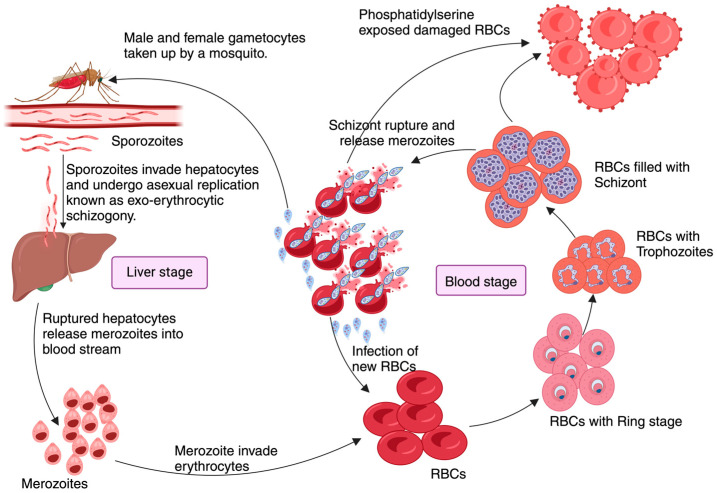 Figure 1
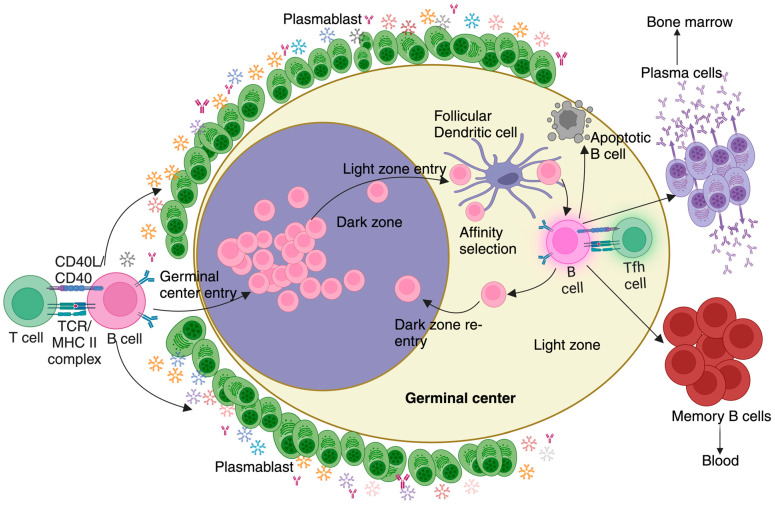 Figure 2
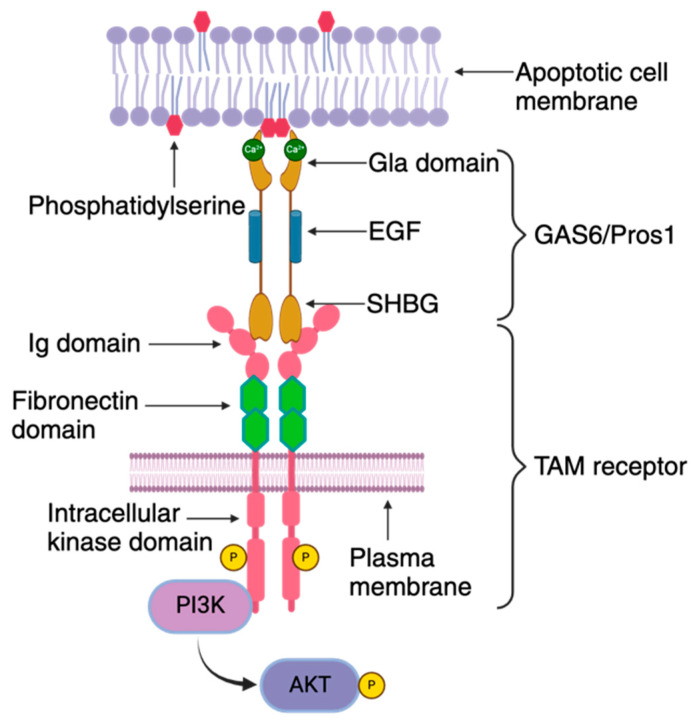 Figure 3
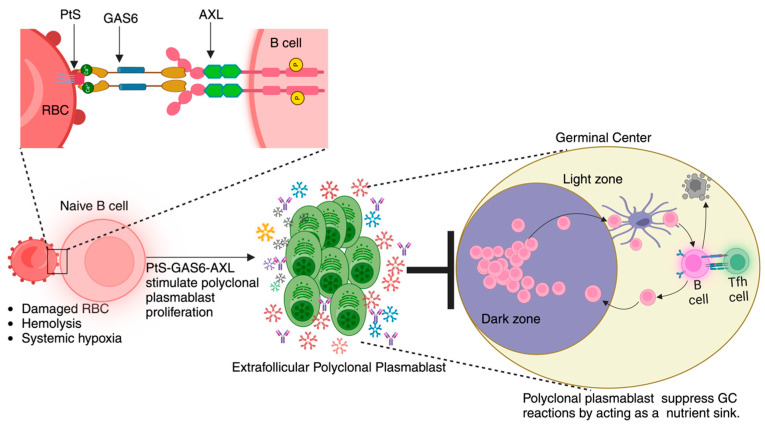 Figure 4
Peer Reviews
No public reviews on file for this paper yet. If you reviewed it on a platform where reviews are public (OpenReview, ICLR, NeurIPS, ICML), you can paste yours below so the community can read it here.
Videos
No videos yet. Explain this paper in a talk, walkthrough, or lecture? Add one.
Taxonomy
TopicsComplement system in diseases · Phagocytosis and Immune Regulation · Malaria Research and Control