First National Prevalence in Italian Horse Population and Phylogenesis Highlight a Fourth Sub-Type Candidate of Equine Hepacivirus
Roberto Nardini, Giulia Pacchiarotti, Valentina Svicher, Romina Salpini, Maria Concetta Bellocchi, Raffaella Conti, Marcello Giovanni Sala, Davide La Rocca, Luca Carioti, Antonella Cersini, Giuseppe Manna, Maria Teresa Scicluna

TL;DR
This study reports the first national prevalence of equine hepacivirus in Italy and suggests the possible existence of a fourth sub-type.
Contribution
The study identifies a potential fourth sub-type of equine hepacivirus through phylogenetic analysis in the Italian horse population.
Findings
The national prevalence of EqHV in Italy is 4.27% with no significant differences among production categories or regions.
Phylogenetic analysis suggests the presence of a possible fourth EqHV sub-type in Italy.
Mutations in the NS3 protein may affect its binding affinity to viral RNA.
Abstract
Equine hepacivirus (EqHV, Flaviviridae, hepacivirus) is a small, enveloped RNA virus generally causing sub-clinical hepatitis with occasional fatalities. EqHV is reported in equids worldwide, but for Italy data are limited. To address this, a survey study was set up to estimate prevalence at a national level and among different production categories (equestrian; competition; work and meat; reproduction) and national macro-regions (North, Central, South, and Islands). Data obtained testing 1801 horse serum samples by Real-Time RT PCR were compared within the categories and regions. The NS3 fragment of the PCR-positive samples was sequenced by Sanger protocol for phylogenetic and mutational analysis. The tertiary structure of the NS3 protein was also assessed. The estimated national prevalence was 4.27% [1.97–6.59, 95% CI] and no statistical differences were detected among production…
Genes, proteins, chemicals, diseases, species, mutations and cell lines named across the full text — each resolved to its canonical identifier and authoritative record.
Click any figure to enlarge with its caption.
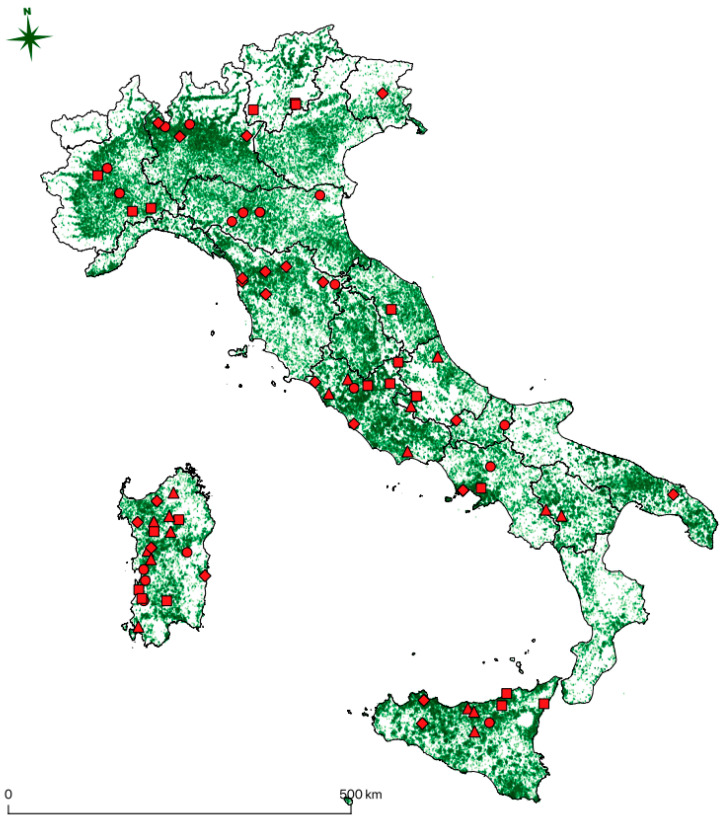 Figure 1
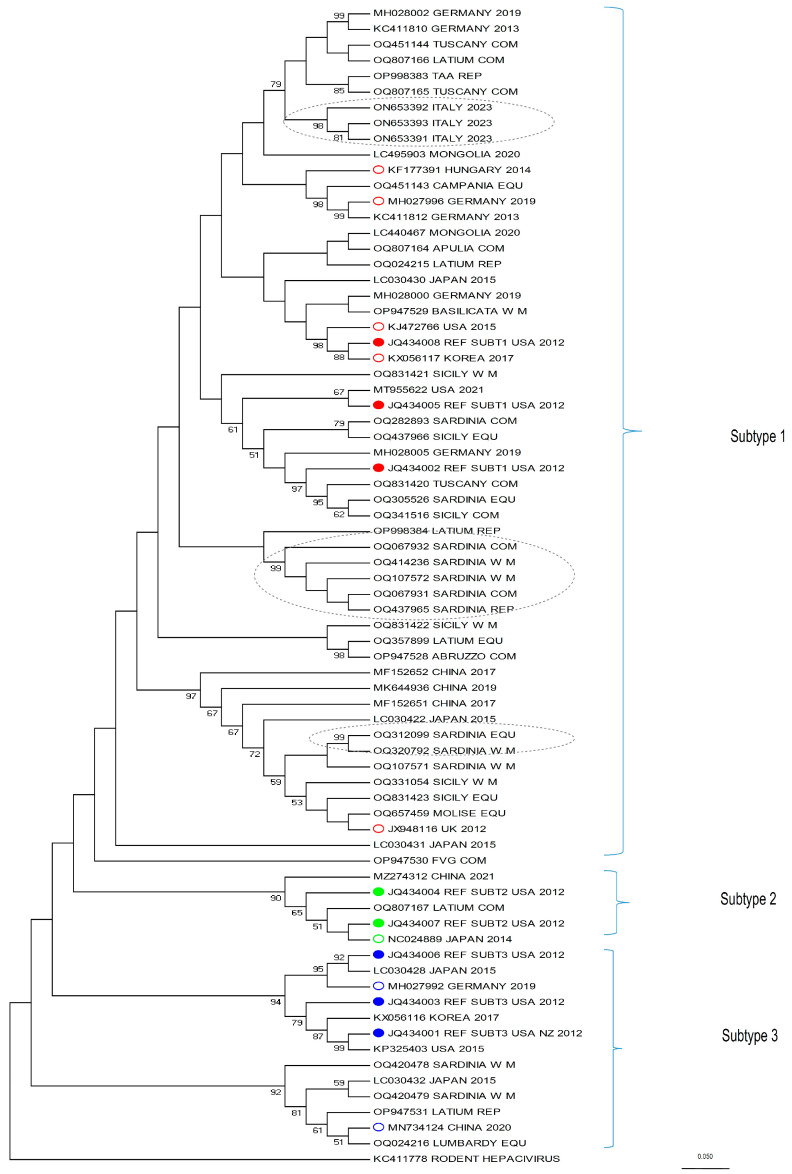 Figure 2
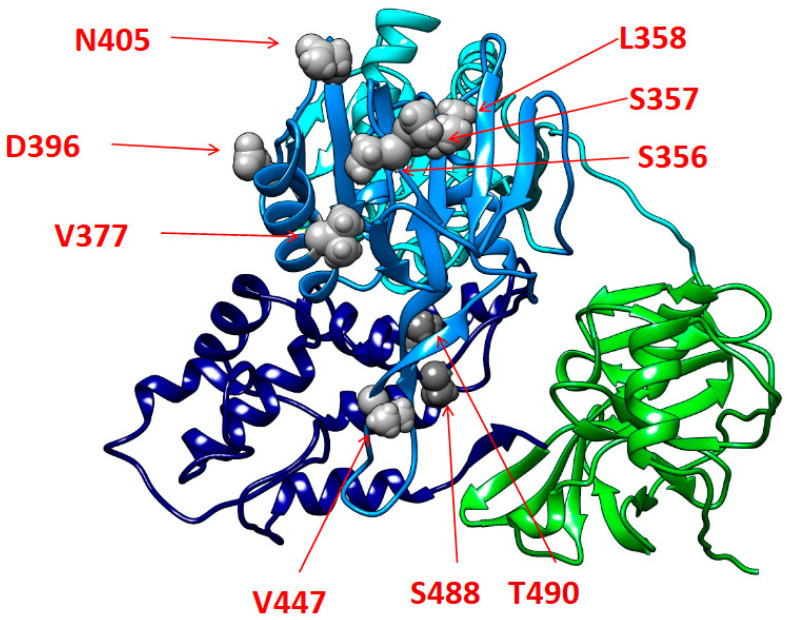 Figure 3
Peer Reviews
No public reviews on file for this paper yet. If you reviewed it on a platform where reviews are public (OpenReview, ICLR, NeurIPS, ICML), you can paste yours below so the community can read it here.
Videos
No videos yet. Explain this paper in a talk, walkthrough, or lecture? Add one.
Taxonomy
TopicsRuminant Nutrition and Digestive Physiology · Cancer-related molecular mechanisms research · Genetic and phenotypic traits in livestock