Valp1, a Newly Identified Temperate Phage Facilitating Coexistence of Lysogenic and Non-Lysogenic Populations of Vibrio anguillarum
Manuel Arce, Guillermo Venegas, Karla Paez, Simone Latz, Paola Navarrete, Mario Caruffo, Carmen Feijoo, Katherine García, Roberto Bastías

TL;DR
A new temperate phage, Valp1, helps maintain a balance between lysogenic and non-lysogenic populations of the fish pathogen Vibrio anguillarum.
Contribution
Valp1 is a newly identified phage that enables coexistence of different V. anguillarum populations through a stable equilibrium mechanism.
Findings
Valp1 inhibits the growth of the virulent V. anguillarum strain PF4 but not its lysogenic derivative P1.1.
Co-cultures of PF4 and P1.1 with Valp1 maintain a stable population balance for 10 hours and across five subcultures.
Non-lysogenic PF4 strains become resistant to Valp1, while the phage reaches high concentrations (~108 PFU/mL).
Abstract
Vibrio anguillarum is a pathogen for several fish and shellfish species. Its ecology is influenced by diverse factors, including bacteriophages. Here, we identify and characterize a new temperate bacteriophage (Valp1) of V. anguillarum. Valp1 is a myovirus with a 60 nm head and a 90 nm contractile tail. Its double-stranded DNA genome of 42,988 bp contains 68 genes, including a protelomerase gene, typical of telomeric phages. Valp1 inhibits the growth of the virulent strain of V. anguillarum PF4, while the derived lysogenic strain P1.1 presents a slight reduction in its growth but is not affected by the presence of Valp1. Both strains present similar virulence in a larval zebrafish (Danio rerio) model, and only slight differences have been observed in their biochemical profile. Co-culture assays reveal that PF4 and P1.1 can coexist for 10 h in the presence of naturally induced Valp1,…
Genes, proteins, chemicals, diseases, species, mutations and cell lines named across the full text — each resolved to its canonical identifier and authoritative record.
Click any figure to enlarge with its caption.
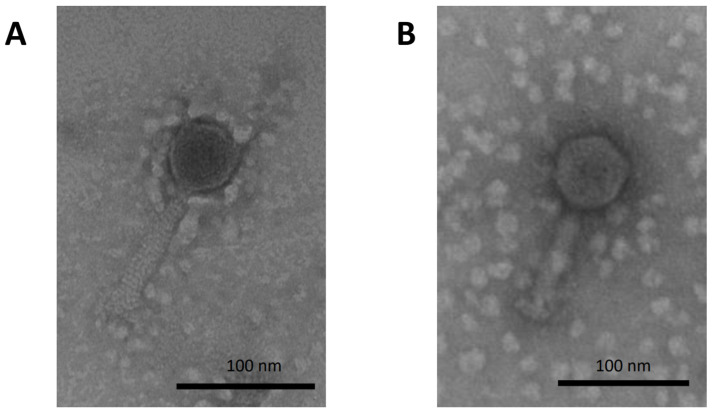 Figure 1
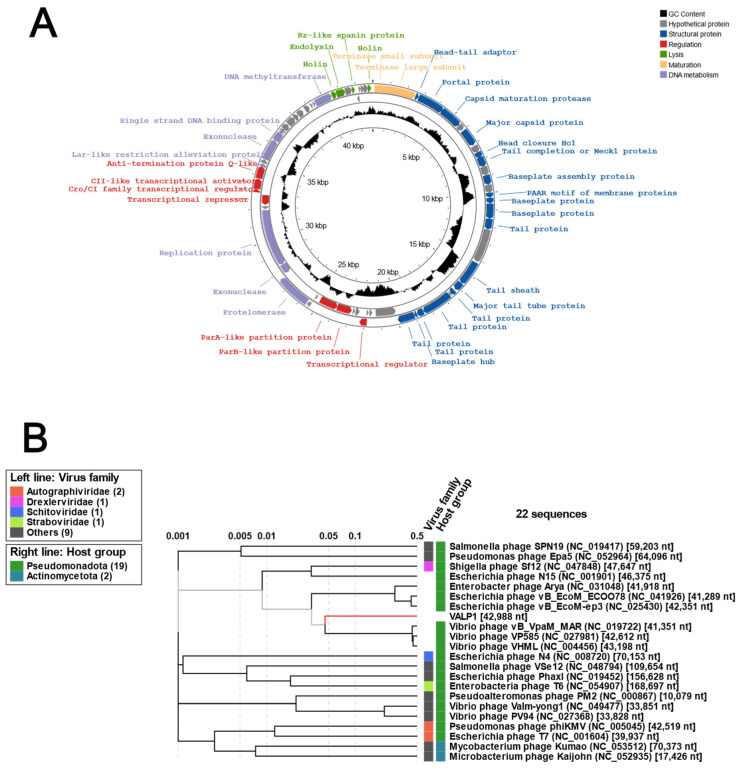 Figure 2
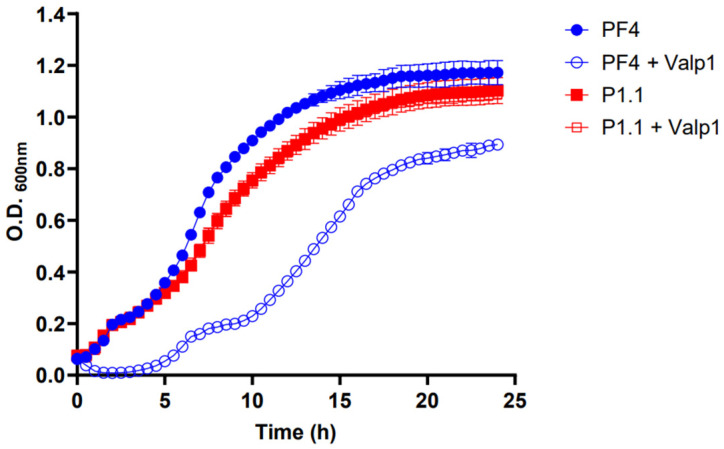 Figure 3
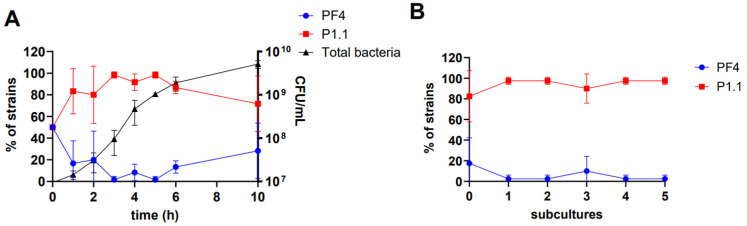 Figure 4
Peer Reviews
No public reviews on file for this paper yet. If you reviewed it on a platform where reviews are public (OpenReview, ICLR, NeurIPS, ICML), you can paste yours below so the community can read it here.
Videos
No videos yet. Explain this paper in a talk, walkthrough, or lecture? Add one.
Taxonomy
TopicsBacteriophages and microbial interactions · Aquaculture disease management and microbiota · Vibrio bacteria research studies