Analysis of Antimicrobial Resistance in Bacterial Pathogens Recovered from Food and Human Sources: Insights from 639,087 Bacterial Whole-Genome Sequences in the NCBI Pathogen Detection Database
Ashley L. Cooper, Alex Wong, Sandeep Tamber, Burton W. Blais, Catherine D. Carrillo

TL;DR
This study analyzes antimicrobial resistance genes in bacteria from food and human sources using genome data, revealing differences in resistance patterns and highlighting data gaps.
Contribution
The study provides a comprehensive analysis of antimicrobial resistance gene prevalence in foodborne and clinical bacterial isolates using a large genomic dataset.
Findings
Foodborne isolates showed varied resistance gene carriage depending on genus/species and source.
Clinical isolates had higher biocide resistance in Bacillus and Escherichia compared to food sources.
Data repositories are biased toward clinical isolates and specific pathogenic species.
Abstract
Understanding the role of foods in the emergence and spread of antimicrobial resistance necessitates the initial documentation of antibiotic resistance genes within bacterial species found in foods. Here, the NCBI Pathogen Detection database was used to query antimicrobial resistance gene prevalence in foodborne and human clinical bacterial isolates. Of the 1,843,630 sequence entries, 639,087 (34.7%) were assigned to foodborne or human clinical sources with 147,788 (23.14%) from food and 427,614 (76.88%) from humans. The majority of foodborne isolates were either Salmonella (47.88%), Campylobacter (23.03%), Escherichia (11.79%), or Listeria (11.3%), and the remaining 6% belonged to 20 other genera. Most foodborne isolates were from meat/poultry (95,251 or 64.45%), followed by multi-product mixed food sources (29,892 or 20.23%) and fish/seafood (6503 or 4.4%); however, the most prominent…
Genes, proteins, chemicals, diseases, species, mutations and cell lines named across the full text — each resolved to its canonical identifier and authoritative record.
Click any figure to enlarge with its caption.
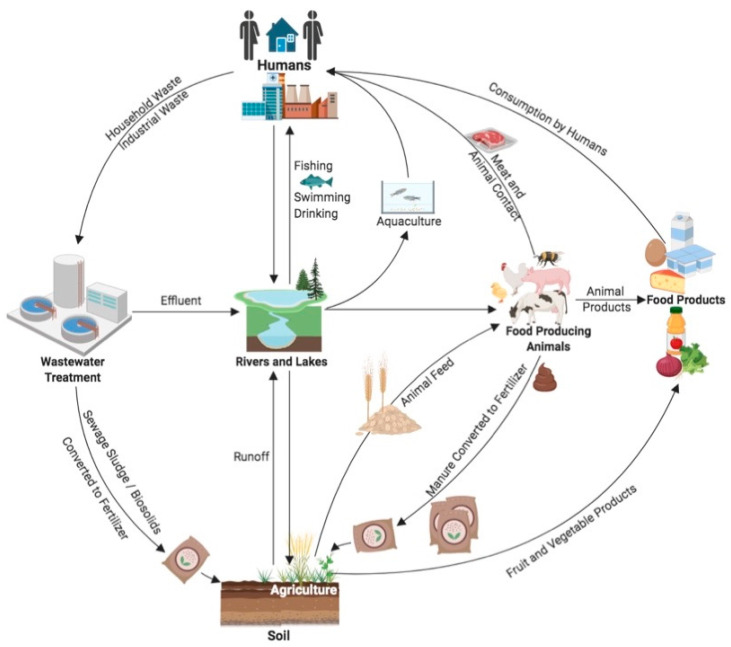 Figure 1
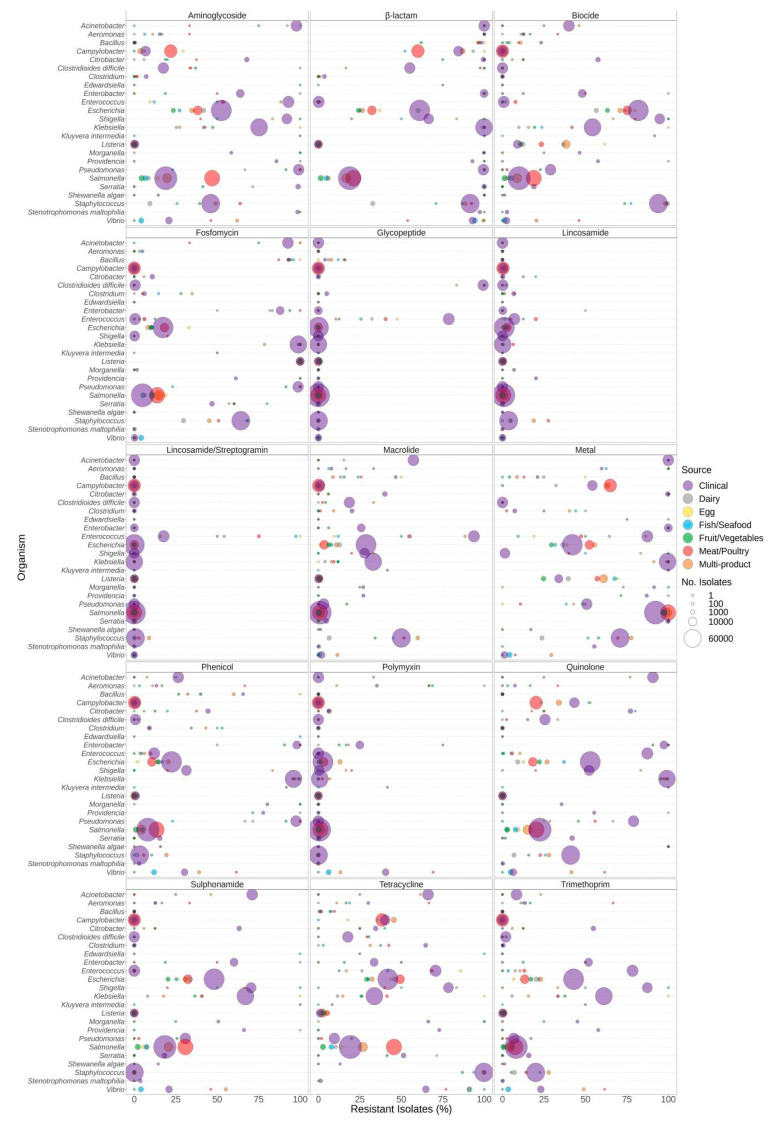 Figure 2
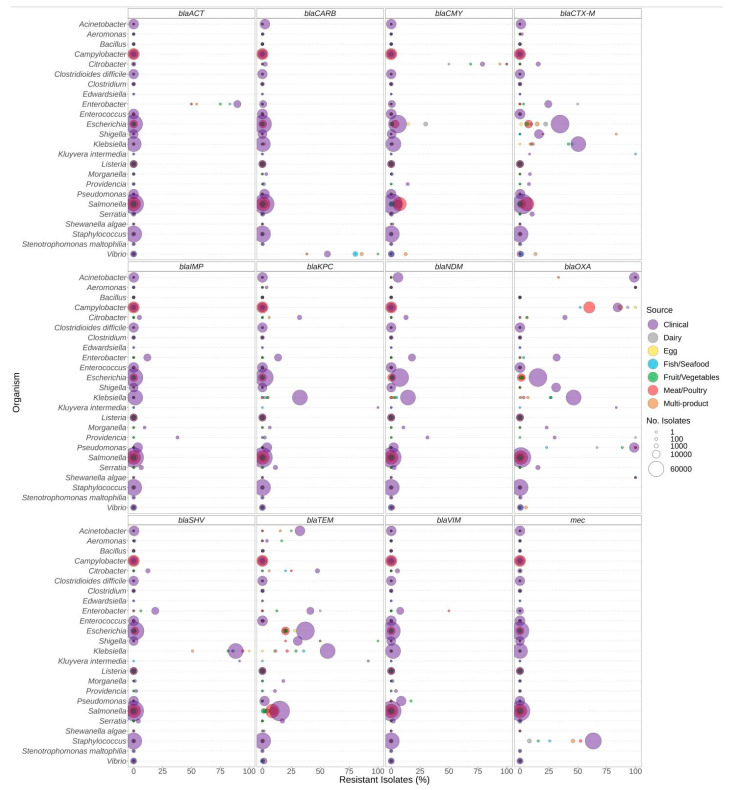 Figure 3
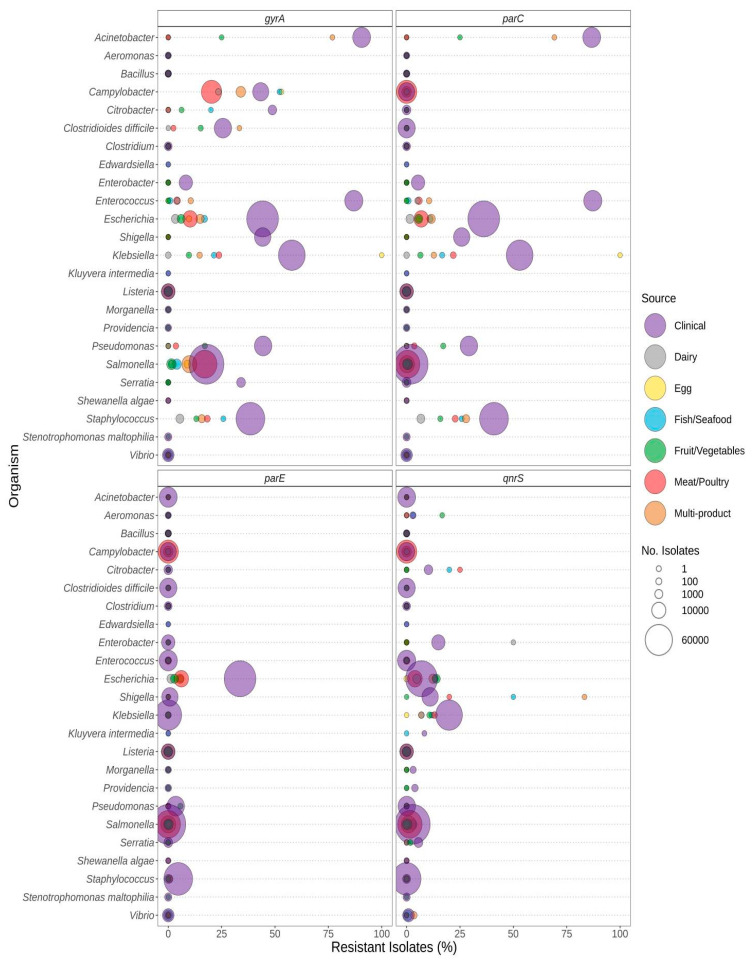 Figure 4
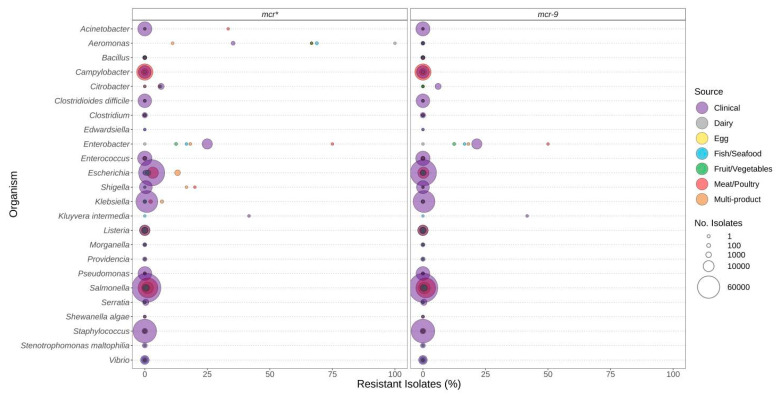 Figure 5
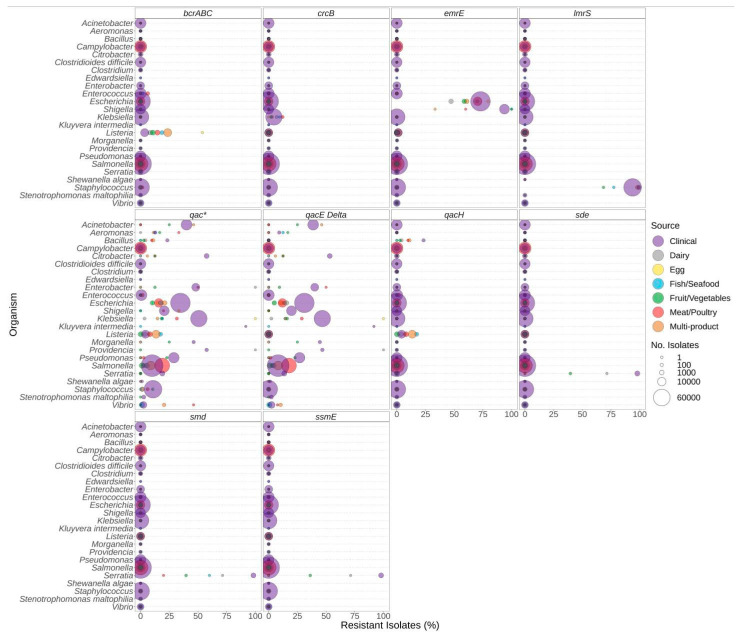 Figure 6
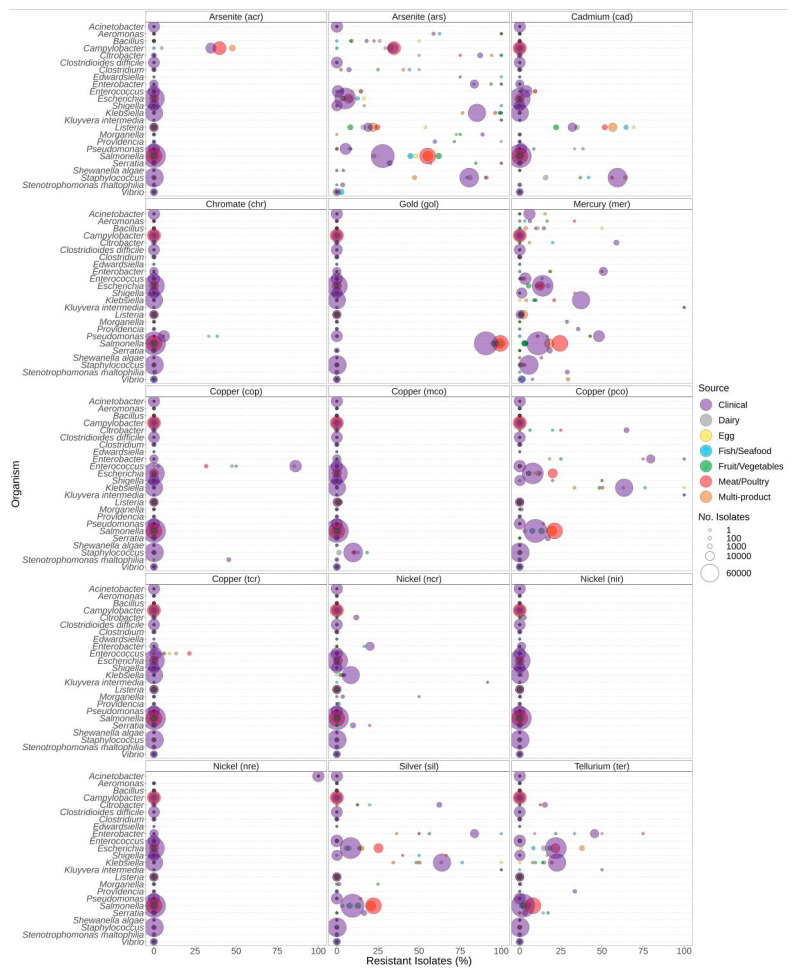 Figure 7
Peer Reviews
No public reviews on file for this paper yet. If you reviewed it on a platform where reviews are public (OpenReview, ICLR, NeurIPS, ICML), you can paste yours below so the community can read it here.
Videos
No videos yet. Explain this paper in a talk, walkthrough, or lecture? Add one.
Taxonomy
TopicsSalmonella and Campylobacter epidemiology · Pharmaceutical and Antibiotic Environmental Impacts · Antimicrobial agents and applications