High-Throughput Screening Method Using Escherichia coli Keio Mutants for Assessing Primary Damage Mechanism of Antimicrobials
José A. Martínez-Álvarez, Marcos Vicente-Gómez, Rodolfo García-Contreras, Thomas K. Wood, Fátima Berenice Ramírez Montiel, Naurú Idalia Vargas-Maya, Beatriz Liliana España-Sánchez, Ángeles Rangel-Serrano, Felipe Padilla-Vaca, Bernardo Franco

TL;DR
This study uses E. coli mutants to determine how silver nanoparticles damage DNA and identifies new pathways involved in resistance.
Contribution
A high-throughput method using E. coli Keio mutants to assess the primary damage mechanism of antimicrobials.
Findings
Silver nanoparticles primarily cause DNA damage through double-strand breaks and base modifications.
The recA, uvrC, mutL, and nfo mutants were most susceptible to silver nanoparticles.
KatG catalase may act as a cellular chaperone, similar to findings in Neurospora crassa.
Abstract
The Escherichia coli Keio mutant collection has been a tool for assessing the role of specific genes and determining their role in E. coli physiology and uncovering novel functions. In this work, specific mutants in the DNA repair pathways and oxidative stress response were evaluated to identify the primary targets of silver nanoparticles (NPs) and their mechanism of action. The results presented in this work suggest that NPs mainly target DNA via double-strand breaks and base modifications since the recA, uvrC, mutL, and nfo mutants rendered the most susceptible phenotype, rather than involving the oxidative stress response. Concomitantly, during the establishment of the control conditions for each mutant, the katG and sodA mutants showed a hypersensitive phenotype to mitomycin C, an alkylating agent. Thus, we propose that KatG catalase plays a key role as a cellular chaperone, as…
Genes, proteins, chemicals, diseases, species, mutations and cell lines named across the full text — each resolved to its canonical identifier and authoritative record.
Click any figure to enlarge with its caption.
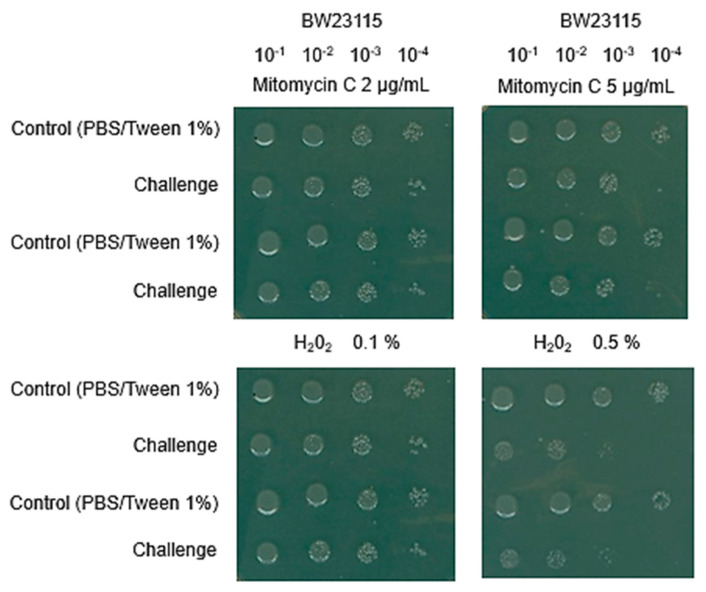 Figure 1
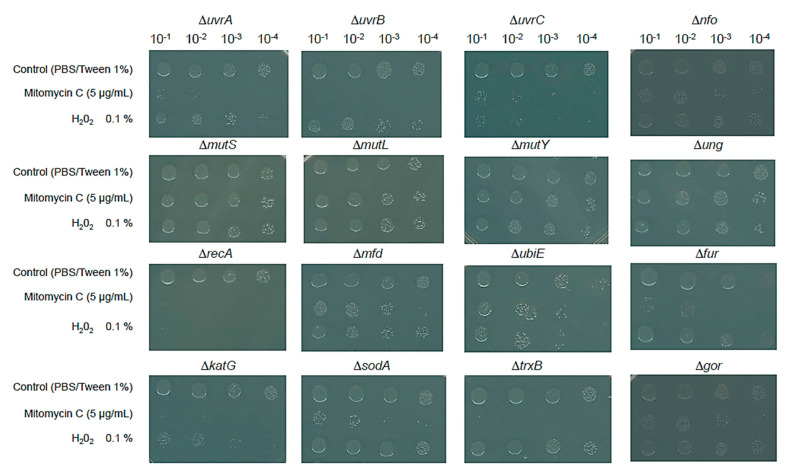 Figure 2
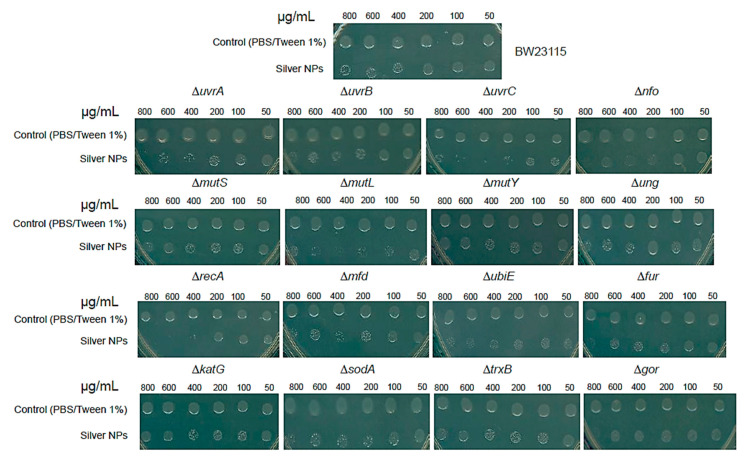 Figure 3
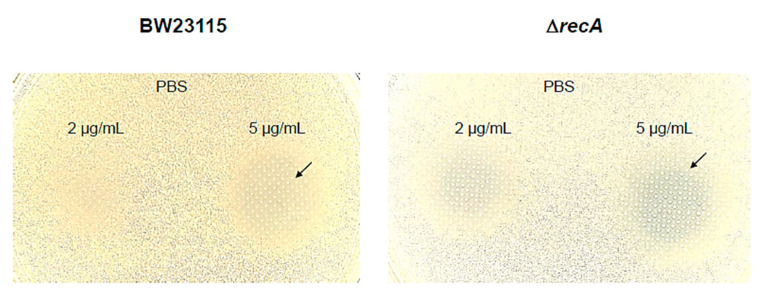 Figure 4
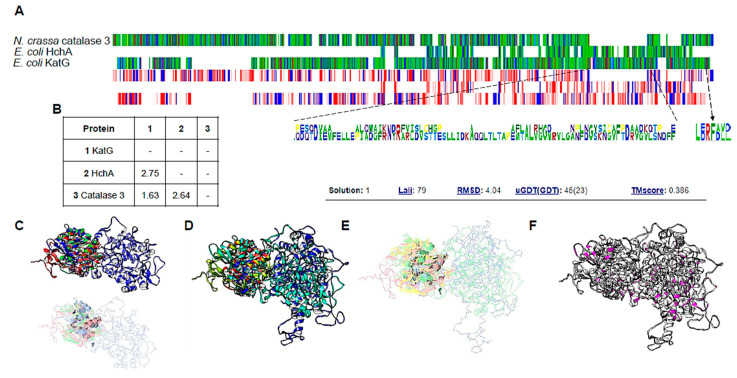 Figure 5
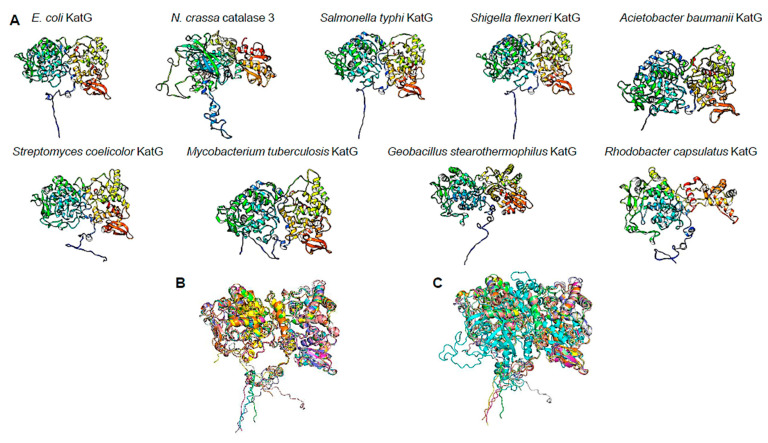 Figure 6
Peer Reviews
No public reviews on file for this paper yet. If you reviewed it on a platform where reviews are public (OpenReview, ICLR, NeurIPS, ICML), you can paste yours below so the community can read it here.
Videos
No videos yet. Explain this paper in a talk, walkthrough, or lecture? Add one.
Taxonomy
TopicsAntibiotic Resistance in Bacteria · Advanced biosensing and bioanalysis techniques · Nanoparticles: synthesis and applications