Influence of Intraoperative Active and Passive Breaks in Simulated Minimally Invasive Procedures on Surgeons’ Perceived Discomfort, Performance, and Workload
Rosina Bonsch, Robert Seibt, Bernhard Krämer, Monika A. Rieger, Benjamin Steinhilber, Tessy Luger

TL;DR
This study found that both active and passive breaks during simulated laparoscopic surgery did not significantly reduce surgeons' discomfort or workload, but were generally preferred and seen as feasible for real-life use.
Contribution
The study introduces a comparison of active and passive intraoperative breaks in simulated laparoscopic surgery to assess their impact on surgeon discomfort and performance.
Findings
Both active and passive breaks did not significantly reduce perceived discomfort or workload during 90-minute simulations.
Participants slightly preferred active breaks and were more likely to use them in real surgeries lasting over 90 minutes.
Performance in key tasks like hot wire and peg transfer was unaffected by the type of break.
Abstract
Laparoscopic surgeons are at high risk of experiencing musculoskeletal discomfort, which is considered the result of long-lasting static and awkward body postures. We primarily aimed to evaluate whether passive and active work breaks can reduce ratings of perceived discomfort among laparoscopic surgeons compared with no work breaks. We secondarily aimed to examine potential differences in performance and workload across work break conditions and requested the surgeons evaluate working with passive or active work breaks. Following a balanced, randomized cross-over design, laparoscopic surgeons performed three 90 min laparoscopic simulations without and with 2.5 min passive or active work breaks after 30 min work blocks on separate days. The simulation included the following tasks: a hot wire, peg transfer, pick-and-place, pick-and-tighten, pick-and-thread, and pull-and-stick tasks.…
Genes, proteins, chemicals, diseases, species, mutations and cell lines named across the full text — each resolved to its canonical identifier and authoritative record.
Click any figure to enlarge with its caption.
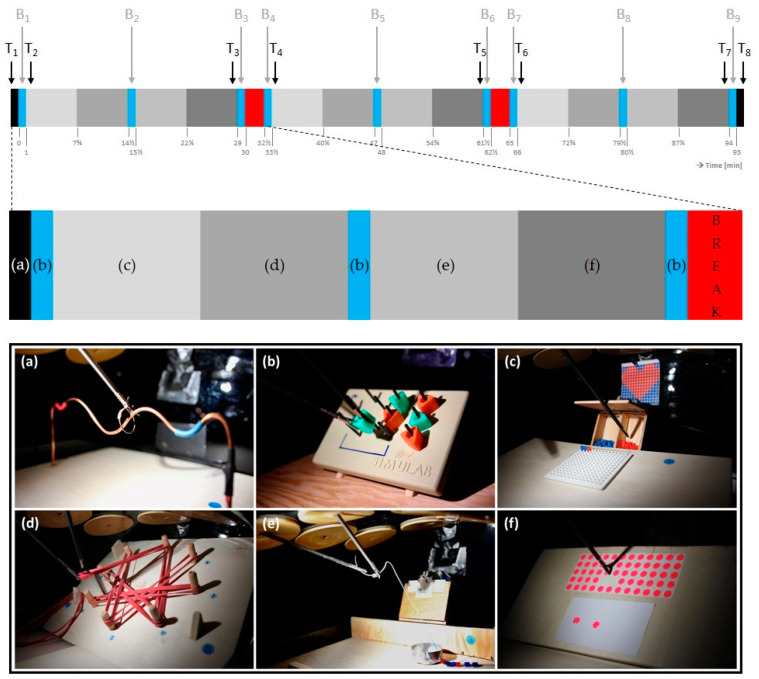 Figure 1
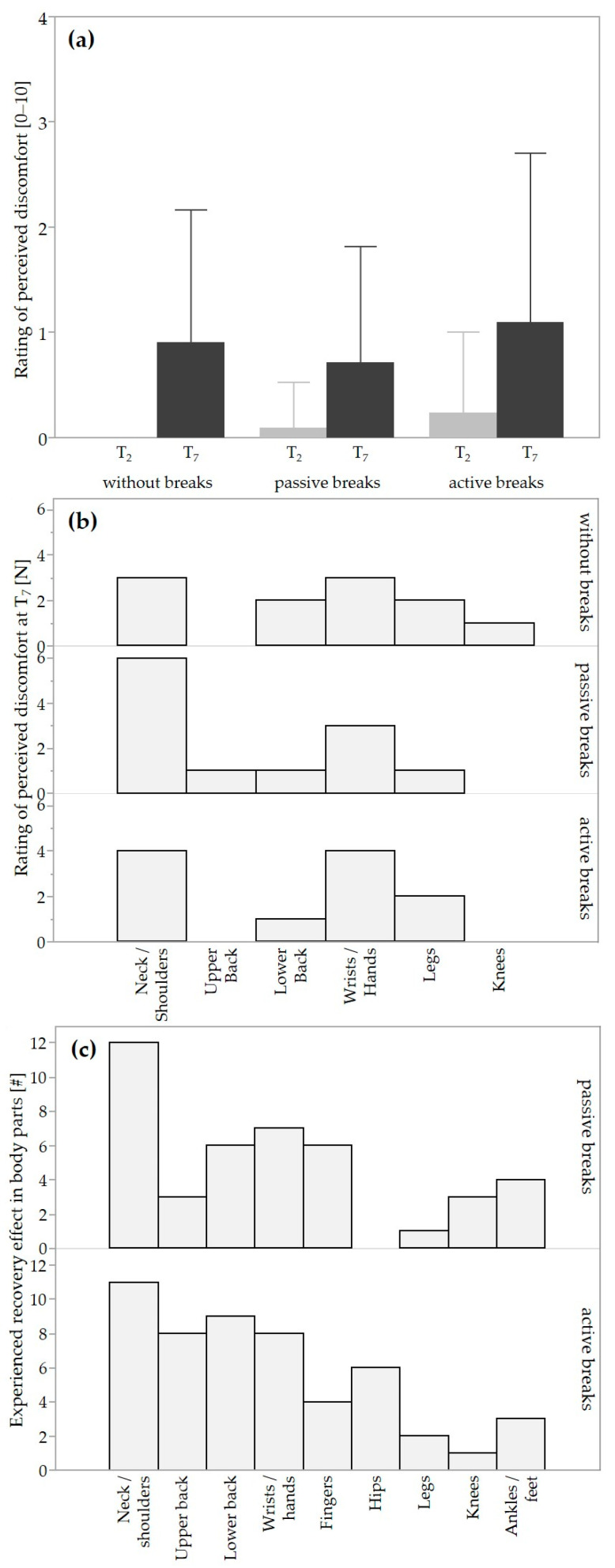 Figure 2
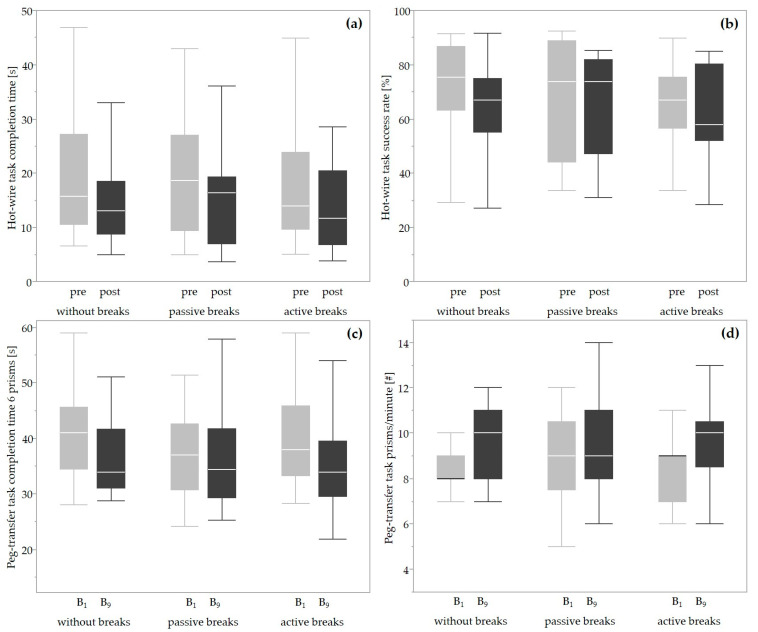 Figure 3
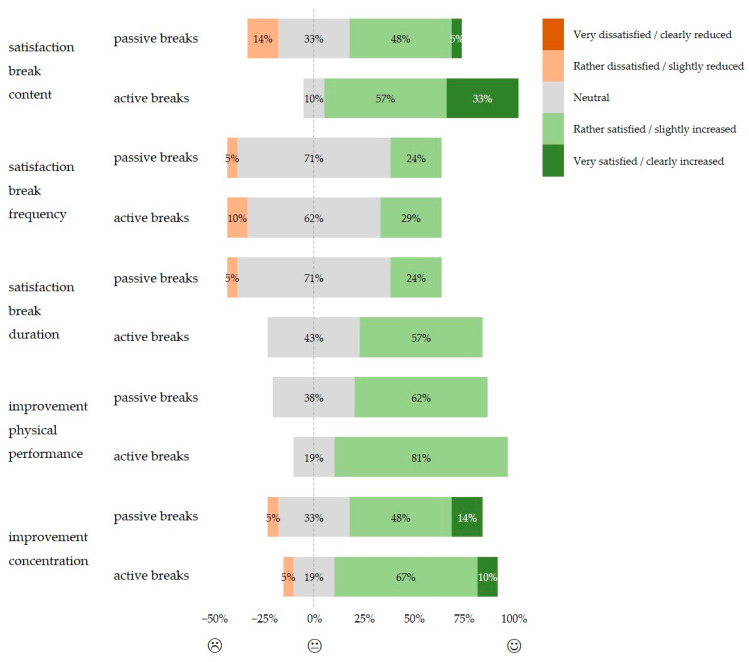 Figure 4
Peer Reviews
No public reviews on file for this paper yet. If you reviewed it on a platform where reviews are public (OpenReview, ICLR, NeurIPS, ICML), you can paste yours below so the community can read it here.
Videos
No videos yet. Explain this paper in a talk, walkthrough, or lecture? Add one.
Taxonomy
TopicsSurgical Simulation and Training · Musculoskeletal pain and rehabilitation · Cardiac, Anesthesia and Surgical Outcomes