Intraoperative Fracture during the Insertion of Advanced Locking Screws (T2 Alpha Femur Retrograde Intramedullary Nailing System): Report of Two Cases and Identifying Causes and Prevention
Takashi Higuchi, Atsushi Taninaka, Rikuto Yoshimizu, Katsuhiro Hayashi, Shinji Miwa, Norio Yamamoto, Hiroyuki Tsuchiya, Satoru Demura

TL;DR
This paper reports two cases where intraoperative fractures occurred during the use of advanced locking screws in a femur nailing system and suggests ways to prevent such fractures.
Contribution
The paper identifies the cause of intraoperative fractures during advanced locking screw insertion and provides prevention strategies.
Findings
Intraoperative fractures occurred during the insertion of advanced locking screws in two elderly patients.
Failure to enlarge the screw hole with a counterbore drill can lead to fractures due to excessive torque.
Proper use of fluoroscopy and manual enlargement of the bony foramen can prevent such fractures.
Abstract
Background: Recently, the T2 alpha nailing system (Stryker, Inc.), which has advanced locking screws that can attach a screw to a rod, has been used worldwide and is expected to improve fracture fixation. We analyzed two cases of supracondylar femoral fractures in older adult patients, in which intraoperative fractures occurred during the insertion of advanced locking screws of the T2 alpha femur retrograde intramedullary nail. Case presentation: A 93-year-old and an 82-year-old woman each underwent T2 alpha femur retrograde nail fixation for supracondylar femur fractures at separate hospitals, and advanced locking screws were used as the proximal transverse locking screws. In both patients, a fracture line was observed at the proximal screw postoperatively, and the fractures were refixed with distal cable wiring and/or femoral distal plates. The patients were subsequently discharged…
Genes, proteins, chemicals, diseases, species, mutations and cell lines named across the full text — each resolved to its canonical identifier and authoritative record.
Click any figure to enlarge with its caption.
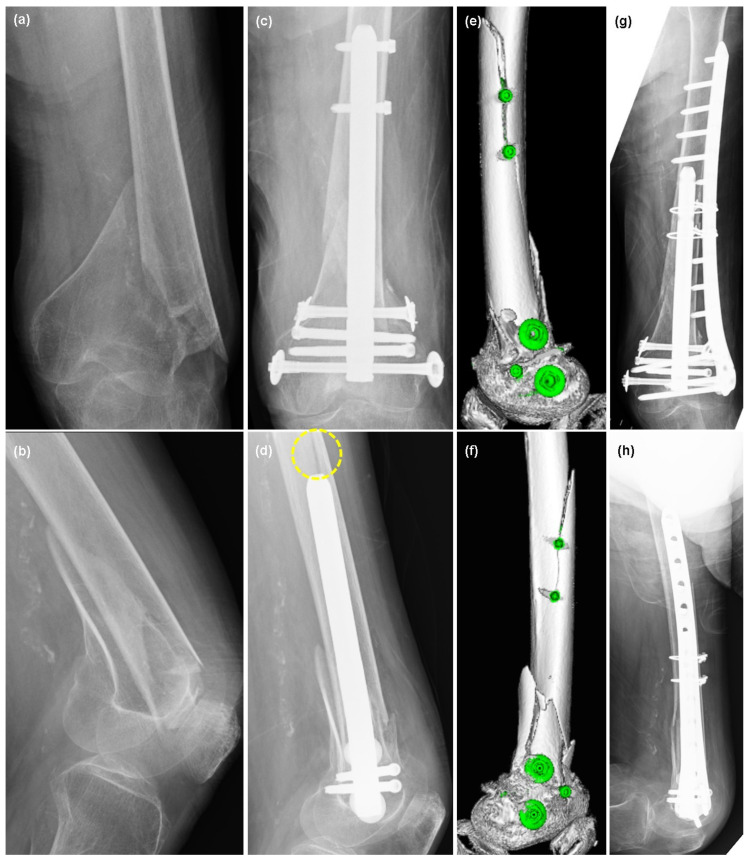 Figure 1
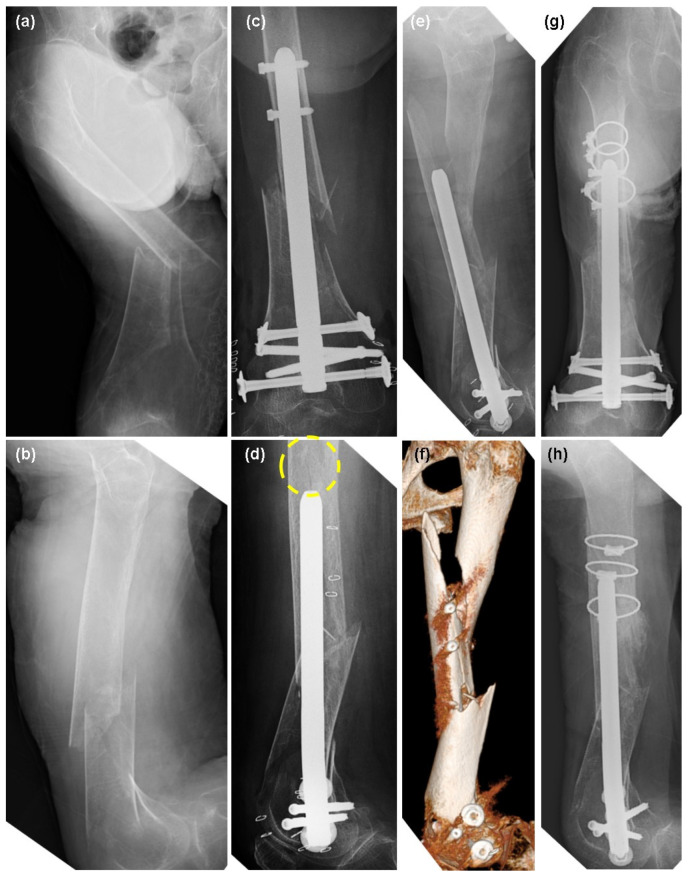 Figure 2
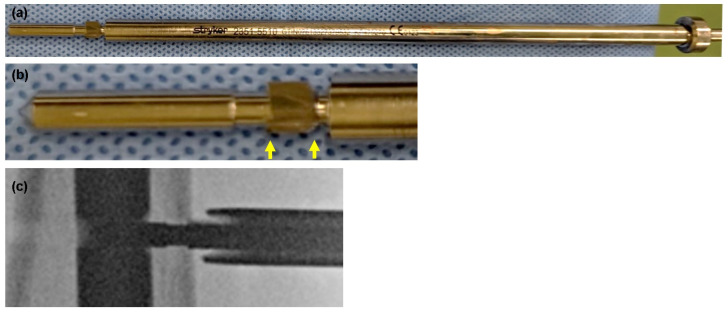 Figure 3
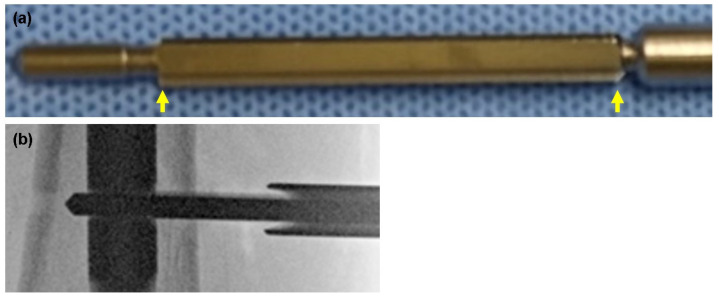 Figure 4
Peer Reviews
No public reviews on file for this paper yet. If you reviewed it on a platform where reviews are public (OpenReview, ICLR, NeurIPS, ICML), you can paste yours below so the community can read it here.
Videos
No videos yet. Explain this paper in a talk, walkthrough, or lecture? Add one.
Taxonomy
TopicsBone fractures and treatments · Hip and Femur Fractures · Orthopaedic implants and arthroplasty