Abdominal Compartment Syndrome Following Paraesophageal and Diaphragmatic Hernia Repair
Shawn A. Brophy, Samuel Minor, Daniel G. French

TL;DR
This paper reports a rare case of abdominal compartment syndrome after hernia repair, highlighting the need for preventive measures in certain patients.
Contribution
The paper reports the first case of postoperative abdominal compartment syndrome following repair of paraesophageal and Morgagni diaphragmatic hernias.
Findings
Abdominal compartment syndrome can occur after laparoscopic repair of large paraesophageal hernias and Morgagni CDHs.
Prophylactic omentectomy may be considered to prevent this rare complication in select patients.
Abstract
Abdominal compartment syndrome (ACS) is defined as a sustained intra-abdominal pressure ≥ 20 mm Hg, associated with new organ dysfunction. Postoperative ACS can occur following repair of hernias with loss-of-domain. Such loss-of-domain hernias are well described involving incisional hernias, less described involving Bochdalek congenital diaphragmatic hernias (CDHs), but not yet described involving paraesophageal hernias (PEHs) or Morgagni CDHs. We describe a case of postoperative ACS following laparoscopic repair of a PEH and Morgagni CDH. This case demonstrates that prophylactic omentectomy should be considered in select patients undergoing repair of large PEHs or CDHs, as ACS is a rare but potential complication.
Genes, proteins, chemicals, diseases, species, mutations and cell lines named across the full text — each resolved to its canonical identifier and authoritative record.
Click any figure to enlarge with its caption.
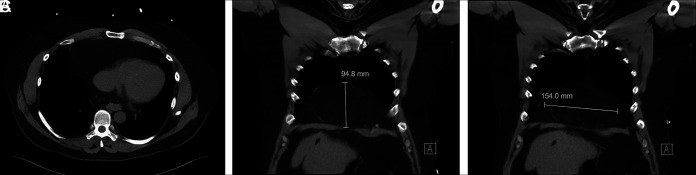 Figure 1
Peer Reviews
No public reviews on file for this paper yet. If you reviewed it on a platform where reviews are public (OpenReview, ICLR, NeurIPS, ICML), you can paste yours below so the community can read it here.
Videos
No videos yet. Explain this paper in a talk, walkthrough, or lecture? Add one.
Taxonomy
TopicsAbdominal Surgery and Complications · Hernia repair and management · Congenital Diaphragmatic Hernia Studies