Posterior Interosseous Neuropathy with Peripheral Dystonia: A Case Report
Gohei Yamada, Takanari Toyoda, Eiichi Katada, Noriyuki Matsukawa

TL;DR
A 62-year-old man experienced finger drop and dystonia-like movements due to posterior interosseous neuropathy, with partial recovery and persistent thumb abnormalities.
Contribution
This case report highlights a rare association between posterior interosseous neuropathy and peripheral dystonia.
Findings
The patient showed posterior interosseous neuropathy with dystonia-like finger movements.
Muscle weakness improved within two weeks, but thumb abnormalities persisted.
Persistent thumb posture may indicate pre-existing motor control issues contributing to dystonia.
Abstract
Posterior interosseous neuropathy is an uncommon cause of peripheral dystonia. A 62-year-old man awakened and noticed right finger drop. A neurological examination revealed posterior interosseous neuropathy with dystonia-like finger movements. Abnormal movements were predominantly observed in the right thumb, ring finger, and little finger. Within 2 weeks, the muscle weakness in the right fingers had completely improved. However, a brief abnormal posture of the right thumb was persistent. The residual abnormal posture of the right thumb may reflect pre-existing motor control abnormalities, which may have contributed to the onset of posterior interosseous neuropathy-associated peripheral dystonia.
Genes, proteins, chemicals, diseases, species, mutations and cell lines named across the full text — each resolved to its canonical identifier and authoritative record.
Click any figure to enlarge with its caption.
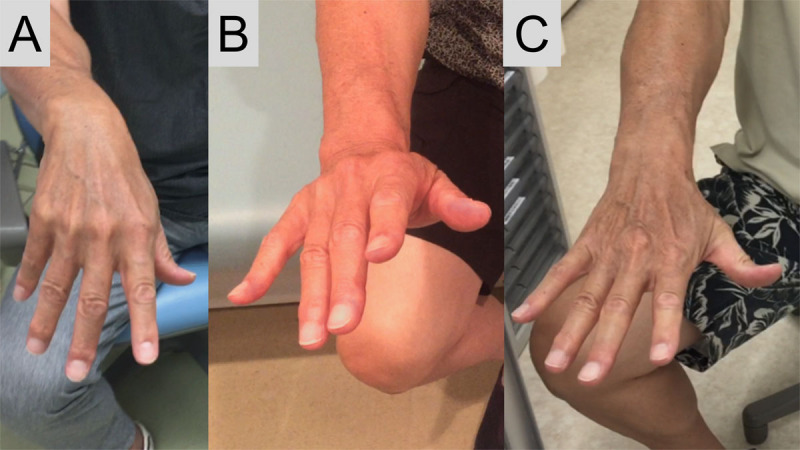 Figure 1
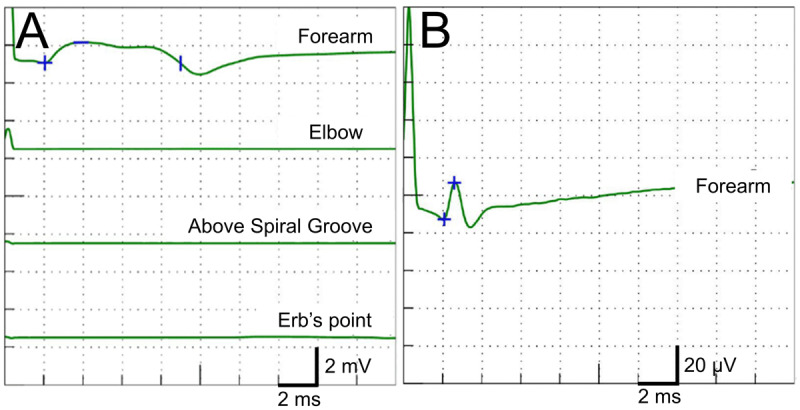 Figure 2
Peer Reviews
No public reviews on file for this paper yet. If you reviewed it on a platform where reviews are public (OpenReview, ICLR, NeurIPS, ICML), you can paste yours below so the community can read it here.
Videos
No videos yet. Explain this paper in a talk, walkthrough, or lecture? Add one.
Taxonomy
TopicsBotulinum Toxin and Related Neurological Disorders · Hereditary Neurological Disorders · Neurological disorders and treatments