Models of Protocells Undergoing Asymmetrical Division
Marco Villani, Elena Alboresi, Roberto Serra

TL;DR
This paper explores how protocells can sustainably grow and divide asymmetrically, comparing it to previous findings on symmetrical division.
Contribution
The study introduces a concept of homogeneous growth to explain sustained protocell population growth under asymmetrical division.
Findings
Surface Reaction Models often exhibit homogeneous growth under the same conditions that cause synchronization in symmetrical division.
Internal Reaction Models require a clearer definition of homogeneous growth to achieve sustained reproduction.
Abstract
The conditions that allow for the sustained growth of a protocell population are investigated in the case of asymmetrical division. The results are compared to those of previous studies concerning models of symmetrical division, where synchronization (between duplication of the genetic material and fission of the lipid container) was found under a variety of different assumptions about the kinetic equations and about the place where molecular replication takes place. Such synchronization allows a sustained proliferation of the protocell population. In the asymmetrical case, there can be no true synchronization, since the time to duplication may depend upon the initial size, but we introduce a notion of homogeneous growth that actually allows for the sustained reproduction of a population of protocells. We first analyze Surface Reaction Models, defined in the text, and we show that in…
Click any figure to enlarge with its caption.
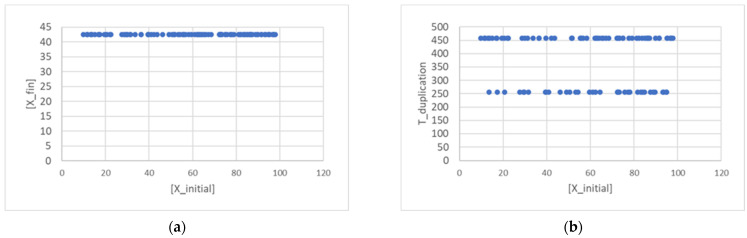 Figure 1
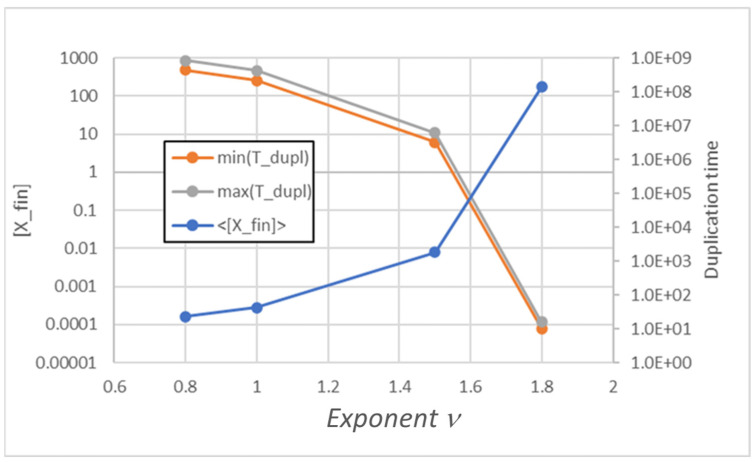 Figure 2
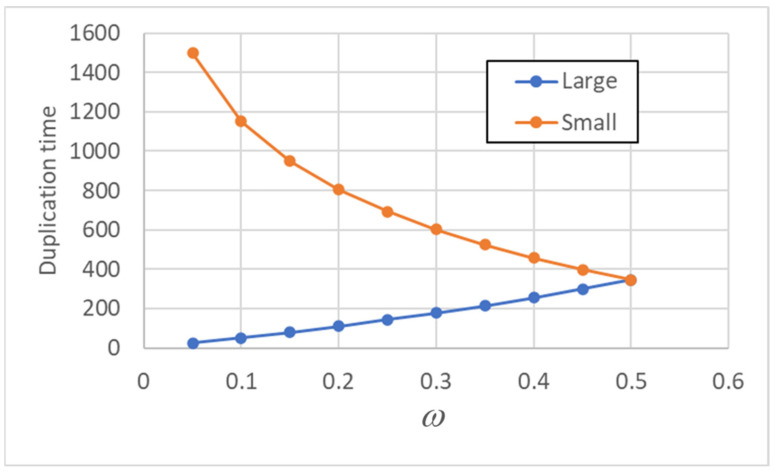 Figure 3
 Figure 4
 Figure 5
 Figure 6
 Figure 7
 Figure 8
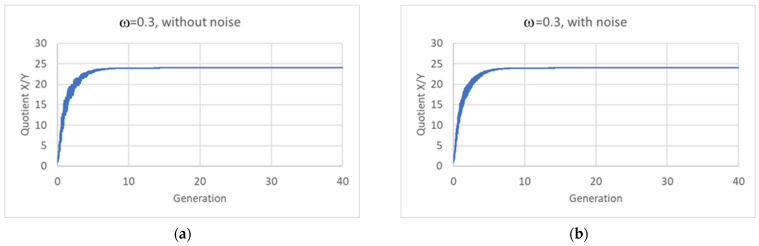 Figure 9
Peer Reviews
No public reviews on file for this paper yet. If you reviewed it on a platform where reviews are public (OpenReview, ICLR, NeurIPS, ICML), you can paste yours below so the community can read it here.
Videos
No videos yet. Explain this paper in a talk, walkthrough, or lecture? Add one.
Taxonomy
TopicsOrigins and Evolution of Life · Photoreceptor and optogenetics research · Protein Structure and Dynamics