Improvement of Z-Weighted Function Based on Fifth-Order Nonlinear Multi-Order Weighted Method for Shock Capturing of Hyperbolic Conservation Laws
Jinwei Bai, Zhenguo Yan, Meiliang Mao, Yankai Ma, Dingwu Jiang

TL;DR
This paper introduces a new shock-capturing method for hyperbolic conservation laws that improves resolution and reduces oscillations near discontinuities.
Contribution
A novel nonlinear multi-order weighted method with improved Z-weighted function for better shock capturing in hyperbolic conservation laws.
Findings
The new method avoids degradation near extreme points by satisfying sufficient nonlinear weight conditions.
Numerical tests show better resolution of discontinuities and smooth regions compared to Z weighting.
Adjusting linear weights does not affect accuracy in smooth regions but enhances discontinuity-capturing capability.
Abstract
Based on a 5-point stencil and three 3-point stencils, a nonlinear multi-order weighted method adaptive to 5-3-3-3 stencils for shock capturing is presented in this paper. The form of the weighting function is the same as JS (Jiang–Shu) weighting; however, the smoothness indicator of the 5-point stencil adopts a special design with a higher-order leading term similar to the τ in Z weighting. The design maintains that the nonlinear weights satisfy sufficient conditions for the scheme to avoid degradation even near extreme points. By adjusting the linear weights to a specific value and using the τ in Z weighting, the method can be degraded to Z weighting. Analysis of linear weights shows that they do not affect the accuracy in the smooth region, and they can also adjust the resolution and discontinuity-capturing capability. Numerical tests of different hyperbolic conservation laws are…
Genes, proteins, chemicals, diseases, species, mutations and cell lines named across the full text — each resolved to its canonical identifier and authoritative record.
Click any figure to enlarge with its caption.
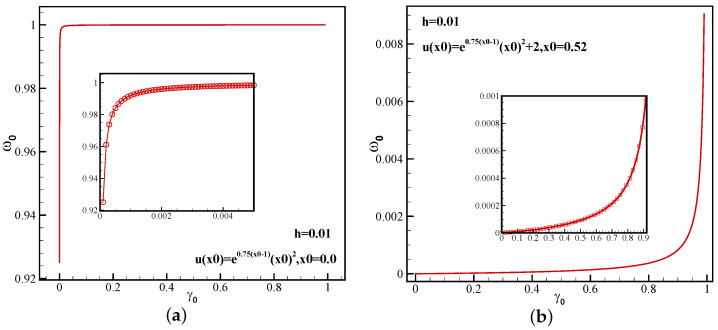 Figure 1
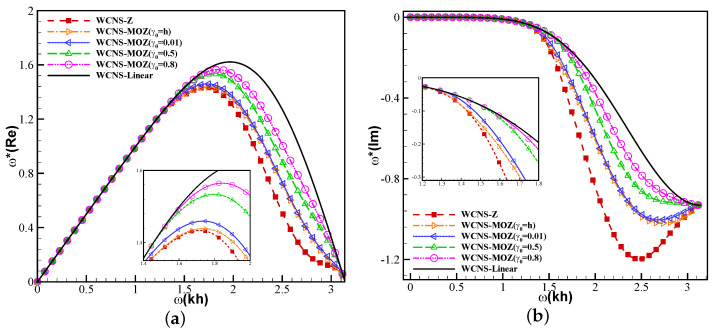 Figure 2
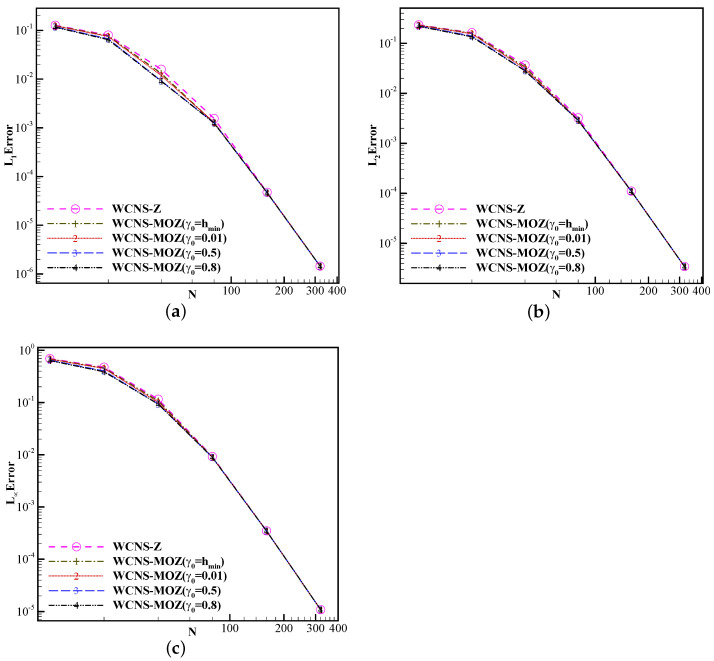 Figure 3
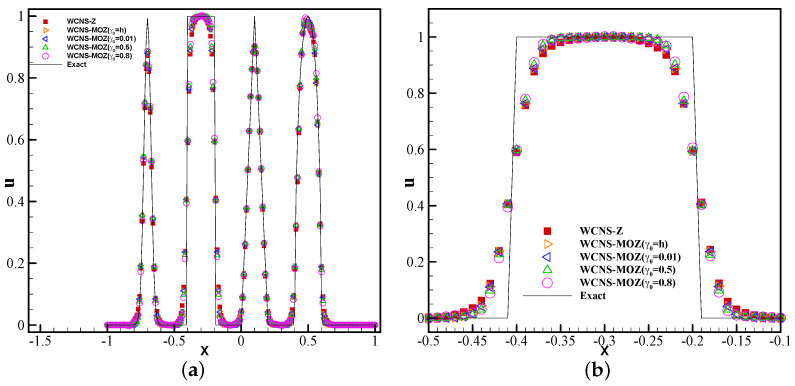 Figure 4
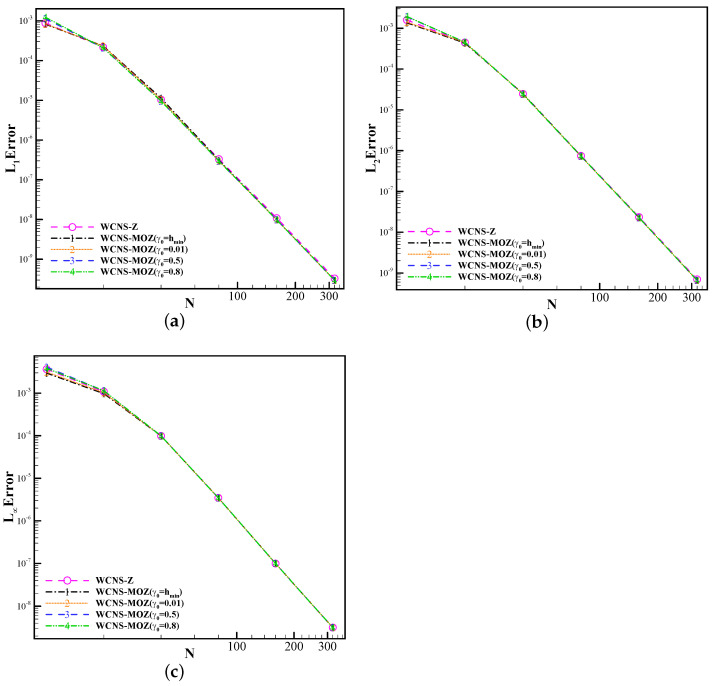 Figure 5
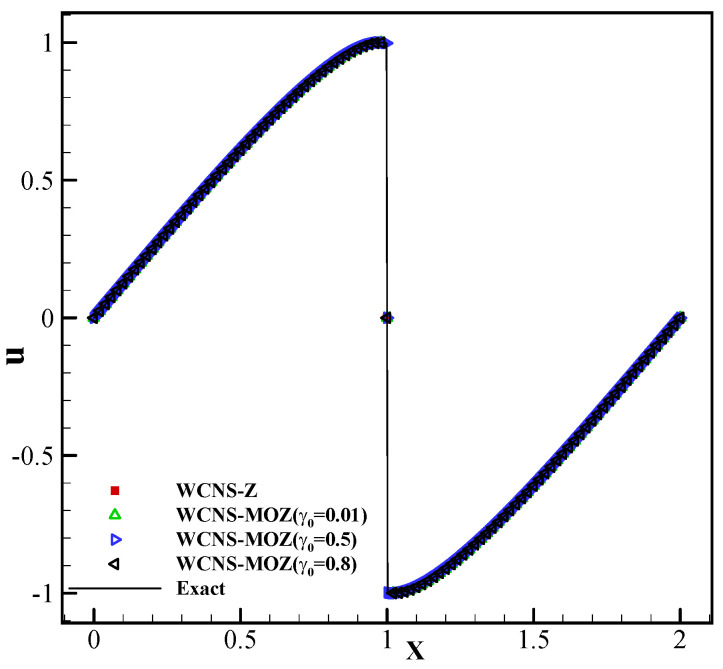 Figure 6
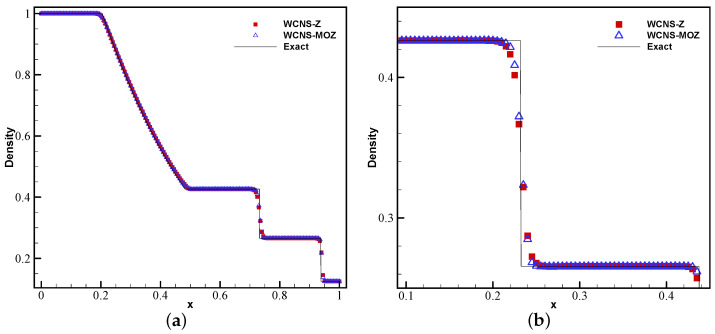 Figure 7
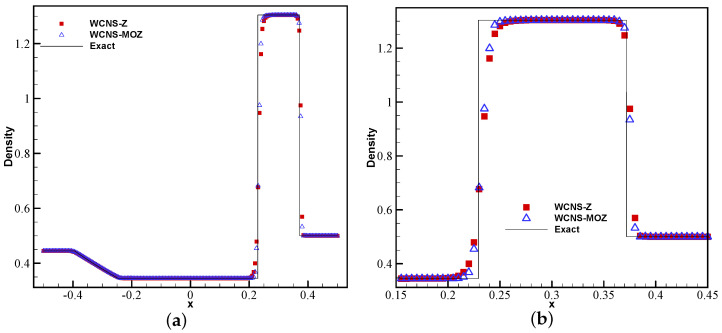 Figure 8
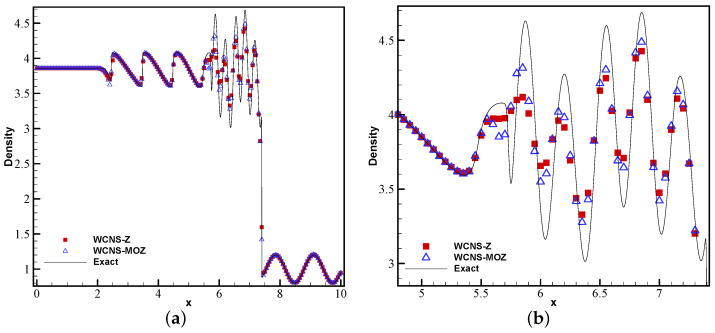 Figure 9
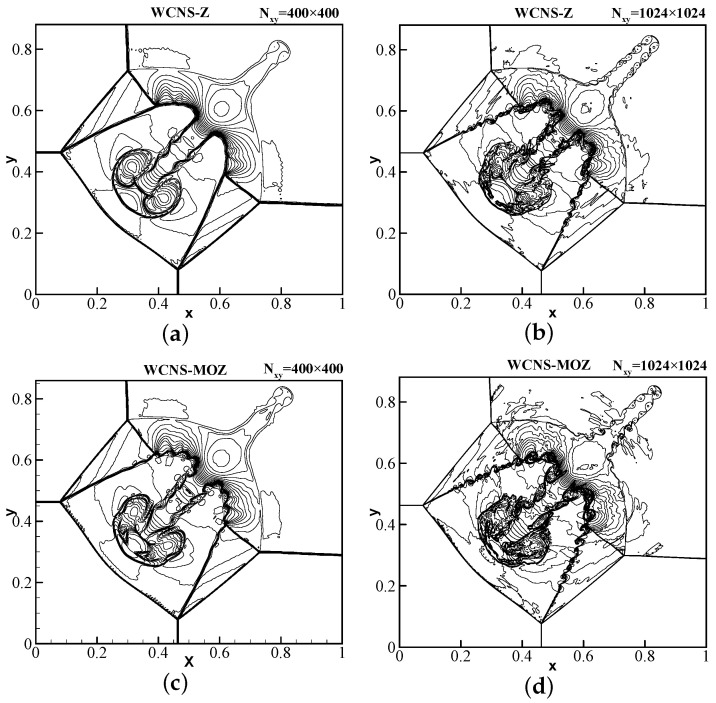 Figure 10
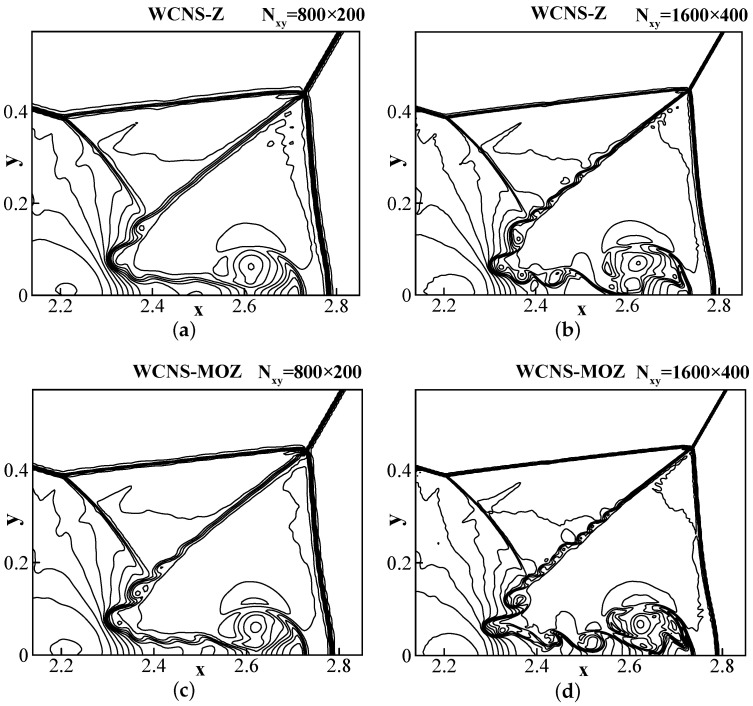 Figure 11
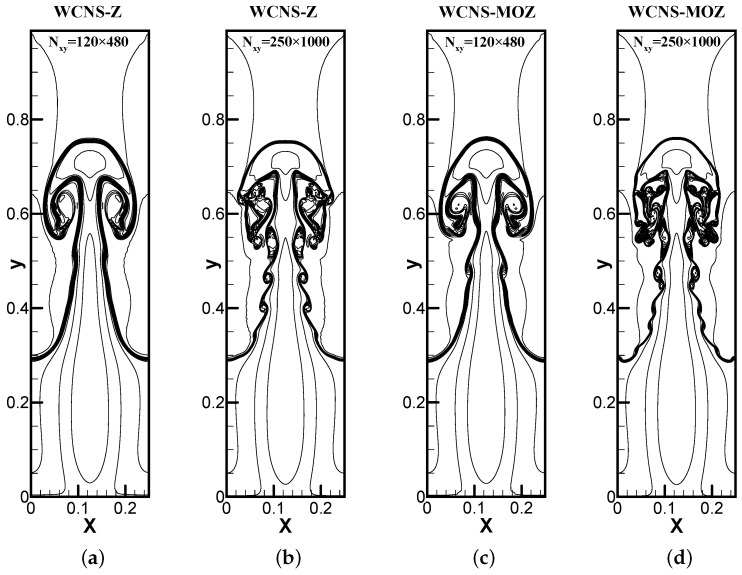 Figure 12
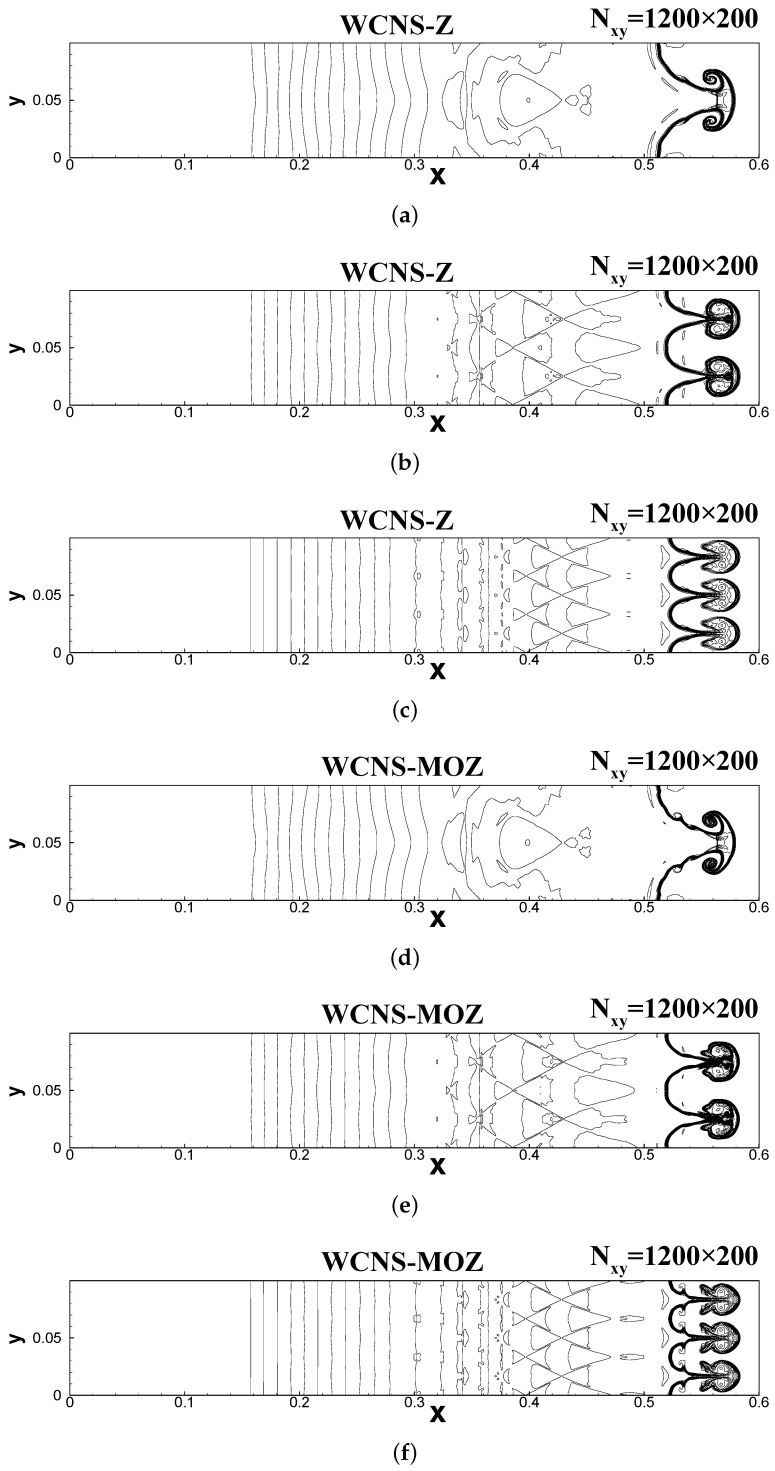 Figure 13
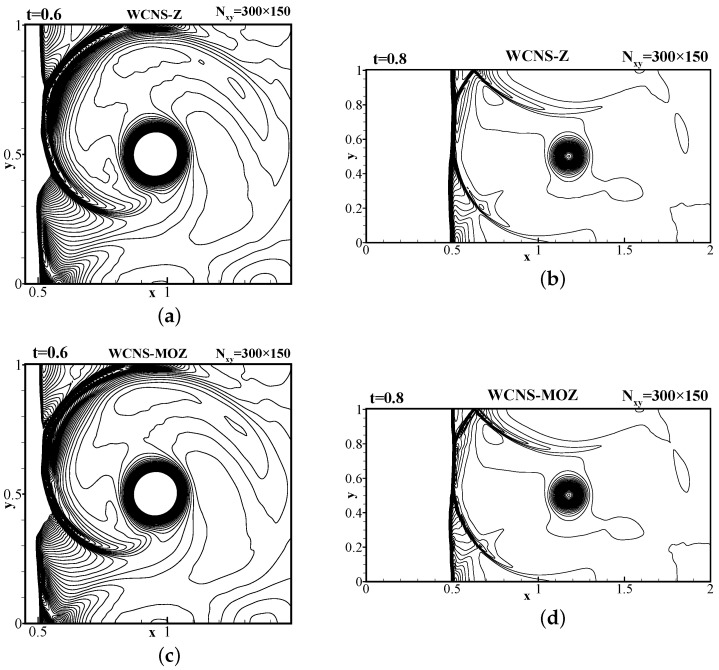 Figure 14
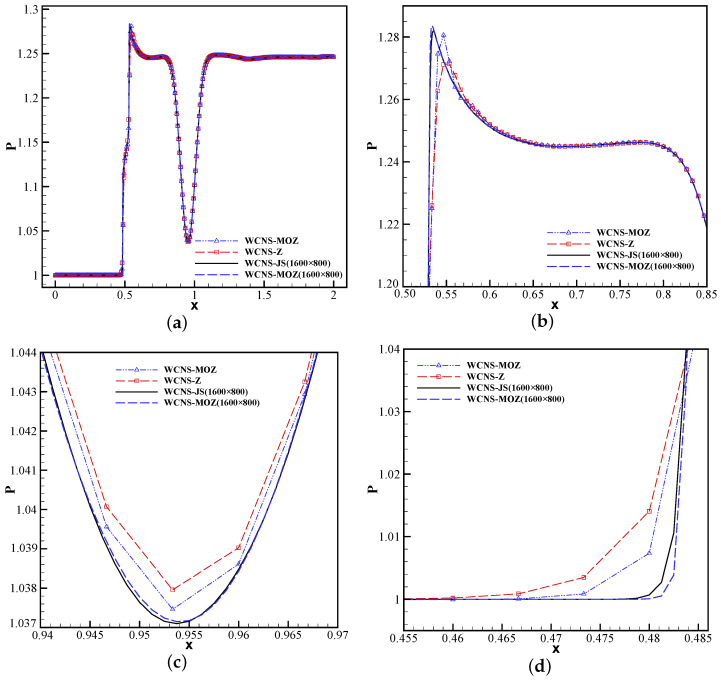 Figure 15
Peer Reviews
No public reviews on file for this paper yet. If you reviewed it on a platform where reviews are public (OpenReview, ICLR, NeurIPS, ICML), you can paste yours below so the community can read it here.
Videos
No videos yet. Explain this paper in a talk, walkthrough, or lecture? Add one.
Taxonomy
TopicsComputational Fluid Dynamics and Aerodynamics · Gas Dynamics and Kinetic Theory · Fluid Dynamics and Turbulent Flows