Evaluation of the forAge Age-at-Death Estimation Program Using Pubic Symphyseal Surface in a Korean Population
Hyun Jin Park, Sehyun Song, Eun Jin Woo, Kyung-Seok Hu

TL;DR
This study evaluates if a program for estimating age from pubic symphysis scans works for Koreans, finding it is not accurate.
Contribution
The study is the first to assess the forAge program's applicability to a Korean population using modern 3D scans.
Findings
Estimated ages using the original forAge prediction equation were consistently lower than actual ages in Koreans over 56.
New regression lines using updated scores showed similar inaccuracy, with large age estimation errors increasing with age.
The forAge program shows low correlation with actual age-at-death in the Korean population tested.
Abstract
The forAge program estimates the age-at-death of human pubic symphysis using 3-dimensional scans. It was developed by Dennis E. Slice and Bridget F. B. Algee-Hewitt, and utilizes three distinct scores: the Slice and Algee-Hewitt (SAH) score, bending energy (BE), and ventral curvature (VC). However, these scores and age estimation regression equation were obtained through European American pubic symphysis. Changes in the pubic symphysis surface are evaluated as one of the most reliable indicators for estimating age, but in connection with this, using Korean materials, changes in the pubic symphysis surface and the actual changes are evaluated. There is no bar where the relationship between ages is grasped, and there are cases where a methodology developed for a specific group is applied to a Korean group. Changing the pubic symphysis surface by aging was evaluated as one of the most…
Genes, proteins, chemicals, diseases, species, mutations and cell lines named across the full text — each resolved to its canonical identifier and authoritative record.
Click any figure to enlarge with its caption.
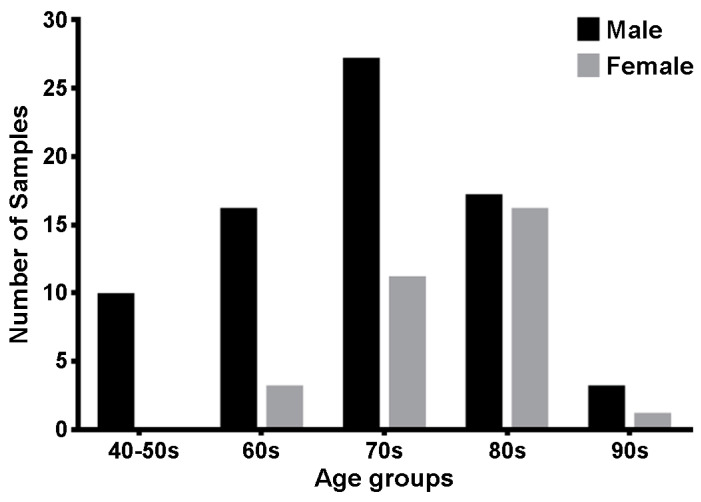 Figure 1
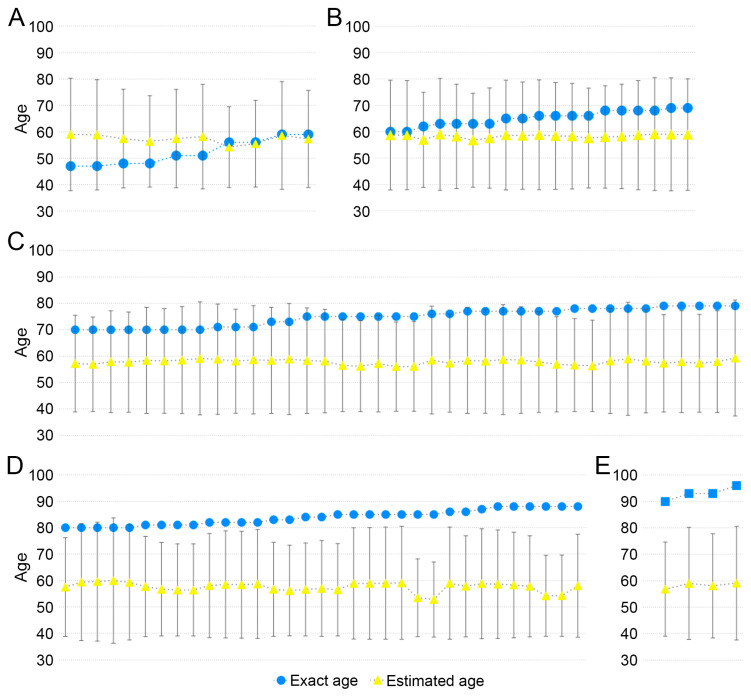 Figure 2
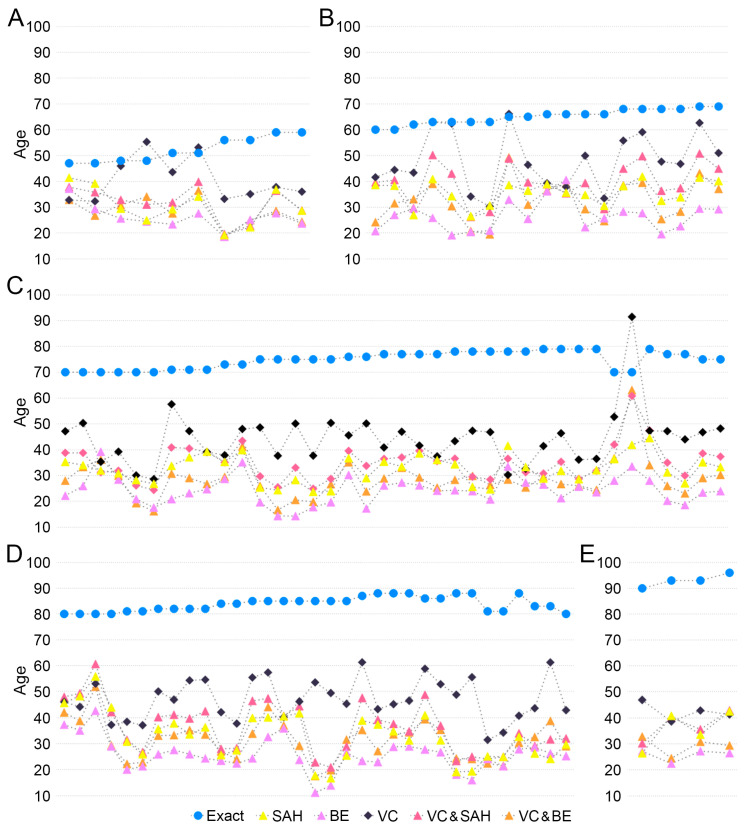 Figure 3
Peer Reviews
No public reviews on file for this paper yet. If you reviewed it on a platform where reviews are public (OpenReview, ICLR, NeurIPS, ICML), you can paste yours below so the community can read it here.
Videos
No videos yet. Explain this paper in a talk, walkthrough, or lecture? Add one.
Taxonomy
TopicsForensic Anthropology and Bioarchaeology Studies · Autopsy Techniques and Outcomes · Genital Health and Disease