The Property of a Key Amino Acid Determines the Function of Farnesyl Pyrophosphate Synthase in Sporobolomyces pararoseus NGR
Yunjiao Wang, Ning Zhang, Jianyu Yan, Chunwang Li, Nan Zeng, Dandan Wang, Zijing Li, Bingxue Li, Yingfeng An

TL;DR
This study identifies how a specific amino acid in an enzyme from Sporobolomyces pararoseus affects its function in synthesizing isoprenoids, which are important for various metabolic processes.
Contribution
The study reveals that the amino acid Y90 in SpFPPS determines the enzyme's product specificity and substrate scope.
Findings
The wild-type SpFPPS produces only FPP from DMAPP and IPP.
Mutation of Y90 to alanine or lysine changes the product profile to include GGPP or hydrolyzes GGPP.
These findings suggest a way to regulate downstream isoprenoid biosynthesis in S. pararoseus.
Abstract
Farnesyl pyrophosphate synthase (FPPS) catalyzes the synthesis of C15 farnesyl diphosphate (FPP) from C5 dimethylallyl diphosphate (DMAPP) and two or three C5 isopentenyl diphosphates (IPPs). FPP is an important precursor for the synthesis of isoprenoids and is involved in multiple metabolic pathways. Here, farnesyl pyrophosphate synthase from Sporobolomyces pararoseus NGR (SpFPPS) was isolated and expressed by the prokaryotic expression system. The SpFPPS full-length genomic DNA and cDNA are 1566 bp and 1053 bp, respectively. This gene encodes a 350-amino acid protein with a predicted molecular mass of 40.33 kDa and a molecular weight of 58.03 kDa (40.33 kDa + 17.7 kDa), as detected by SDS-PAGE. The function of SpFPPS was identified by induction, purification, protein concentration and in vitro enzymatic activity experiments. Structural analysis showed that Y90 was essential for chain…
Genes, proteins, chemicals, diseases, species, mutations and cell lines named across the full text — each resolved to its canonical identifier and authoritative record.
Click any figure to enlarge with its caption.
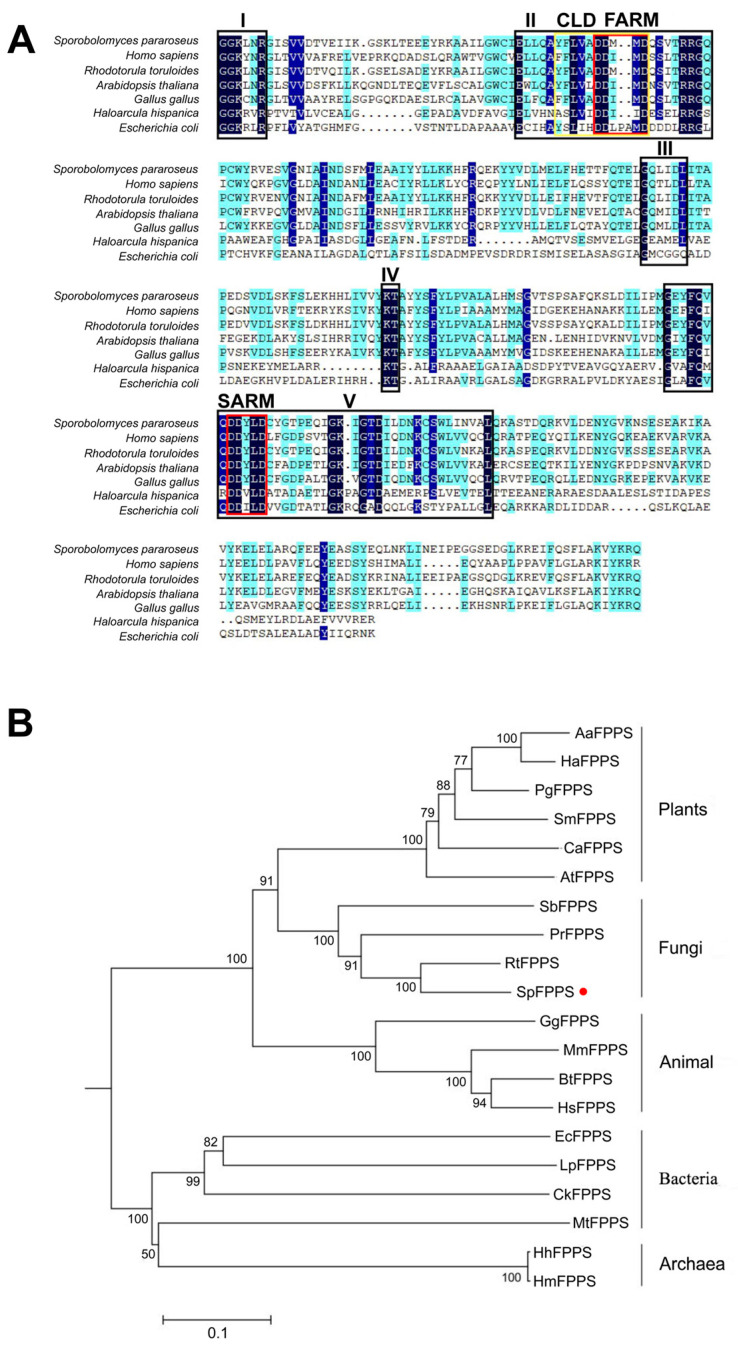 Figure 1
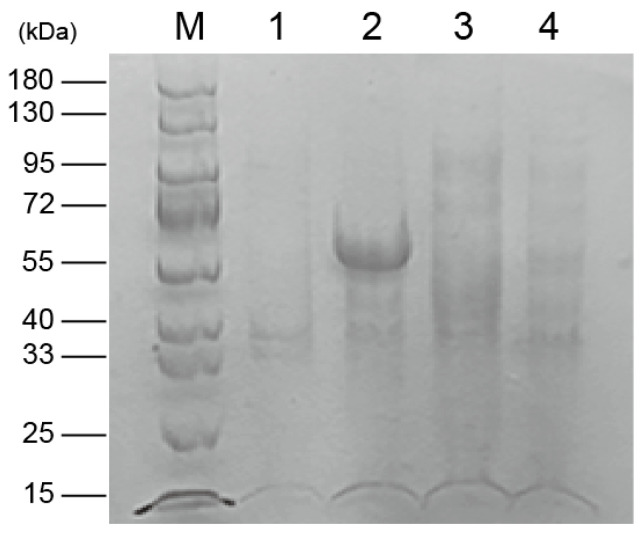 Figure 2
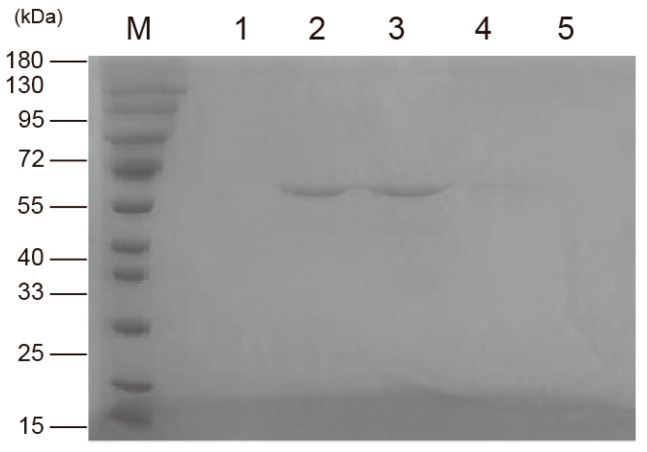 Figure 3
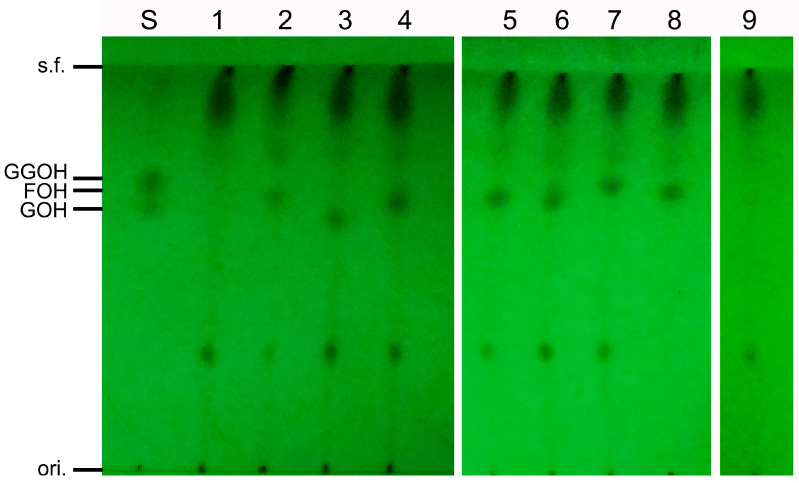 Figure 4
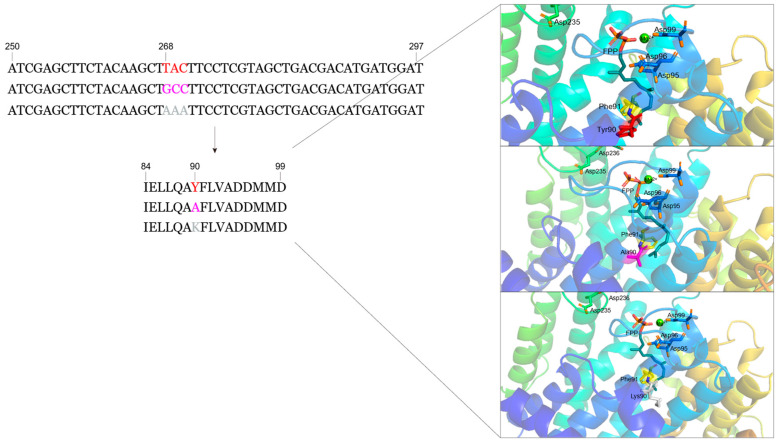 Figure 5
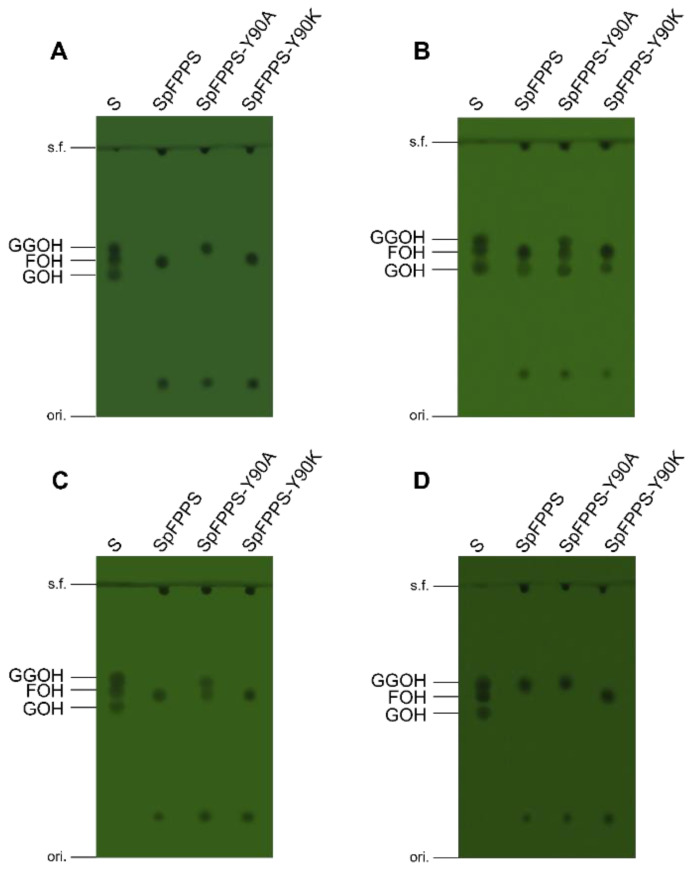 Figure 6
Peer Reviews
No public reviews on file for this paper yet. If you reviewed it on a platform where reviews are public (OpenReview, ICLR, NeurIPS, ICML), you can paste yours below so the community can read it here.
Videos
No videos yet. Explain this paper in a talk, walkthrough, or lecture? Add one.
Taxonomy
TopicsPlant biochemistry and biosynthesis · Microbial Natural Products and Biosynthesis · Computational Drug Discovery Methods