Postural Change of the Annual Cicada (Tibicen linnei) Helps Facilitate Backward Flight
Ayodeji T. Bode-Oke, Alec Menzer, Haibo Dong

TL;DR
Cicadas use backward flight for better maneuverability, and their body posture helps control aerodynamic forces, which could inspire micro-aerial vehicle designs.
Contribution
This study is the first to show that cicadas use backward flight, revealing how body posture affects aerodynamic forces and flight mechanics.
Findings
Backward flight involves steep body angles and high wing velocities, with aerodynamic forces aligned similarly to forward flight.
The upstroke becomes aerodynamically active in backward flight, contributing 50% of net forces due to leading-edge vortices and high velocity.
Backward flight reorients stroke planes and aerodynamic forces in the global frame, reversing the function of wing half-strokes.
Abstract
Cicadas are heavy fliers well known for their life cycles and sound production; however, their flight capabilities have not been extensively investigated. Here, we show for the first time that cicadas appropriate backward flight for additional maneuverability. We studied this flight mode using computational fluid dynamics (CFD) simulations based on three-dimensional reconstructions of high-speed videos captured in a laboratory. Backward flight was characterized by steep body angles, high angles of attack, and high wing upstroke velocities. Wing motion occurred in an inclined stroke plane that was fixed relative to the body. Likewise, the directions of the half-stroke-averaged aerodynamic forces relative to the body (local frame) were constrained in a narrow range (<20°). Despite the drastic difference of approximately 90° in body posture between backward and forward flight in the global…
Genes, proteins, chemicals, diseases, species, mutations and cell lines named across the full text — each resolved to its canonical identifier and authoritative record.
Click any figure to enlarge with its caption.
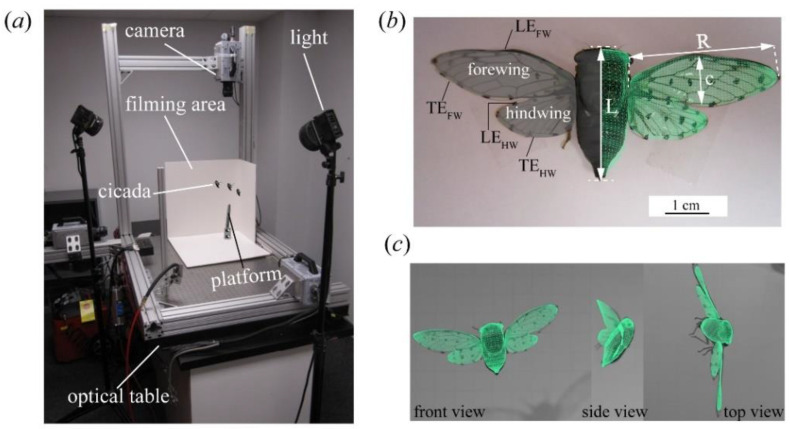 Figure 1
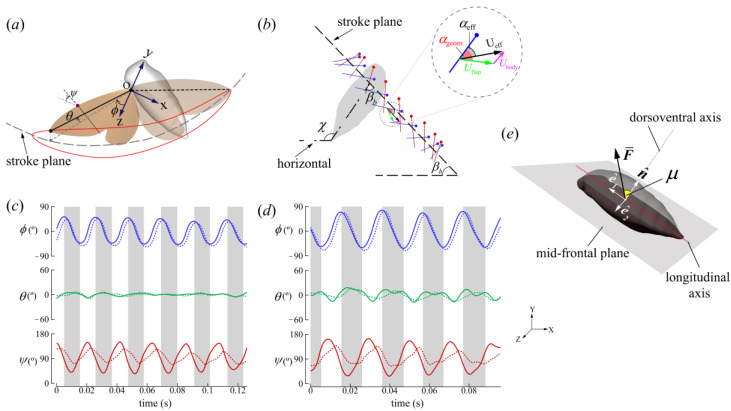 Figure 2
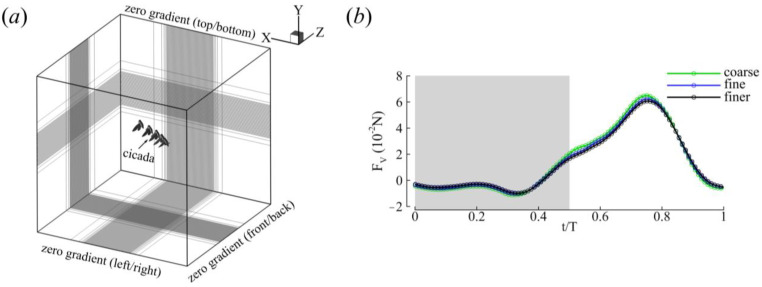 Figure 3
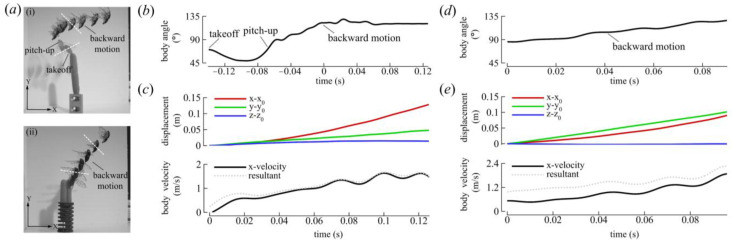 Figure 4
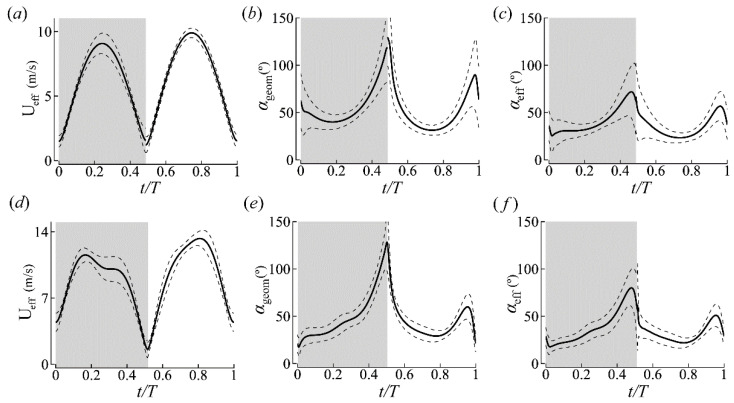 Figure 5
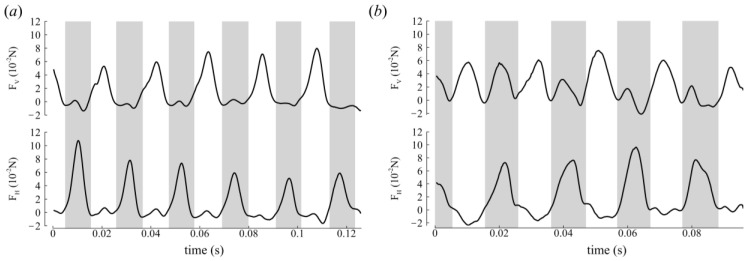 Figure 6
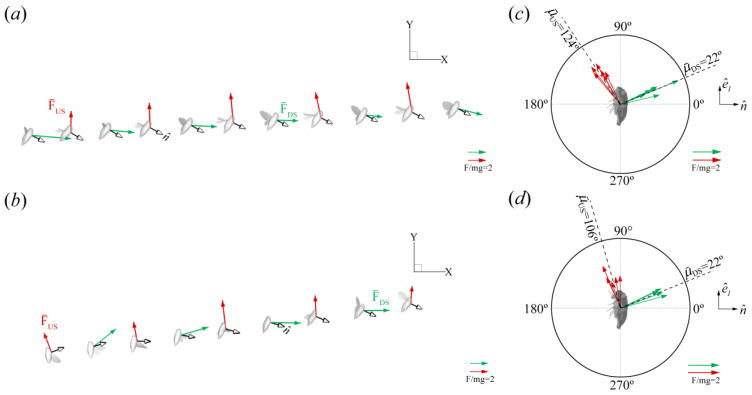 Figure 7
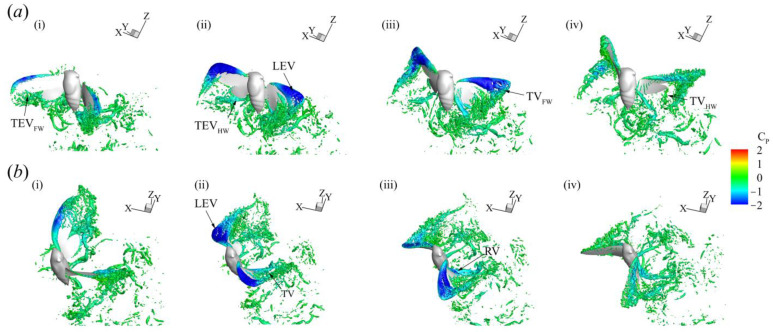 Figure 8
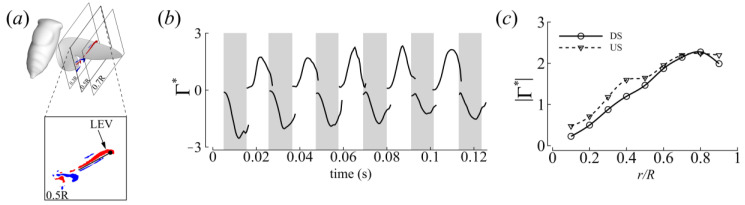 Figure 9
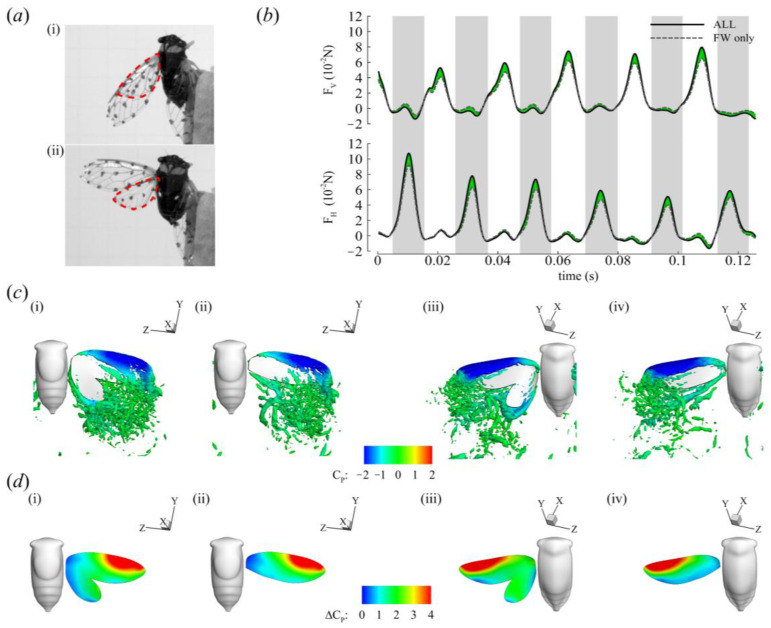 Figure 10
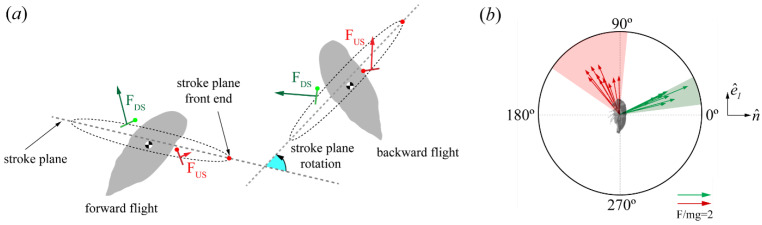 Figure 11
Peer Reviews
No public reviews on file for this paper yet. If you reviewed it on a platform where reviews are public (OpenReview, ICLR, NeurIPS, ICML), you can paste yours below so the community can read it here.
Videos
No videos yet. Explain this paper in a talk, walkthrough, or lecture? Add one.
Taxonomy
TopicsBiomimetic flight and propulsion mechanisms · Fluid Dynamics and Turbulent Flows · Physiological and biochemical adaptations