Experimental Study on the Adhesion of Abalone to Surfaces with Different Morphologies
Peng Xi, Yanqi Qiao, Qian Cong, Qingliang Cui

TL;DR
This study explores how abalone adhere to surfaces with different textures, revealing how their foot adapts to various surface morphologies.
Contribution
The study provides new insights into abalone adhesion mechanisms on non-smooth surfaces using experimental measurements.
Findings
Abalone adhere effectively to block pattern and small lattice pit glass plates due to the elasticity of their abdominal foot.
Adhesion to quadrangular conical and frosted glass plates showed no significant difference compared to smooth surfaces.
The abdominal foot forms independent sucker systems on small lattice pits, enhancing adhesion.
Abstract
To date, research on abalone adhesion has primarily analyzed the organism’s adhesion to smooth surfaces, with few studies on adhesion to non-smooth surfaces. The present study examined the surface morphology of the abalone’s abdominal foot, followed by measuring the adhesive force of the abalone on a smooth force measuring plate and five force measuring plates with different surface morphologies. Next, the adhesion mechanism of the abdominal foot was analyzed. The findings indicated that the abdominal foot of the abalone features numerous stripe-shaped folds on its surface. The adhesion of the abalone to a fine frosted glass plate, a coarse frosted glass plate, and a quadrangular conical glass plate was not significantly different from that on a smooth glass plate. However, the organism’s adhesion to a small lattice pit glass plate and block pattern glass plate was significantly…
Genes, proteins, chemicals, diseases, species, mutations and cell lines named across the full text — each resolved to its canonical identifier and authoritative record.
Click any figure to enlarge with its caption.
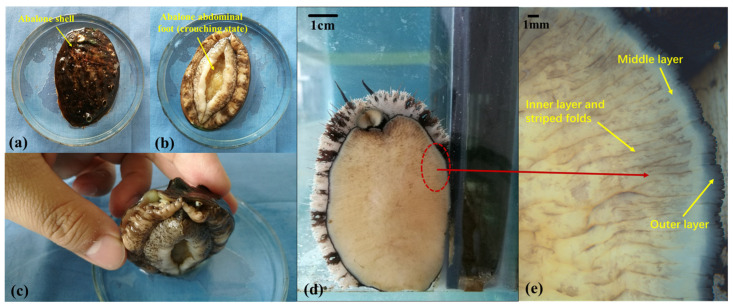 Figure 1
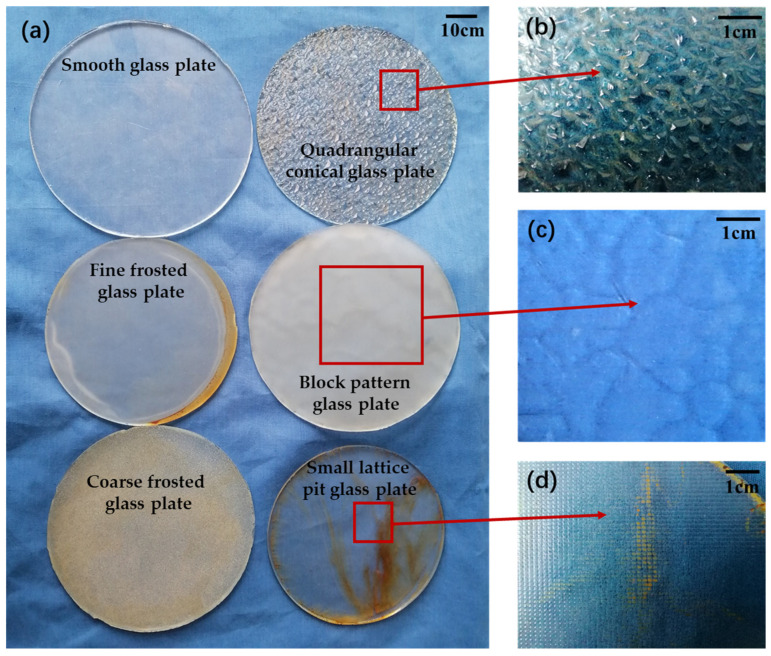 Figure 2
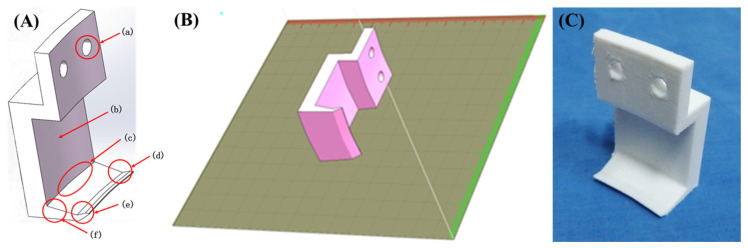 Figure 3
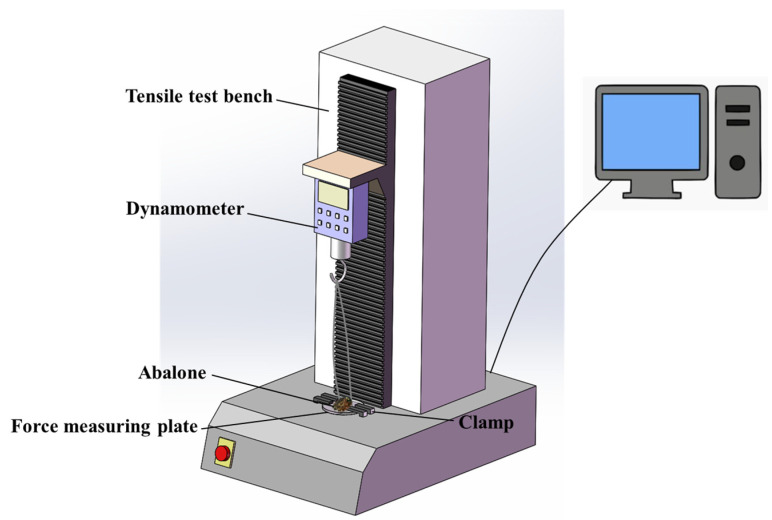 Figure 4
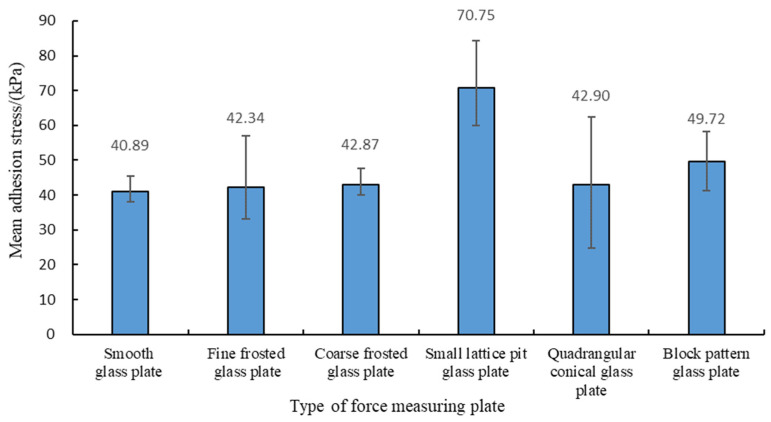 Figure 5
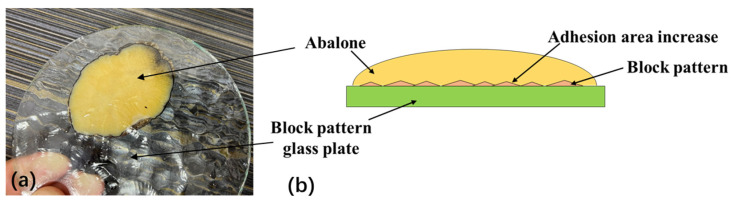 Figure 6
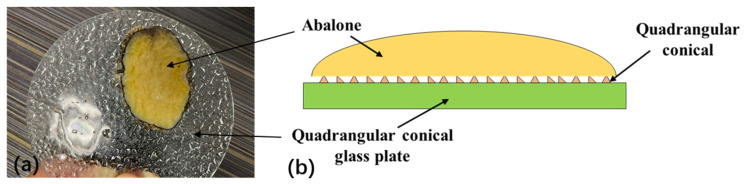 Figure 7
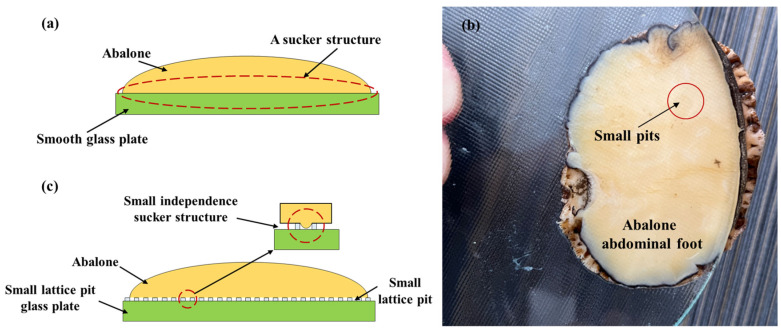 Figure 8
Peer Reviews
No public reviews on file for this paper yet. If you reviewed it on a platform where reviews are public (OpenReview, ICLR, NeurIPS, ICML), you can paste yours below so the community can read it here.
Videos
No videos yet. Explain this paper in a talk, walkthrough, or lecture? Add one.
Taxonomy
TopicsAdhesion, Friction, and Surface Interactions · Polymer Surface Interaction Studies · Surface Modification and Superhydrophobicity