What Have We Learned about the Prevention of NMSC from Albino Patients from Malawi? Secondary Prevention Maintained over Time
Alejandra Tomás-Velázquez, Ester Moreno-Artero, Javier Romero, Pilar Escalonilla, Isabel Medina, Gisela Hebe Petiti, Pedro Redondo

TL;DR
This study shows that providing photoprotective clothing and regular follow-up care significantly improves outcomes for albino patients in Malawi at high risk of skin cancer.
Contribution
The study highlights the effectiveness of secondary prevention through local collaboration and teledermatology in managing skin cancer among albinos in rural Africa.
Findings
Photoprotective clothing is more effective and sustainable than sporadic sunscreen use in rural settings.
Secondary prevention with regular follow-up and teledermatology is crucial for treating high-risk patients with squamous cell carcinoma.
Many patients were lost to follow-up, emphasizing the need for sustained local engagement and tracking systems.
Abstract
Albino patients in rural Africa have a very high risk of skin cancer. We have conducted several cooperative campaigns in recent years focusing on the care of this population in a rural area of Malawi and have reached some important conclusions. Primary prevention is fundamental and, in addition to education, providing adequate clothing offers more sustainable and long-lasting photoprotection and is more effective than offering sunscreen sporadically. However, at present, secondary prevention focused on frequent follow-up and early diagnosis of treatable lesions is what really makes the difference in many patients affected by squamous cell carcinoma, who otherwise will eventually die. To achieve this, it is essential to have funding and local collaboration with a comprehensive organization prior to visits by using teledermatology and frequent campaigns of qualified health staff who, in…
Genes, proteins, chemicals, diseases, species, mutations and cell lines named across the full text — each resolved to its canonical identifier and authoritative record.
Click any figure to enlarge with its caption.
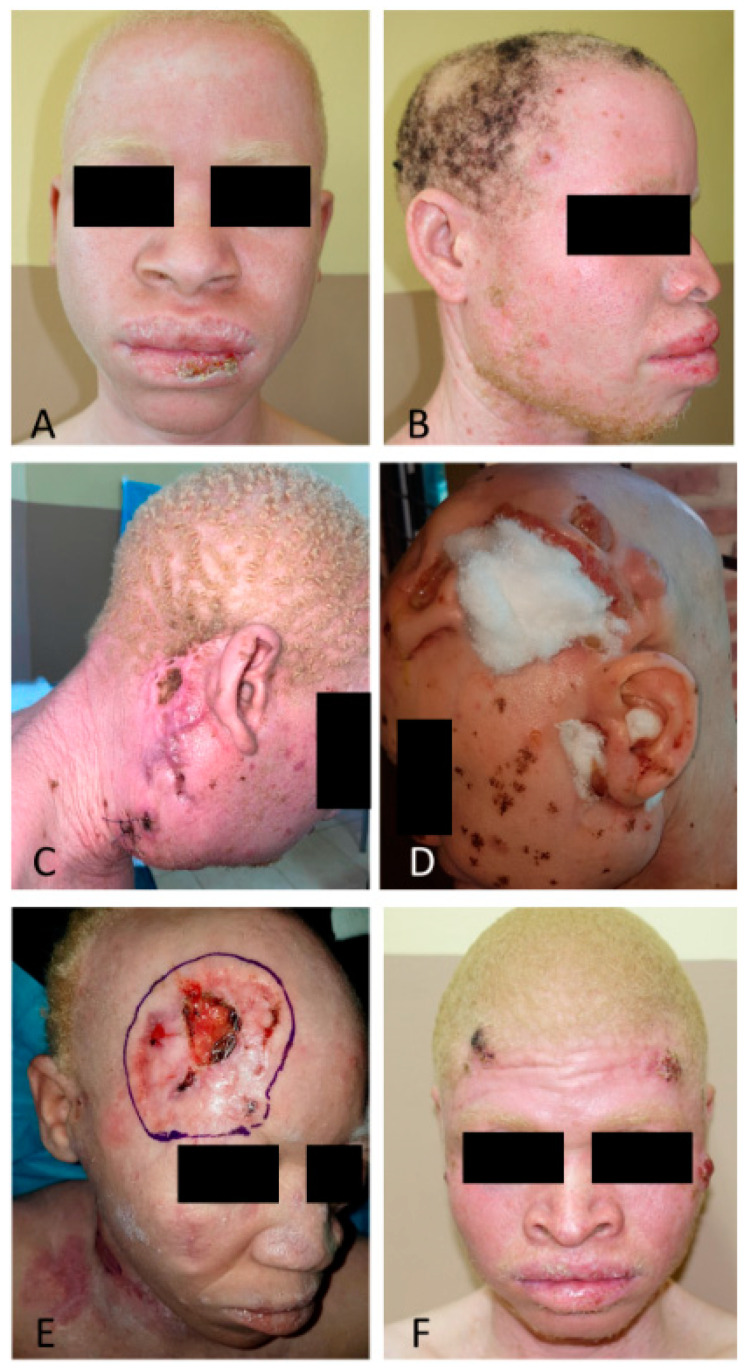 Figure 1
Peer Reviews
No public reviews on file for this paper yet. If you reviewed it on a platform where reviews are public (OpenReview, ICLR, NeurIPS, ICML), you can paste yours below so the community can read it here.
Videos
No videos yet. Explain this paper in a talk, walkthrough, or lecture? Add one.
Taxonomy
TopicsNonmelanoma Skin Cancer Studies · Cutaneous Melanoma Detection and Management