A Prospective Study on Deep Inspiration Breath Hold Thoracic Radiation Therapy Guided by Bronchoscopically Implanted Electromagnetic Transponders
Yuzhong Jeff Meng, Nikhil P. Mankuzhy, Mohit Chawla, Robert P. Lee, Ellen D. Yorke, Zhigang Zhang, Emily Gelb, Seng Boh Lim, John J. Cuaron, Abraham J. Wu, Charles B. Simone, Daphna Y. Gelblum, Dale Michael Lovelock, Wendy Harris, Andreas Rimner

TL;DR
This study shows that using implanted sensors to guide deep breath-hold radiation therapy for lung cancer is mostly feasible and safe, with some challenges related to sensor placement.
Contribution
Demonstrates the feasibility and safety of bronchoscopically implanted transponders for transponder-guided deep inspiration breath hold in thoracic radiation therapy.
Findings
Transponder-guided DIBH was feasible in 96% of patients.
The smallest feasible gating window was ±3 mm.
Toxicities were mostly grade 2 or lower, with no grade 5 events.
Abstract
We studied the feasibility and safety of using bronchoscopically implanted electromagnetic transponders to monitor deep inspiration breath hold (DIBH) for thoracic radiation therapy (RT) of primary lung cancers or lung metastases. Three transponders were implanted near the tumor, followed by CT simulation. The initial gating window was ±5 mm; in a second cohort, the window was incrementally reduced to determine the smallest feasible gating window: this was identified to be ±3 mm. Among the 48 patients enrolled, transponder-guided DIBH was feasible in all but two patients (96% feasible), where it failed because the distance between the transponders and the antenna was >19 cm. Toxicities at least possibly related to transponders or the implantation procedure were grade 2 in six patients, grade 3 in three patients, and grade 4 in one patient. Toxicities at least possibly related to RT were…
Genes, proteins, chemicals, diseases, species, mutations and cell lines named across the full text — each resolved to its canonical identifier and authoritative record.
Click any figure to enlarge with its caption.
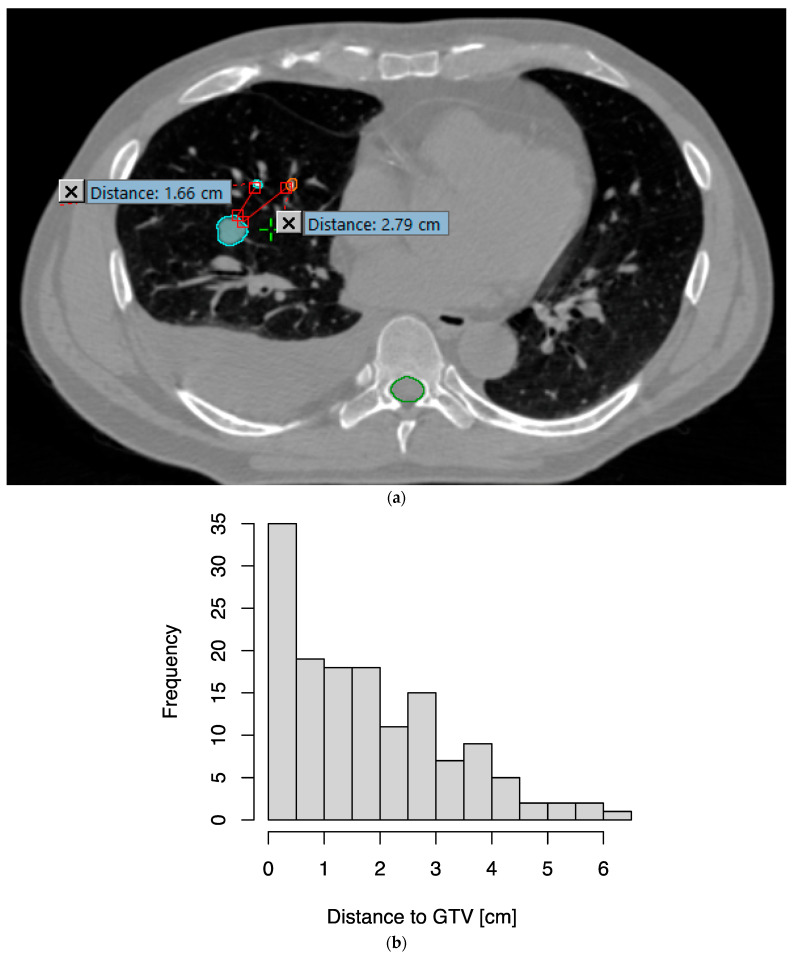 Figure 1
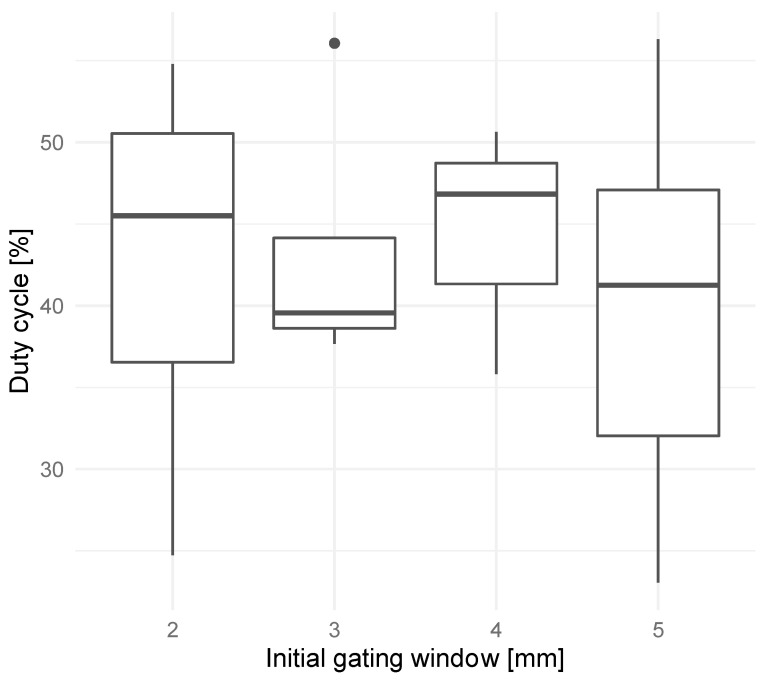 Figure 2
 Figure 3
 Figure 4
Peer Reviews
No public reviews on file for this paper yet. If you reviewed it on a platform where reviews are public (OpenReview, ICLR, NeurIPS, ICML), you can paste yours below so the community can read it here.
Videos
No videos yet. Explain this paper in a talk, walkthrough, or lecture? Add one.
Taxonomy
TopicsAdvanced Radiotherapy Techniques · Lung Cancer Diagnosis and Treatment · Head and Neck Cancer Studies