Coffee Ring Effect Enhanced Surface Plasmon Resonance Imaging Biosensor via 2-λ Fitting Detection Method
Youjun Zeng, Dongyun Kai, Zhenxiao Niu, Zhaogang Nie, Yuye Wang, Yonghong Shao, Lin Ma, Fangteng Zhang, Guanyu Liu, Jiajie Chen

TL;DR
This paper introduces a highly sensitive SPR biosensor that uses the coffee ring effect and a two-LED system to detect biomolecules at ultra-low concentrations.
Contribution
The novel use of the coffee ring effect for in situ molecule enrichment and a cost-effective two-LED system significantly improves SPR biosensor sensitivity.
Findings
A detection limit of 213 fM was achieved, which is 365 times better than traditional SPR biosensors.
The coffee ring effect enhances molecule enrichment on the sensing surface, improving detection at ultra-low concentrations.
The two-LED wavelength modulation system reduces costs and increases detection speed.
Abstract
SPR biosensors have been extensively used for investigating protein–protein interactions. However, in conventional surface plasmon resonance (SPR) biosensors, detection is limited by the Brownian-motion-governed diffusion process of sample molecules in the sensor chip, which makes it challenging to detect biomolecule interactions at ultra-low concentrations. Here, we propose a highly sensitive SPR imaging biosensor which exploits the coffee ring effect (CRE) for in situ enrichment of molecules on the sensing surface. In addition, we designed a wavelength modulation system utilizing two LEDs to reduce the system cost and enhance the detection speed. Furthermore, a detection limit of 213 fM is achieved, which amounts to an approximately 365 times improvement compared to traditional SPR biosensors. With further development, we believe that this SPR imaging system with high sensitivity,…
Genes, proteins, chemicals, diseases, species, mutations and cell lines named across the full text — each resolved to its canonical identifier and authoritative record.
Click any figure to enlarge with its caption.
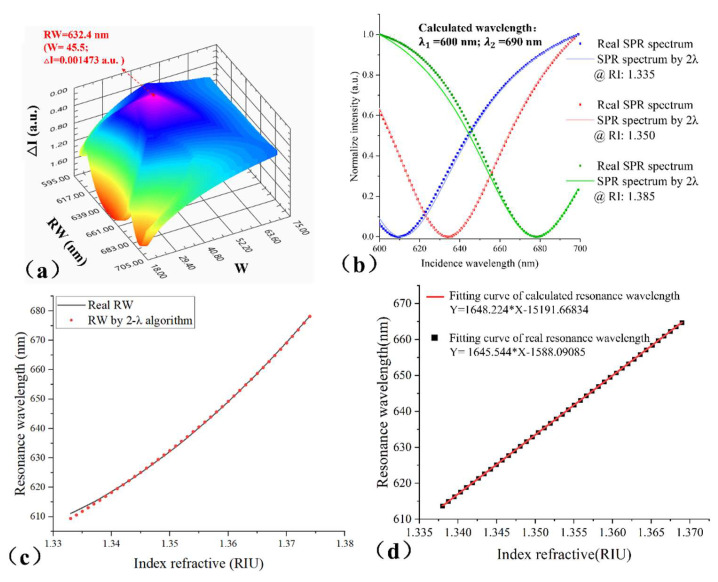 Figure 1
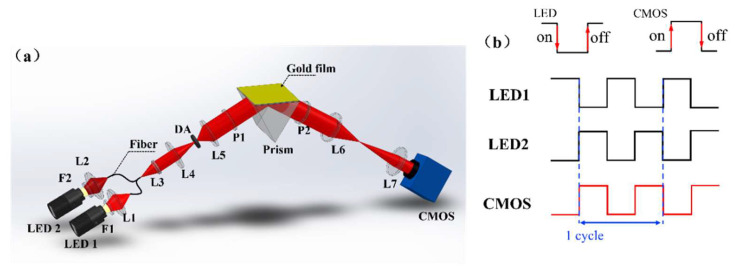 Figure 2
 Figure 3
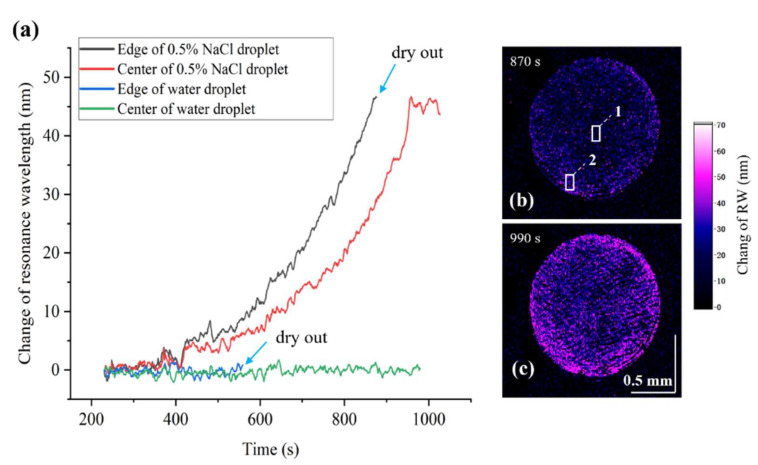 Figure 4
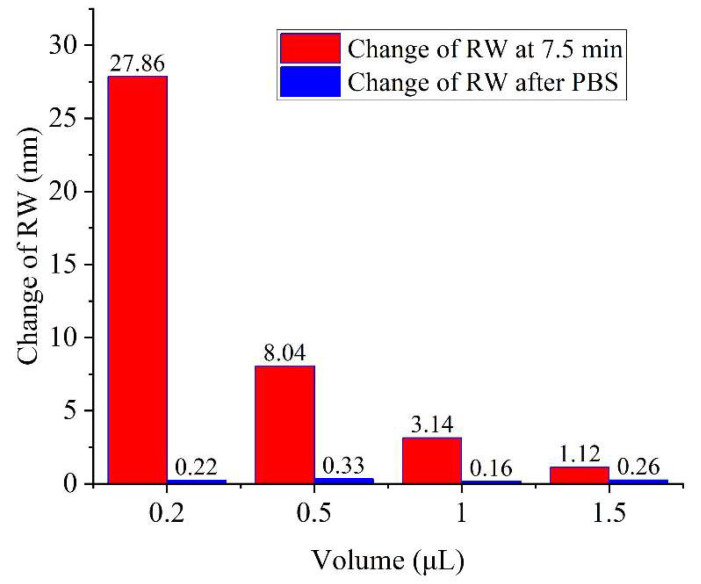 Figure 5
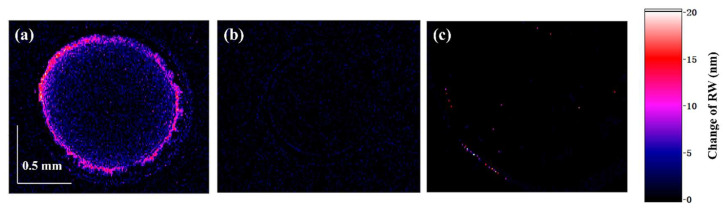 Figure 6
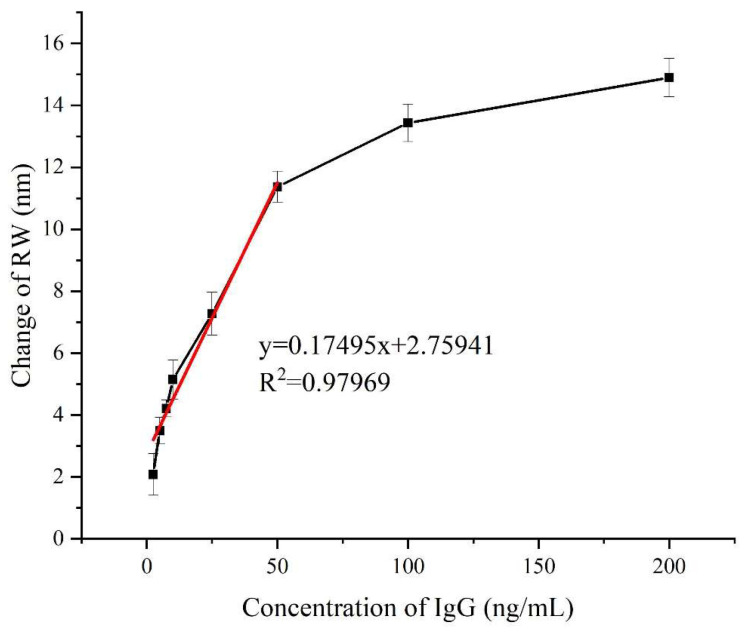 Figure 7
Peer Reviews
No public reviews on file for this paper yet. If you reviewed it on a platform where reviews are public (OpenReview, ICLR, NeurIPS, ICML), you can paste yours below so the community can read it here.
Videos
No videos yet. Explain this paper in a talk, walkthrough, or lecture? Add one.
Taxonomy
TopicsPlasmonic and Surface Plasmon Research · Biosensors and Analytical Detection · Advanced biosensing and bioanalysis techniques