Concordance between Wada, Transcranial Magnetic Stimulation, and Magnetoencephalography for Determining Hemispheric Dominance for Language: A Retrospective Study
Negar Noorizadeh, Roozbeh Rezaie, Jackie A. Varner, James W. Wheless, Stephen P. Fulton, Basanagoud D. Mudigoudar, Leigh Nevill, Christen M. Holder, Shalini Narayana

TL;DR
This study compares non-invasive methods like TMS and MEG to the traditional Wada test for determining which side of the brain controls language in epilepsy patients.
Contribution
The study provides a direct comparison of TMS and MEG against the Wada test for language lateralization in a small patient cohort.
Findings
TMS showed 58.33% and 66.67% concordance with the Wada test using classic and weighted error metrics.
MEG demonstrated 75% concordance with the Wada test in eight patients with conclusive results.
MEG showed stronger agreement with the Wada test compared to TMS.
Abstract
Determination of language hemispheric dominance (HD) in patients undergoing evaluation for epilepsy surgery has traditionally relied on the sodium amobarbital (Wada) test. The emergence of non-invasive methods for determining language laterality has increasingly shown to be a viable alternative. In this study, we assessed the efficacy of transcranial magnetic stimulation (TMS) and magnetoencephalography (MEG), compared to the Wada test, in determining language HD in a sample of 12 patients. TMS-induced speech errors were classified as speech arrest, semantic, or performance errors, and the HD was based on the total number of errors in each hemisphere with equal weighting of all errors (classic) and with a higher weighting of speech arrests and semantic errors (weighted). Using MEG, HD for language was based on the spatial extent of long-latency activity sources localized to receptive…
Genes, proteins, chemicals, diseases, species, mutations and cell lines named across the full text — each resolved to its canonical identifier and authoritative record.
Click any figure to enlarge with its caption.
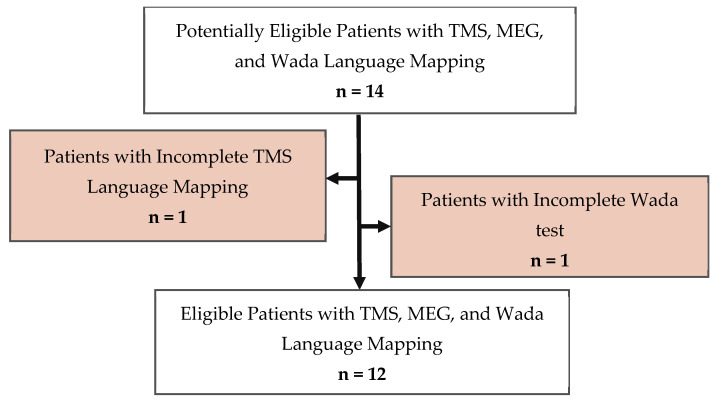 Figure 1
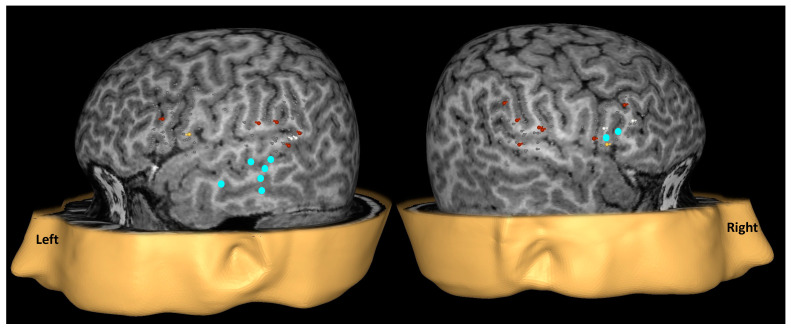 Figure 2
Peer Reviews
No public reviews on file for this paper yet. If you reviewed it on a platform where reviews are public (OpenReview, ICLR, NeurIPS, ICML), you can paste yours below so the community can read it here.
Videos
No videos yet. Explain this paper in a talk, walkthrough, or lecture? Add one.
Taxonomy
TopicsNeurobiology of Language and Bilingualism · Hemispheric Asymmetry in Neuroscience · EEG and Brain-Computer Interfaces