The Effect of Induced Regulatory Focus on Frontal Cortical Activity
Yiqin Lin, Xiaomin Sun

TL;DR
This study shows that different types of motivation affect brain activity in specific regions.
Contribution
The study experimentally demonstrates a causal link between regulatory focus and frontal cortical activity.
Findings
Induced promotion focus increases left frontal cortical activity.
Induced prevention focus increases right frontal cortical activity.
Abstract
The motivation–direction model has served as the primary framework for understanding frontal cortical activity. However, research on the link between approach/avoidance motivation and left/right frontal cortical activity has produced inconsistent findings. Recent studies suggest that regulatory systems may offer a more accurate explanation than the motivational direction model. Despite being regulatory systems, the relationship between regulatory focus and frontal cortical activity has received limited attention. Only one experimental study has explored this connection through correlational analysis, yet it lacks causal evidence. The present study aimed to address this gap by manipulating regulatory focus and measuring frontal cortical activity in 36 college students. Our results revealed that induced promotion focus led to increased left frontal cortical activity, whereas induced…
Genes, proteins, chemicals, diseases, species, mutations and cell lines named across the full text — each resolved to its canonical identifier and authoritative record.
Click any figure to enlarge with its caption.
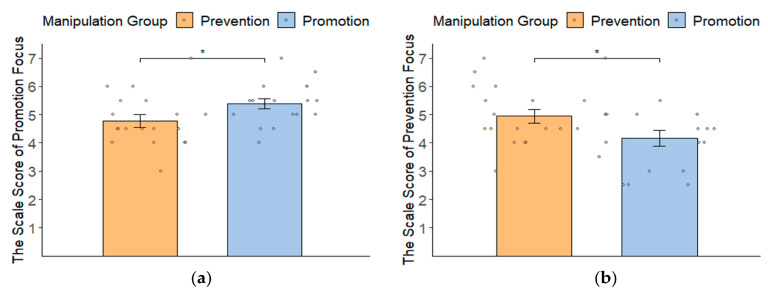 Figure 1
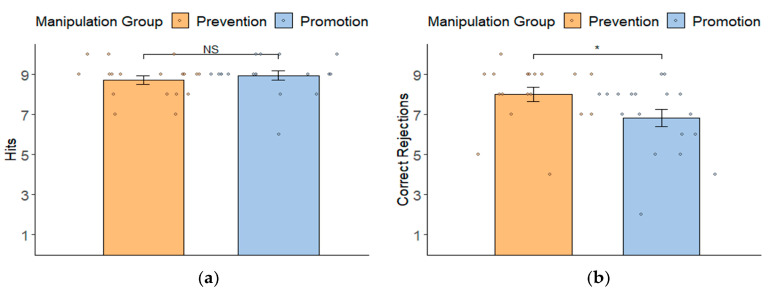 Figure 2
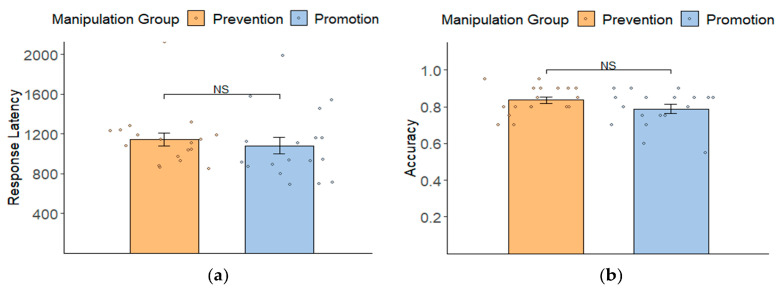 Figure 3
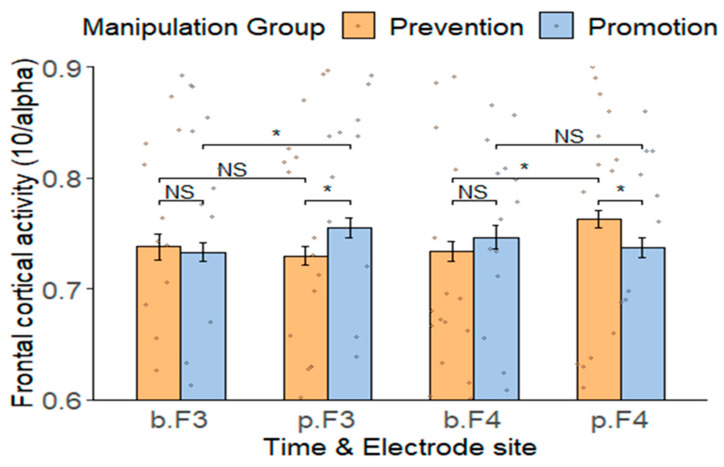 Figure 4
Peer Reviews
No public reviews on file for this paper yet. If you reviewed it on a platform where reviews are public (OpenReview, ICLR, NeurIPS, ICML), you can paste yours below so the community can read it here.
Videos
No videos yet. Explain this paper in a talk, walkthrough, or lecture? Add one.
Taxonomy
TopicsNeural and Behavioral Psychology Studies · Behavioral Health and Interventions · Anxiety, Depression, Psychometrics, Treatment, Cognitive Processes