Generation of human-induced pluripotent stem cells from a patient with homozygous I1234V mutation of cystic fibrosis
Mohamed M. Emara, Merlin Thomas, Mona Al Langawi, Michail Nomikos, Hanaa Mousa, Soha Aboukhalaf, Nadin H Abouzeid, Yasemin AlShanableh, Maryam K Al Thani, Yehia Y. Hussein, Nuha T. Swaidan, Yasmin Elsharabassi

Abstract
Genes, proteins, chemicals, diseases, species, mutations and cell lines named across the full text — each resolved to its canonical identifier and authoritative record.
Click any figure to enlarge with its caption.
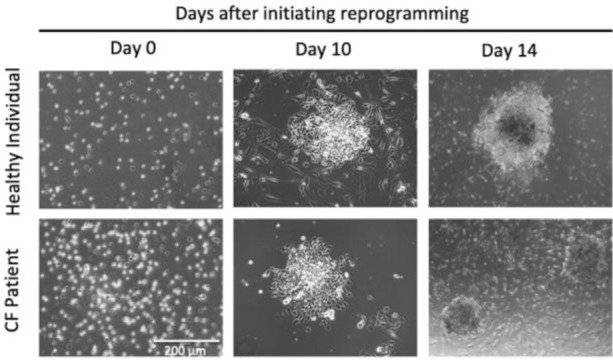 Figure 1
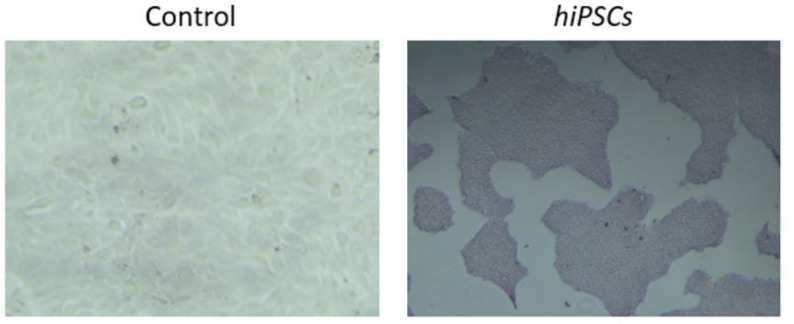 Figure 2
Peer Reviews
No public reviews on file for this paper yet. If you reviewed it on a platform where reviews are public (OpenReview, ICLR, NeurIPS, ICML), you can paste yours below so the community can read it here.
Videos
No videos yet. Explain this paper in a talk, walkthrough, or lecture? Add one.
Taxonomy
TopicsPluripotent Stem Cells Research · Renal and related cancers · Biomedical Ethics and Regulation
Introduction
Cystic fibrosis (CF) is an inherited autosomal recessive disorder. The most predominant mutation among Qatari patients with CF is the homozygous I1234V mutation, which is more prevalent in a Bedouin tribe.^1^ There are no reliable models of this mutation available to study the pathogenesis of CF; therefore, discovery of an effective treatment for the disease is ongoing.
Methods
We conducted this study to generate patient-specific induced pluripotent stem cells (iPSCs) from an adult Qatari CF patient with the above-mentioned mutation to fully characterize these cells and eventually use them in disease modeling. The study was ethically approved by the Institutional Review Board of Hamad Medical Corporation (HMC) and Qatar University (QU). Blood samples (10 ml) were collected at HMC from the patient with CF and a matched healthy control and processed at QU based on Takahashi et al.^2^
Results
The emerging iPSC colonies were monitored daily until we observed the typical morphology of undifferentiated human embryonic stem cell-like colonies and/or commercial iPSCs (Figure 1). These colonies were fully characterized by different molecular and cell biology techniques and showed similar characteristics of the commercial ones. Indeed, different known pluripotent protein markers (Nanog, Oct4, SOX2, SOX17, and Brachyury) were efficiently expressed as assessed by Western blot analysis. The presence of these pluripotent markers was also confirmed using fluorescence microscopy. In addition, the generated cells markedly expressed alkaline phosphatase, which is a key marker of pluripotent stem cells (Figure 2). Finally, the clones maintained the normal integrity of the 46, XY karyotype chromosome.
Conclusion
These results indicate that we have succeeded for the first time in generating CF-I1234V-hiPSC colonies that have the typical pluripotent cell morphology and carry all the molecular characteristics of pluripotent stem cells. The generation of this cell model could be used to tailor personalized treatment specifically for Qatari CF patients with this mutation.
Conflict of Interest
The authors have no conflict of interest to disclose.
Ethical Approval
The research described in this paper has received ethical approval from Hamad Medical Cooperation: MRC-03-20-050 and Qatar University: QU-IRB 1247-EA/20 Institutional Review Boards (IRB) in accordance with established ethical guidelines and regulations.
The reference list from the paper itself. Each links out to its DOI / PubMed record.
- 1Hammoudeh S.Gadelhak W.Abdul Wahab A.Al-Langawi M Janahi IA Approaching two decades of cystic fibrosis research in Qatar: A historical perspective and future directions Multidisciplinary Respiratory Medicine 2019;14:2910.1186/s 40248-019-0193-431583102 PMC 6771098 · doi ↗ · pubmed ↗
- 2Takahashi K Tanabe K Ohnuki M Narita M Ichisaka T Tomoda K Induction of pluripotent stem cells from adult human fibroblasts by defined factors Cell 2007;131(5):861-87210.1016/j.cell.2007.11.019PMID: 1803540818035408 · doi ↗ · pubmed ↗