Construction and validation of machine learning algorithm for predicting depression among home-quarantined individuals during the large-scale COVID-19 outbreak: based on Adaboost model
Yiwei Zhou, Zejie Zhang, Qin Li, Guangyun Mao, Zumu Zhou

TL;DR
This study developed a machine learning model using Adaboost to predict depression in people under home quarantine during the COVID-19 outbreak, showing strong performance.
Contribution
The novel contribution is the development and validation of an Adaboost-based model for depression prediction in home-quarantined individuals during a pandemic.
Findings
The prevalence of depression among home-quarantined individuals was 31.66%.
The Adaboost model achieved an AUC of 0.7803 and outperformed 15 other models.
The model showed high robustness and generalizability with AUC over 0.83 in validation sets.
Abstract
COVID-19 epidemics often lead to elevated levels of depression. To accurately identify and predict depression levels in home-quarantined individuals during a COVID-19 epidemic, this study constructed a depression prediction model based on multiple machine learning algorithms and validated its effectiveness. A cross-sectional method was used to examine the depression status of individuals quarantined at home during the epidemic via the network. Characteristics included variables on sociodemographics, COVID-19 and its prevention and control measures, impact on life, work, health and economy after the city was sealed off, and PHQ-9 scale scores. The home-quarantined subjects were randomly divided into training set and validation set according to the ratio of 7:3, and the performance of different machine learning models were compared by 10-fold cross-validation, and the model algorithm…
Genes, proteins, chemicals, diseases, species, mutations and cell lines named across the full text — each resolved to its canonical identifier and authoritative record.
Click any figure to enlarge with its caption.
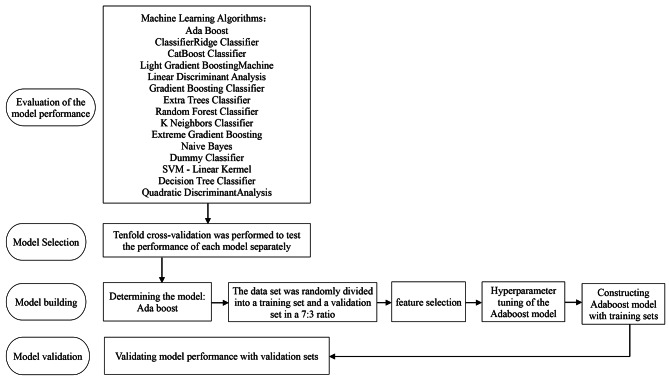 Figure 1
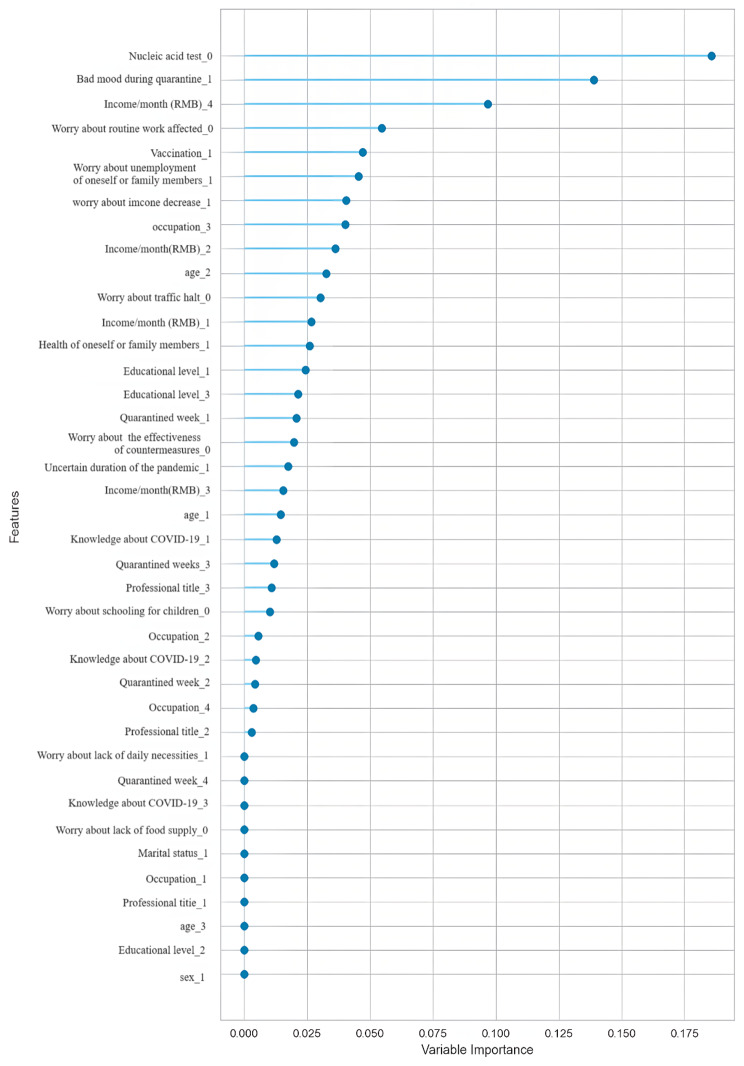 Figure 2
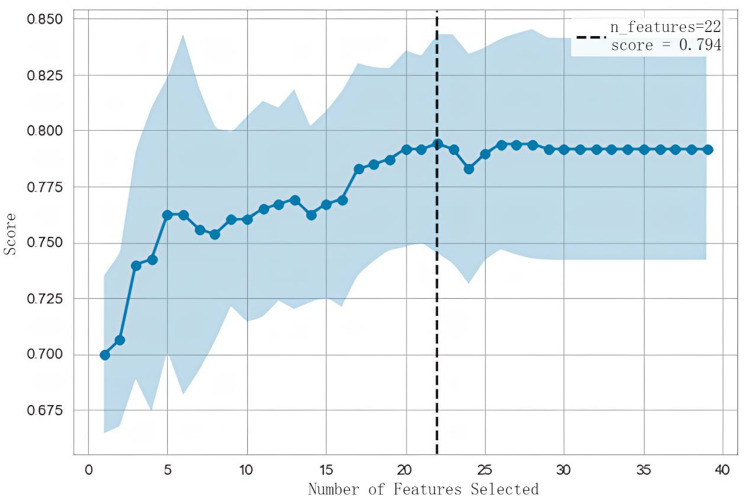 Figure 3
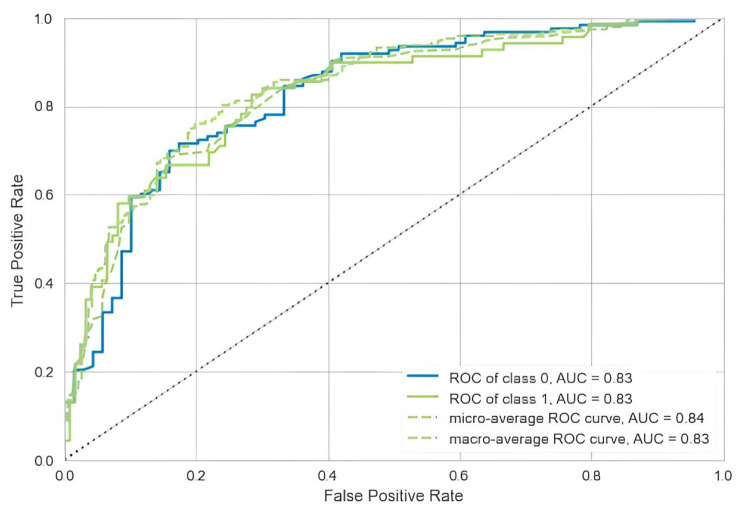 Figure 4
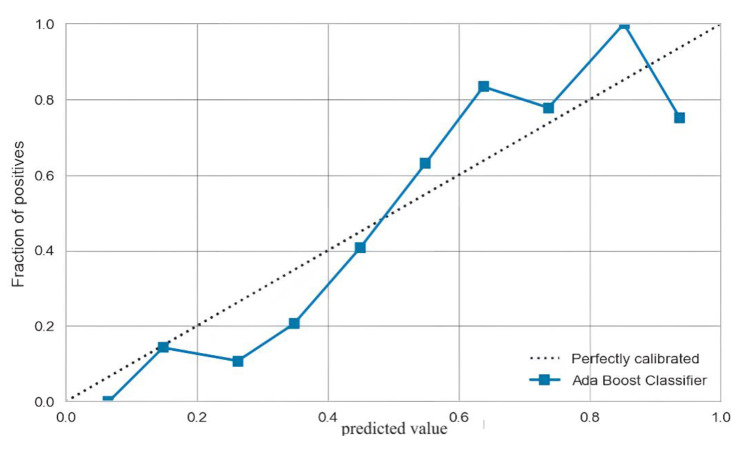 Figure 5
Peer Reviews
No public reviews on file for this paper yet. If you reviewed it on a platform where reviews are public (OpenReview, ICLR, NeurIPS, ICML), you can paste yours below so the community can read it here.
Videos
No videos yet. Explain this paper in a talk, walkthrough, or lecture? Add one.
Taxonomy
TopicsInnovation in Digital Healthcare Systems · Mental Health via Writing · Health and Wellbeing Research