Diterpenes Isolated from Three Different Plectranthus Sensu Lato Species and Their Antiproliferative Activities against Gynecological and Glioblastoma Cancer Cells
Mária Gáborová, Máté Vágvölgyi, Bizhar Ahmed Tayeb, Renáta Minorics, István Zupkó, Ondřej Jurček, Szabolcs Béni, Renata Kubínová, György Tibor Balogh, Attila Hunyadi

TL;DR
This study isolated diterpenes from three Plectranthus species and found some to be highly effective at stopping the growth of gynecological and brain cancer cells.
Contribution
The discovery of three new diterpenes and their strong antiproliferative activity against glioblastoma and gynecological cancer cells.
Findings
Three new diterpenes were isolated from Coleus comosus.
Royleanone- and hydroquinone-type abietane diterpenes showed the strongest antiproliferative effects.
IC50 values for these diterpenes against glioblastoma cells ranged from 1.1 to 15.6 μM.
Abstract
Fourteen diterpenes were isolated from methanol extracts of the aerial parts ofColeus comosus,Coleus forsteri “Marginatus”, and Plectranthus ciliatus. The compounds belong to the abietane (1–4, 9–11, and 13), ent-clerodane (5–8), and ent-kaurane (14, 15) classes. Three new compounds were isolated from C. comosus, including 3-O-acetylornatin G (2), 3,12-di-O-acetylornatin G (3), ornatin B methyl ester (5), and ornatin F (4), for which we proposed a revised structure. The structures of the compounds were determined by comprehensive spectroscopic data analysis. The isolated diterpenes were examined in silico for their physicochemical and early ADME properties. Their antiproliferative effects were determined in vitro using human breast (MDA-MB-231 and MCF-7), cervical (HeLa), and glioblastoma (U-87 MG) cancer cell lines. The royleanone- and hydroquinone-type abietane diterpenes…
Genes, proteins, chemicals, diseases, species, mutations and cell lines named across the full text — each resolved to its canonical identifier and authoritative record.
Click any figure to enlarge with its caption.
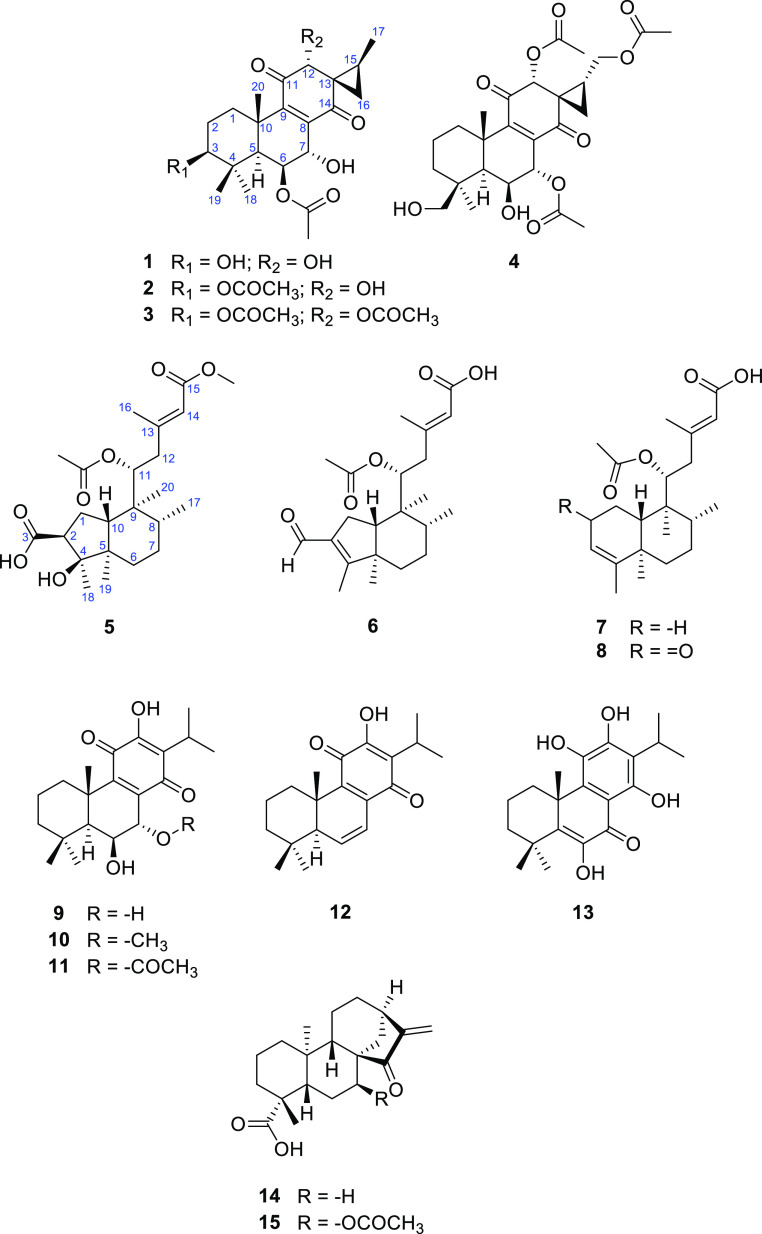 Figure 1
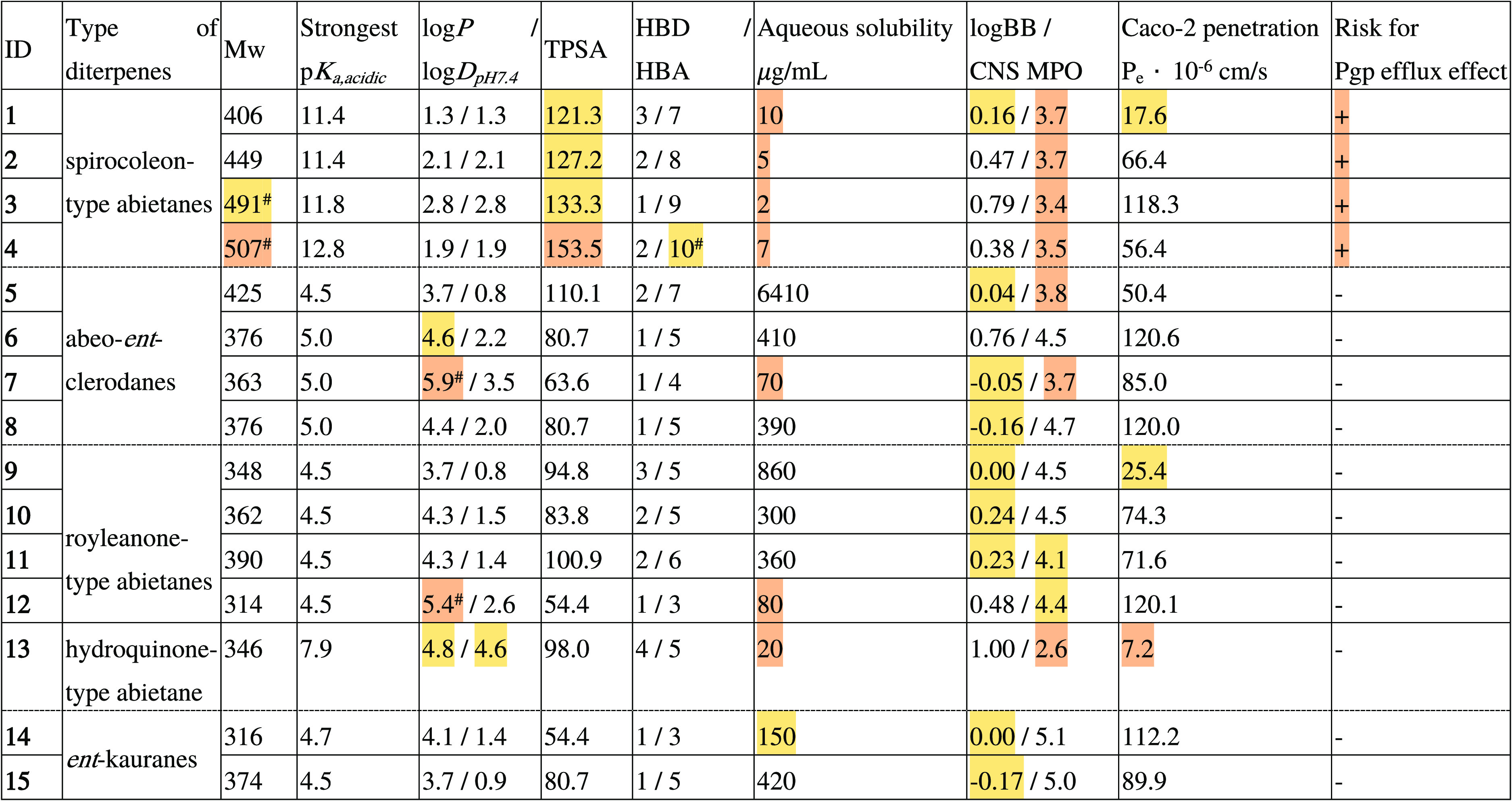 Figure 2
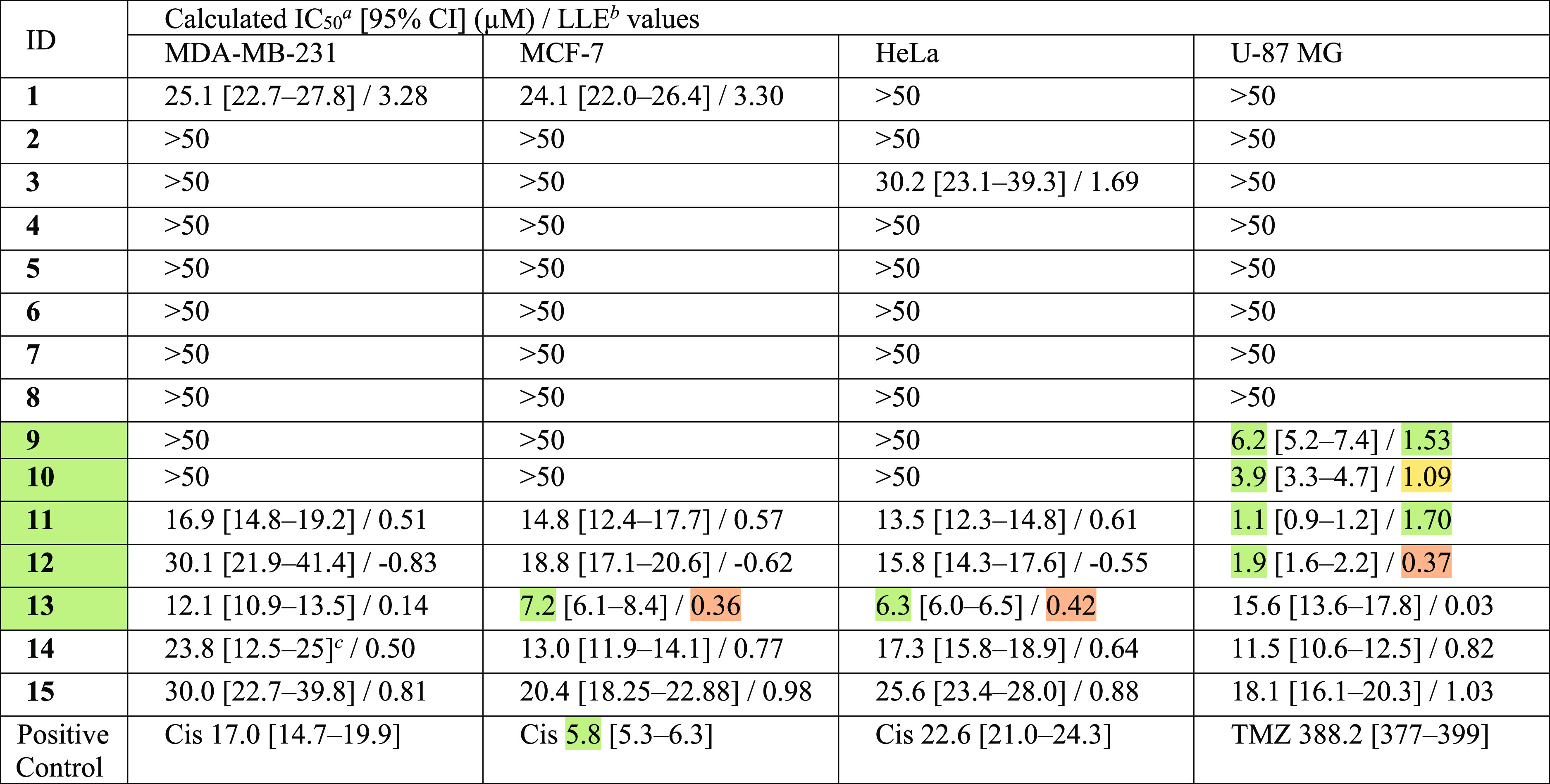 Figure 3
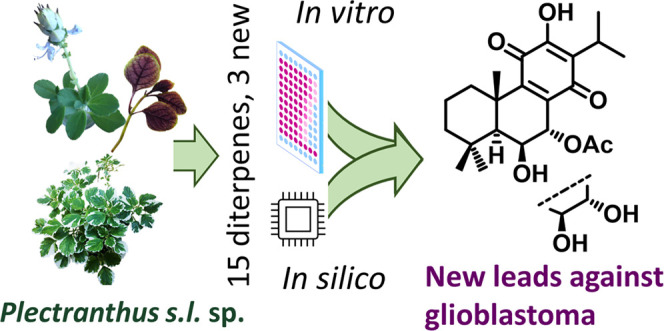 Figure 4
Peer Reviews
No public reviews on file for this paper yet. If you reviewed it on a platform where reviews are public (OpenReview, ICLR, NeurIPS, ICML), you can paste yours below so the community can read it here.
Videos
No videos yet. Explain this paper in a talk, walkthrough, or lecture? Add one.
Taxonomy
TopicsNatural product bioactivities and synthesis · Plant biochemistry and biosynthesis · Traditional and Medicinal Uses of Annonaceae