Cymensifin A: a promising pharmaceutical candidate to defeat lung cancer via cellular reactive oxygen species-mediated apoptosis
Bruno Cesar Costa Soares, Hnin Ei Ei Khine, Boonchoo Sritularak, Pithi Chanvorachote, Rosa Alduina, Rungroch Sungthong, Chatchai Chaotham

TL;DR
Cymensifin A, a compound from an orchid, shows promise in killing lung cancer cells by increasing reactive oxygen species and triggering cell death.
Contribution
The study reveals the molecular mechanisms by which Cymensifin A induces apoptosis in lung cancer cells.
Findings
Cymensifin A at 25–50 μM effectively kills non-small-cell lung cancer cells.
The compound triggers apoptosis via ROS accumulation and modulates key proteins like P53, BAX, and BCL-2.
Cymensifin A downregulates antioxidant activity and activates pro-apoptotic pathways more effectively than hydrogen peroxide.
Abstract
Background: The upgrade of natural products for cancer treatment is essential since current anticancer drugs still pose severe side effects. Cymensifin A (Cym A) isolated from an orchid Cymbidium ensifolium has shown its potential to induce the death of several cancer cells; however, its underlying molecular mechanisms are hitherto unknown. Methods: Here, we conducted a set of in vitro preliminary tests to assess the cytotoxic effects of Cym A on non-small-cell lung cancer (NSCLC) cells (A549, H23, H292, and H460). A flow cytometry system and Western blot analyses were employed to unveil molecular mechanisms underlying cancer cell apoptosis caused by Cym A. Results: Cym A at 25–50 μM caused the death of all NSCLC cells tested, and its cytotoxicity was comparable to cisplatin, a currently used anticancer drug. The compound induced apoptosis of all NSCLC cells in a dose-dependent manner…
Genes, proteins, chemicals, diseases, species, mutations and cell lines named across the full text — each resolved to its canonical identifier and authoritative record.
Click any figure to enlarge with its caption.
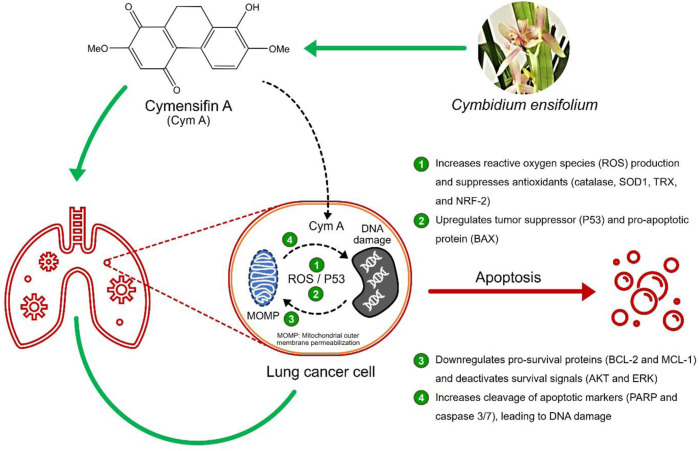 Figure 1
 Figure 2
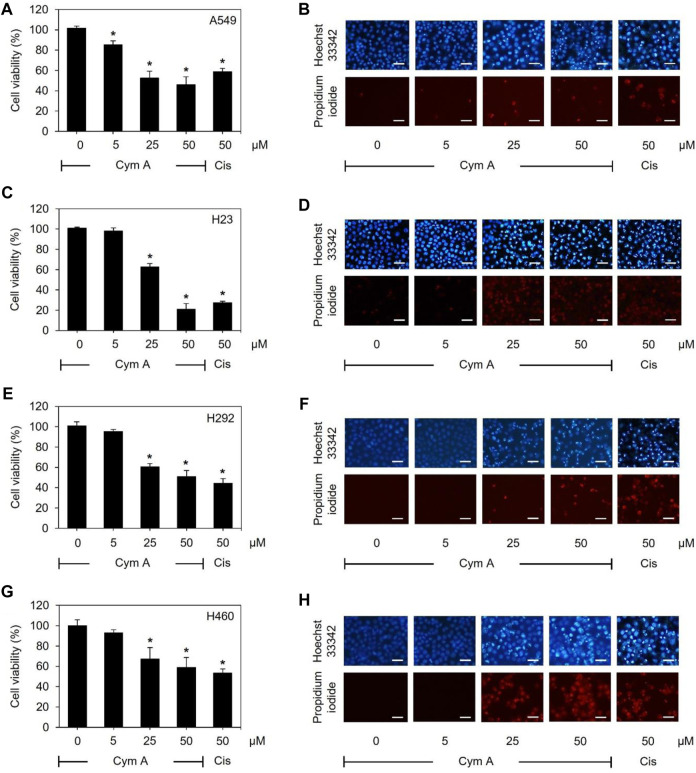 Figure 3
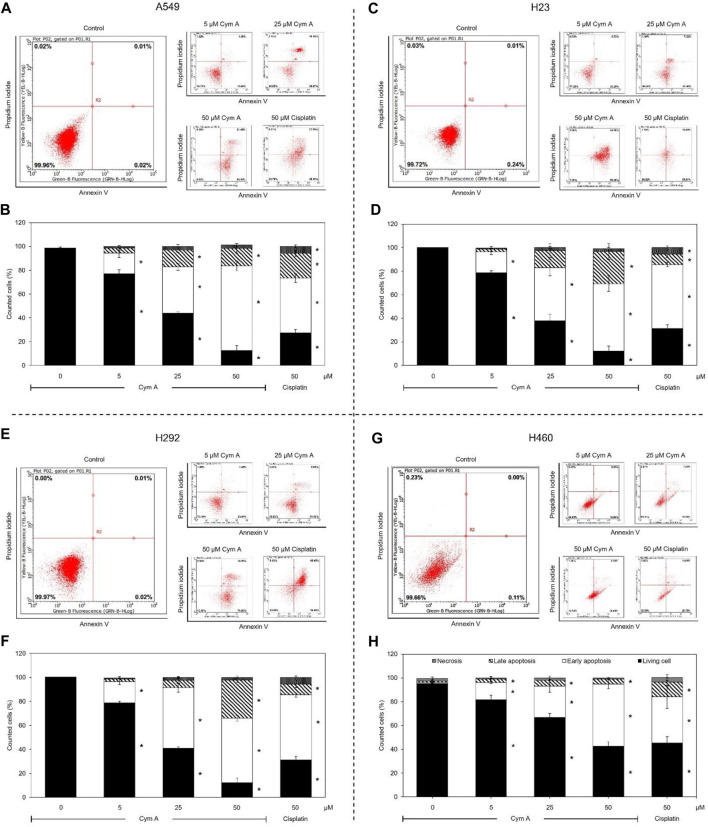 Figure 4
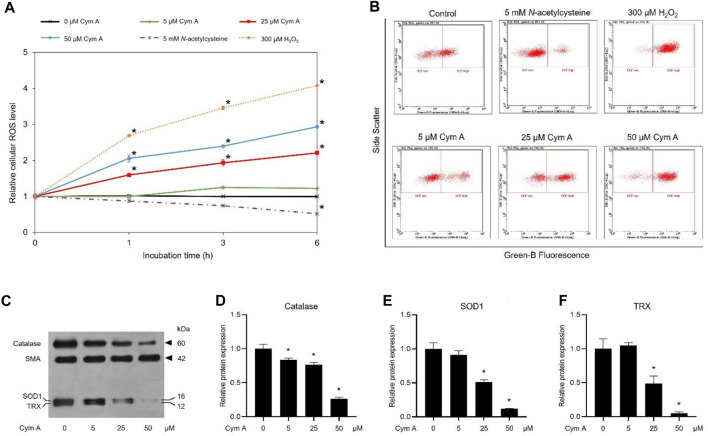 Figure 5
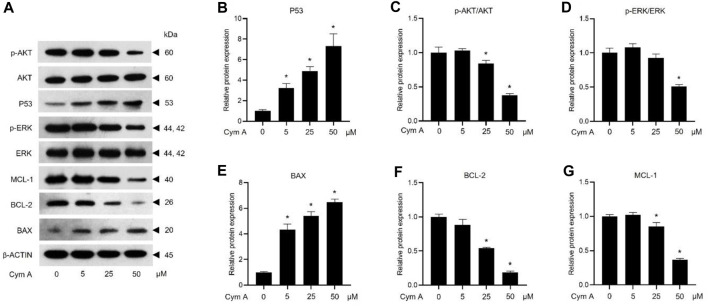 Figure 6
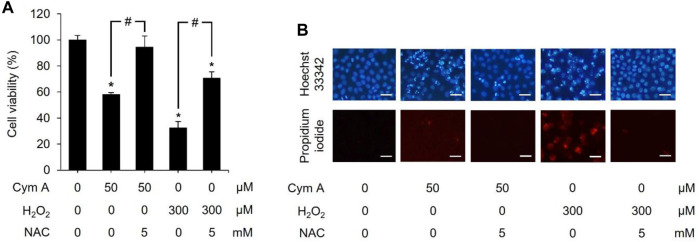 Figure 7
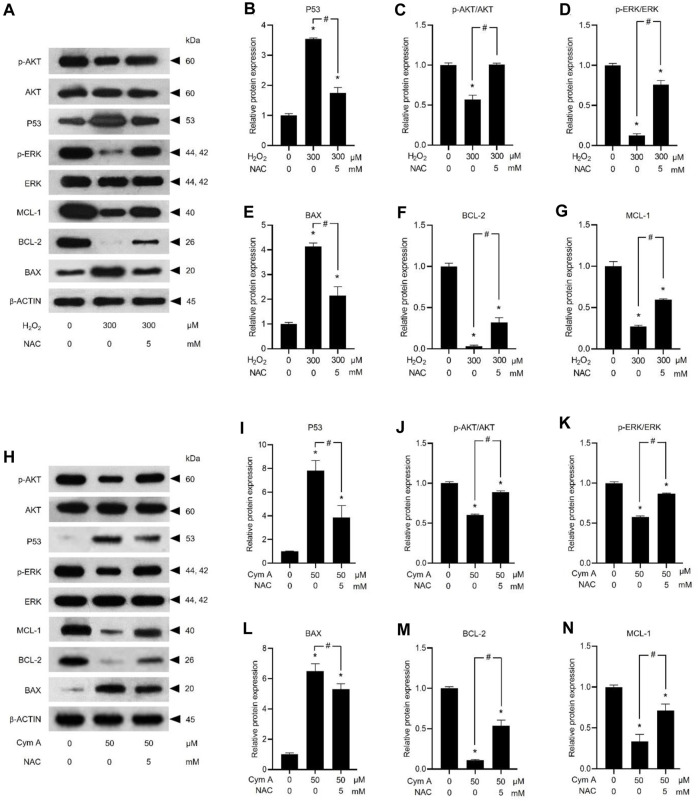 Figure 8
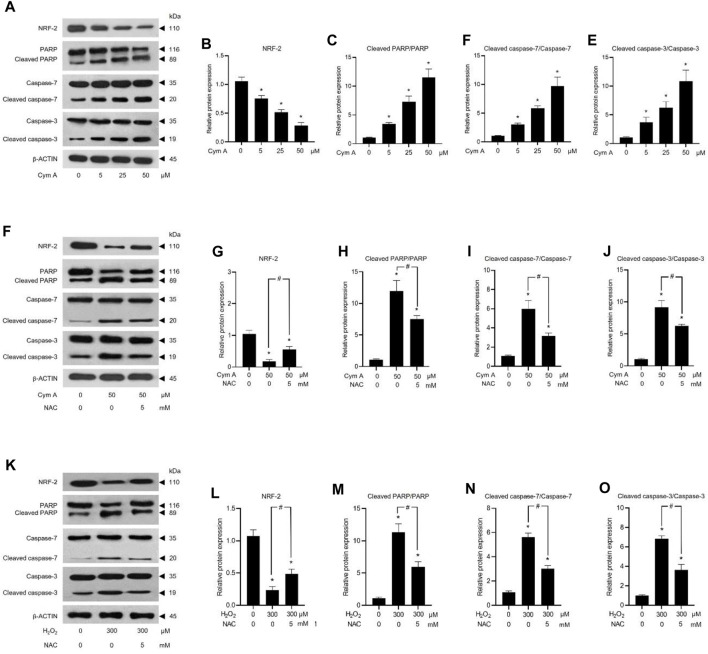 Figure 9
Peer Reviews
No public reviews on file for this paper yet. If you reviewed it on a platform where reviews are public (OpenReview, ICLR, NeurIPS, ICML), you can paste yours below so the community can read it here.
Videos
No videos yet. Explain this paper in a talk, walkthrough, or lecture? Add one.
Taxonomy
TopicsBiological and pharmacological studies of plants · Genomics, phytochemicals, and oxidative stress · Ginseng Biological Effects and Applications