Protecting the non-operative lobe/s of the operative lung can reduce the pneumonia incidence after thoracoscopic lobectomy: a randomised controlled trial
Chao Zhou, Shan Song, Jianfeng Fu, Xuelian Zhao, Huaqin Liu, Huanshuang Pei, Shasha Zhang, Hongbo Guo, Xinxin Cui

TL;DR
Using a double-bronchial blocker with CPAP during lung surgery can significantly reduce postoperative pneumonia in both the operative and non-operative lungs.
Contribution
A new technique using a double-bronchial blocker with CPAP to protect non-operative lobes during thoracoscopic lobectomy is shown to reduce pneumonia risk.
Findings
Group DBB had a significantly lower pneumonia incidence in the operative lung (27.5% vs 5%) on postoperative day 1.
Group DBB also showed reduced pneumonia in the non-operative lung (40% vs 15%) on postoperative day 1.
The DBB technique with CPAP is more effective than routine bronchial blocker use in preventing postoperative pneumonia.
Abstract
Lung isolation usually refers to the isolation of the operative from the non-operative lung without isolating the non-operative lobe(s) of the operative lung. We aimed to evaluate whether protecting the non-operative lobe of the operative lung using a double-bronchial blocker (DBB) with continuous positive airway pressure (CPAP) could reduce the incidence of postoperative pneumonia. Eighty patients were randomly divided into two groups (n = 40 each): the DBB with CPAP (Group DBB) and routine bronchial blocker (Group BB) groups. In Group DBB, a 7-Fr BB was placed in the middle bronchus of the right lung for right lung surgery and in the inferior lobar bronchus of the left lung for left lung surgery. Further, a 9-Fr BB was placed in the main bronchus of the operative lung. In Group BB, routine BB placement was performed on the main bronchus on the surgical side. The primary endpoint was…
Genes, proteins, chemicals, diseases, species, mutations and cell lines named across the full text — each resolved to its canonical identifier and authoritative record.
Click any figure to enlarge with its caption.
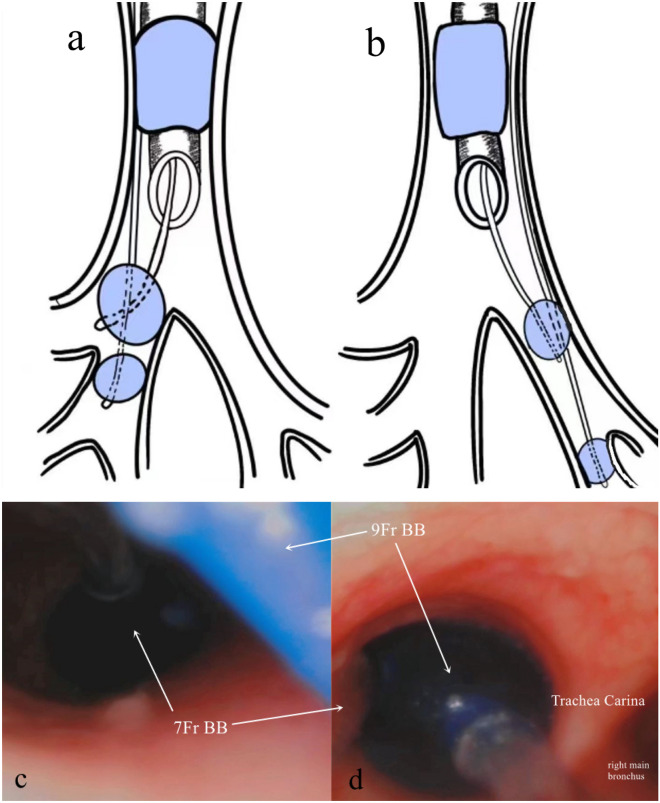 Figure 1
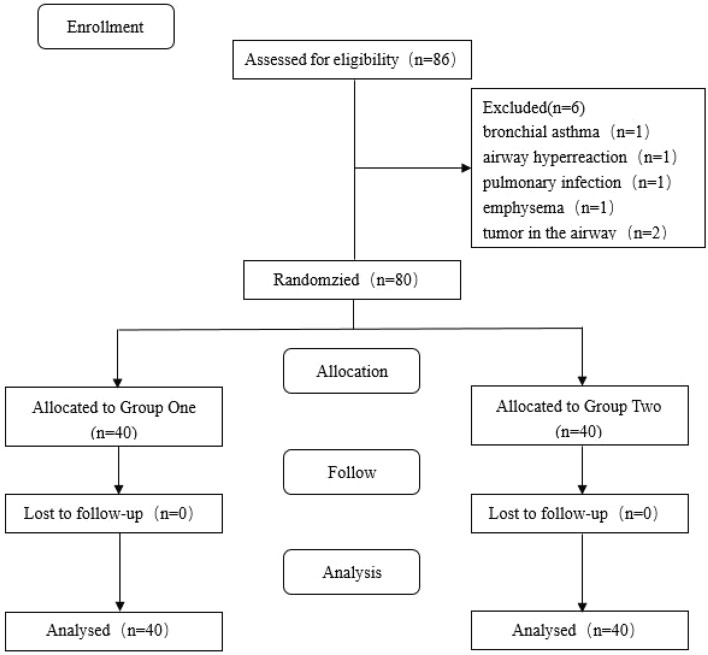 Figure 2
Peer Reviews
No public reviews on file for this paper yet. If you reviewed it on a platform where reviews are public (OpenReview, ICLR, NeurIPS, ICML), you can paste yours below so the community can read it here.
Videos
No videos yet. Explain this paper in a talk, walkthrough, or lecture? Add one.
Taxonomy
TopicsTracheal and airway disorders · Airway Management and Intubation Techniques · Lung Cancer Diagnosis and Treatment