Stored alcohol and fatty acid intermediates and the biosynthesis of sex pheromone aldehyde in the moth Chloridea virescens
Stephen P. Foster, Karin G. Anderson

TL;DR
This study investigates how a moth species produces its sex pheromone, finding that it relies on rapid biosynthesis rather than stored fat.
Contribution
The study reveals the biosynthetic pathway of a moth sex pheromone aldehyde and rules out prior synthesis and storage of fatty acid precursors.
Findings
Intracellular (Z)-11-hexadecenol is synthesized at the same rate as the pheromone aldehyde, indicating no rate-limiting steps.
Two pools of (Z)-11-hexadecenol exist, with one rapidly converted to pheromone and the other remaining in gland cells.
Stored (Z)-11-hexadecenoate increases during biosynthesis but is not the source of the indirect pheromone route.
Abstract
In most species of moths, the female produces and releases a volatile sex pheromone from a specific gland to attract a mate. Biosynthesis of the most common type of moth sex pheromone component (Type 1) involves de novo synthesis of hexadecanoate (16:Acyl), followed by modification to various fatty acyl intermediates, then reduction to a primary alcohol, which may be acetylated or oxidized to produce an acetate ester or aldehyde, respectively. Our previous work on the moth Chloridea virescens (Noctuidae) showed that females produce 90% of the major pheromone component, (Z)-11-hexadecenal (Z11-16:Ald), via a direct and rapid route of de novo biosynthesis with highly labile intermediates, and ca. 10% from an indirect route that likely mobilizes a pre-synthesized 16-carbon skeleton, possibly, (Z)-11-hexadecenoate (Z11-16:Acyl) or hexadecanoate (16:Acyl). In this paper, we use stable…
Genes, proteins, chemicals, diseases, species, mutations and cell lines named across the full text — each resolved to its canonical identifier and authoritative record.
Click any figure to enlarge with its caption.
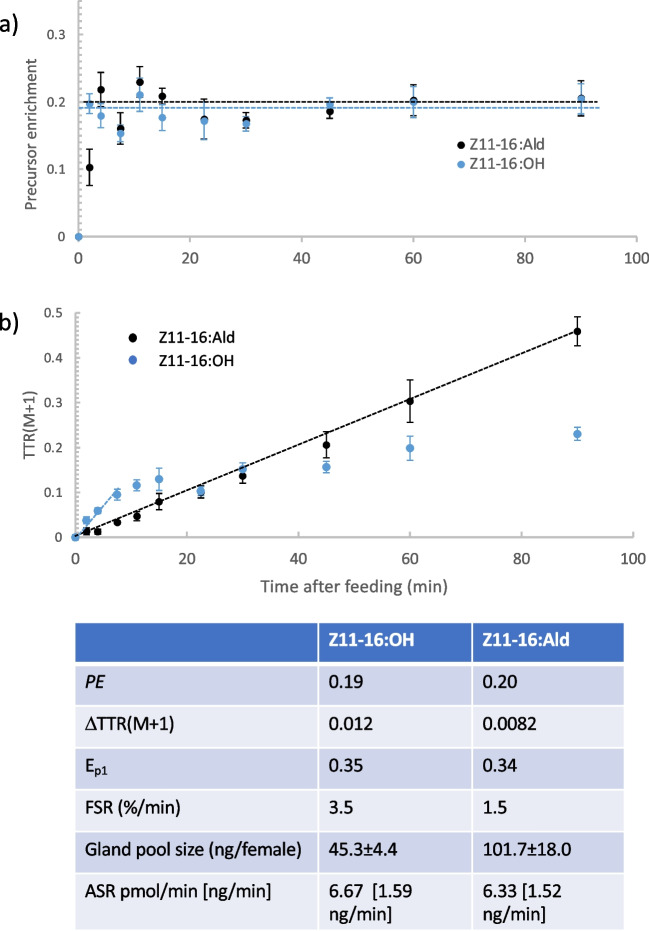 Figure 1
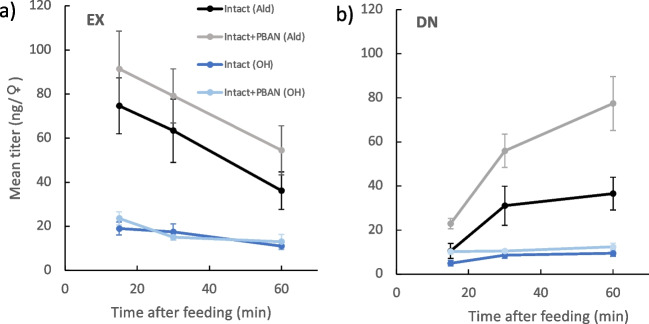 Figure 2
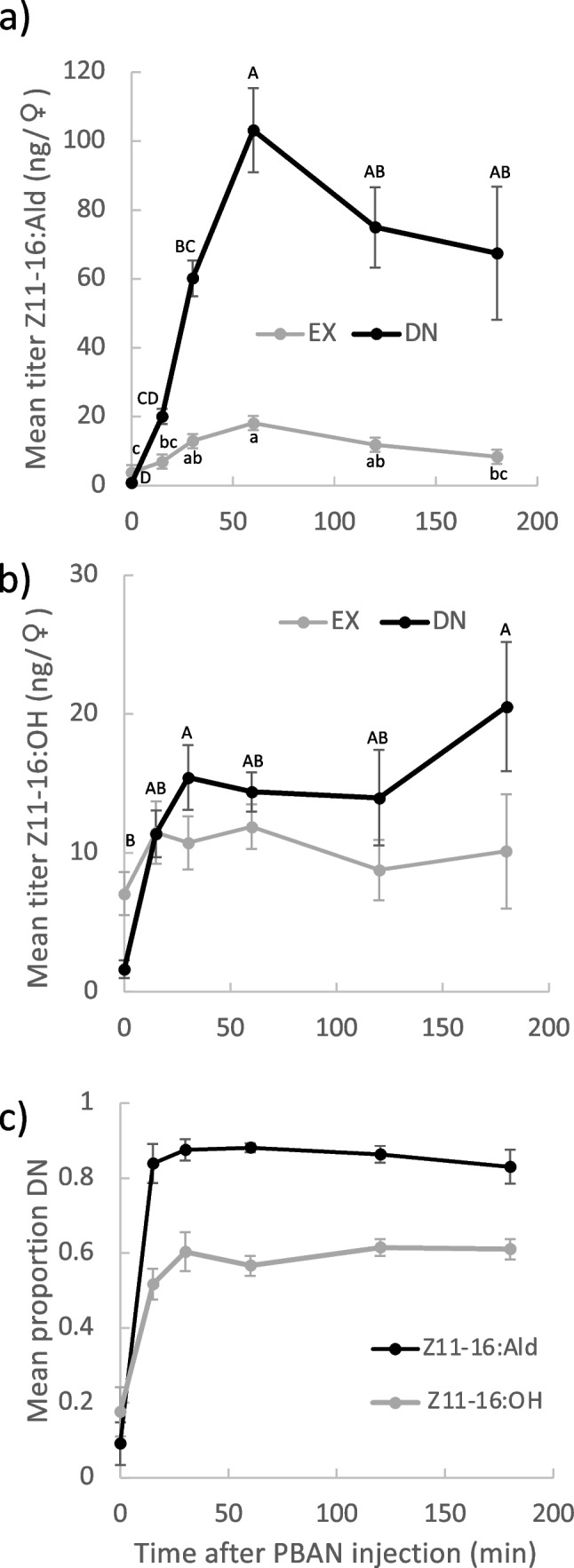 Figure 3
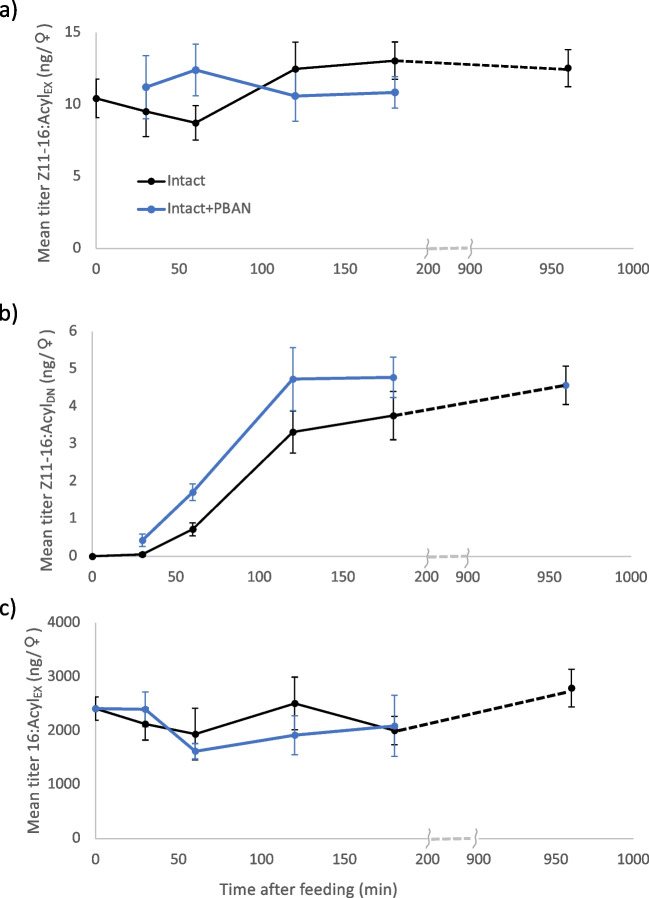 Figure 4
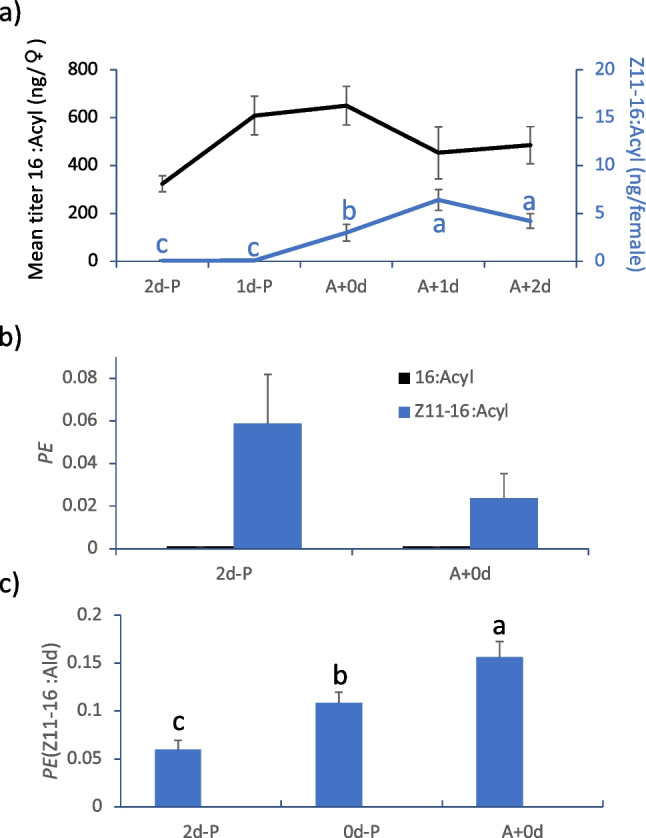 Figure 5
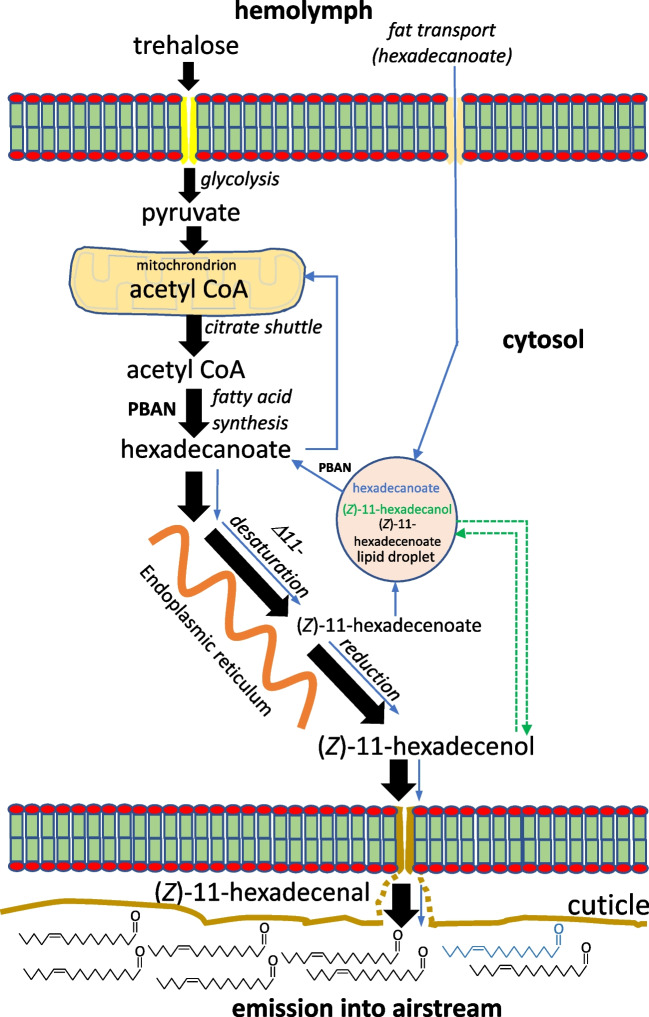 Figure 6
Peer Reviews
No public reviews on file for this paper yet. If you reviewed it on a platform where reviews are public (OpenReview, ICLR, NeurIPS, ICML), you can paste yours below so the community can read it here.
Videos
No videos yet. Explain this paper in a talk, walkthrough, or lecture? Add one.
Taxonomy
TopicsInsect Pheromone Research and Control · Neurobiology and Insect Physiology Research · Insect and Pesticide Research