Adaptive robust structure exploration for complex systems based on model configuration and fusion
Yingfei Qu, Wanbing Liu, Junhao Wen, Ming Li

TL;DR
This paper introduces an adaptive algorithm to explore complex system structures, uncovering multiple features like clustering and overlapping.
Contribution
The novel contribution is an adaptive algorithm using generative models to explore complex systems with enhanced adaptability and fusion strategies.
Findings
The algorithm effectively uncovers structural features such as clustering, overlapping, and local chaining.
Comparative experiments on benchmark networks show the method's effectiveness and stability.
Algorithm fusion strategies improve adaptability on real-world networks.
Abstract
Analyzing and obtaining useful information is challenging when facing a new complex system. Traditional methods often focus on specific structural aspects, such as communities, which may overlook the important features and result in biased conclusions. To address this, this article suggests an adaptive algorithm for exploring complex system structures using a generative model. This method calculates and optimizes node parameters, which can reflect the latent structural characteristics of the complex system. The effectiveness and stability of this method have been demonstrated in comparative experiments on 10 sets of benchmark networks using our model parameter configuration scheme. To enhance adaptability, algorithm fusion strategies were also proposed and tested on two real-world networks. The results indicate that the algorithm can uncover multiple structural features, including…
Click any figure to enlarge with its caption.
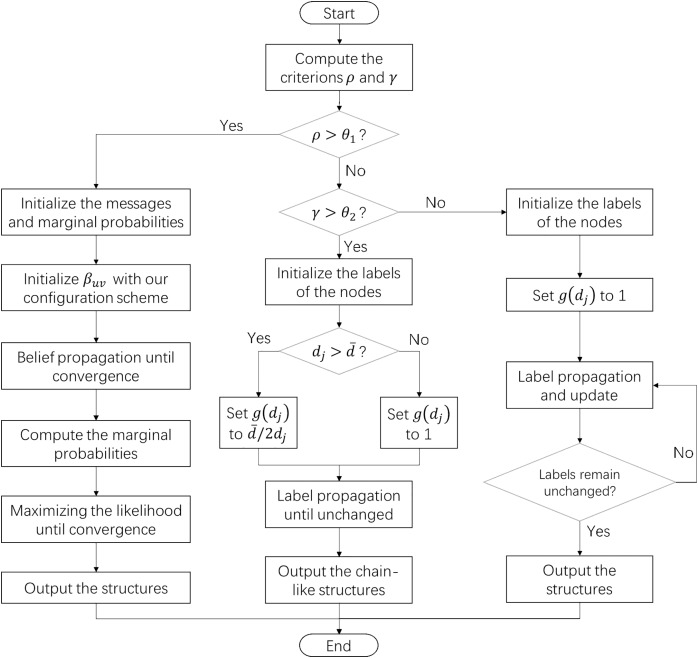 Figure 1
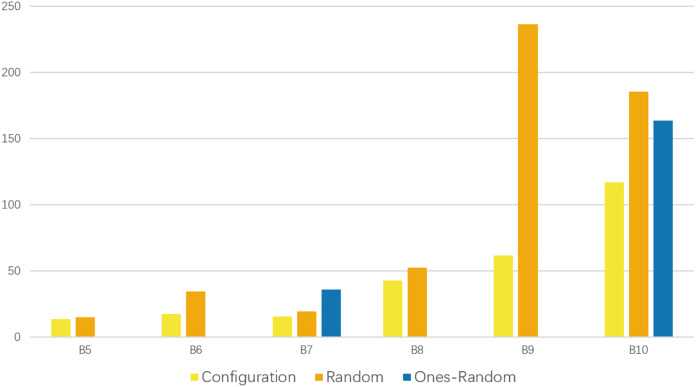 Figure 2
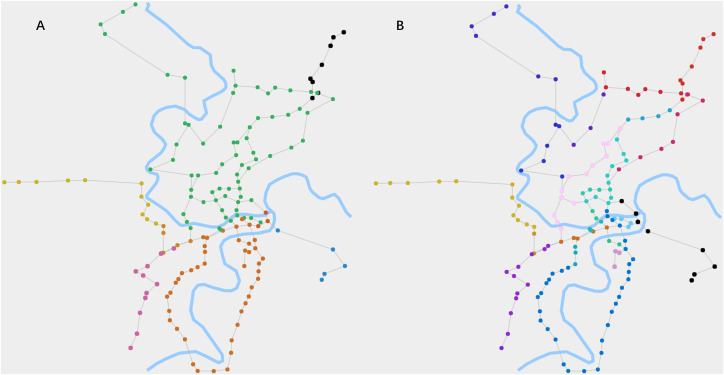 Figure 3
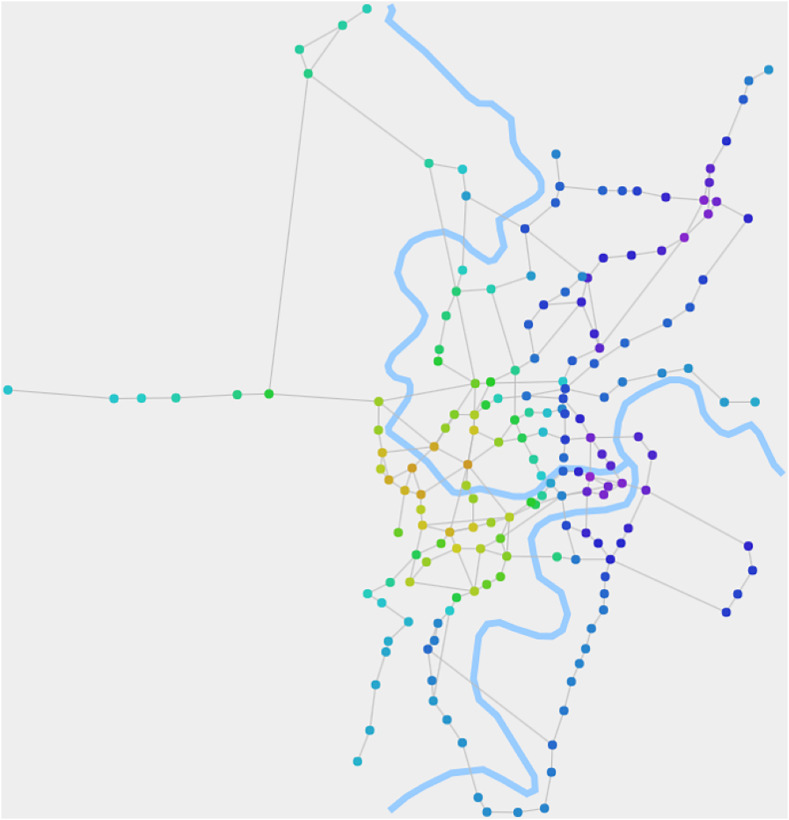 Figure 4
- —Science and Technology Research Program of Chongqing Municipal Education Commission
Peer Reviews
No public reviews on file for this paper yet. If you reviewed it on a platform where reviews are public (OpenReview, ICLR, NeurIPS, ICML), you can paste yours below so the community can read it here.
Videos
No videos yet. Explain this paper in a talk, walkthrough, or lecture? Add one.
Taxonomy
TopicsComplex Network Analysis Techniques · Opinion Dynamics and Social Influence · Mental Health Research Topics
Introduction
With the advancement of digital transformation (Zaoui & Souissi, 2020; Kraus et al., 2021) complex network systems are experiencing exponential growth (Cohen et al., 2022; Rosas et al., 2022; Shurety, Bodin & Cumming, 2022; Stella, 2022). There is a shortage of manpower and resources for researching complex network systems. Therefore, a highly adaptive framework is needed to automatically explore the structures of complex networks without requiring extensive prior knowledge.
Despite having been studied for many years, complex network structure exploration (Strogatz, 2001; Wei, Xu & Ma, 2019; Li et al., 2020) remains an active research field due to its widespread application (Mou et al., 2020; Zhang et al., 2020) and significant value in solving real-world problems (Li et al., 2021; Lei & Cheong, 2022; Zhao et al., 2022). In a commentary article published in Nature Physics, Fortunato & Newman (2022) review the advancements in community detection, a crucial direction in exploring network structures, over the past two decades. The article provides an overview of representative community detection techniques, identifies the detection limitations encountered in community discovery, and affirms the data processing capabilities of representation learning. The team led by Hui-Jia et al. (2022) has developed metrics and models to assess network structure, allowing for a quantitative evaluation of structural exploration. Xu et al. (2021) found that the Kuramoto oscillation model’s synchronization algorithm could be employed to reveal the overlapping structural features of a network. The approach introduced by Ma et al. (2021) involves hierarchical partitioning of networks in network systems based on scale indicators. They further propose a network structure exploration algorithm based on joint non-negative matrix factorization, allowing for structural feature discovery at different levels and enhancing the understanding of network structure (Ma et al., 2021). Khawaja et al. (2021) put forward a method for detecting implicit or weak communities in a network by attenuating the strength of the main structure. The test results indicated a substantial disparity in the number of identified communities compared to conventional algorithms (Khawaja et al., 2021). Overall, these advances demonstrate the ongoing efforts to develop more accurate and effective methods for structure exploration in various applications.
Network structure exploration requires adapting to more networks and discovering multiple structural features to gain more information about complex systems. However, there are still challenges at present. Many algorithms have over-designed models, and there is limited research on structural characteristics beyond community structure (Cantwell & Newman, 2019; Fei et al., 2023). Using deep learning for network structure exploration is a feasible approach that has achieved some results (Pham et al., 2022; Shun et al., 2022). However, interpretability remains a challenge.
Therefore, this article proposes a statistical inference method based on the flexible generative model to explore network structures. The latent parameters of the model are calculated using the belief propagation algorithm (Qu, Tang & Yan, 2021) based on Markov random fields. A parameter configuration scheme was proposed to improve the convergence speed and performance by combining the parameter initialization experience of deep learning models. A fusion algorithm strategy was proposed to explore the multi-type structural features and improve the adaptability of the algorithm.
Materials and Methods
For the network G, we assign a latent parameter x to each node. Considering a pair of nodes i and j, the probability of an edge between them can be expressed by Eq. (1).
\documentclass[12pt]{minimal} \usepackage{amsmath} \usepackage{wasysym} \usepackage{amsfonts} \usepackage{amssymb} \usepackage{amsbsy} \usepackage{upgreek} \usepackage{mathrsfs} \setlength{\oddsidemargin}{-69pt} \begin{document} $${p_{ij}} = \displaystyle{{{s_i}{s_j}} \over {2l}}f\left( {{x_i},{x_j}} \right)$$\end{document}In Eq. (1), \documentclass[12pt]{minimal} \usepackage{amsmath} \usepackage{wasysym} \usepackage{amsfonts} \usepackage{amssymb} \usepackage{amsbsy} \usepackage{upgreek} \usepackage{mathrsfs} \setlength{\oddsidemargin}{-69pt} \begin{document} {s_i}\end{document} represents the strength of node i, which is the sum of the edge weights connected to it. l represents the total strength of the network, which is the sum of the weights of all edges. \documentclass[12pt]{minimal} \usepackage{amsmath} \usepackage{wasysym} \usepackage{amsfonts} \usepackage{amssymb} \usepackage{amsbsy} \usepackage{upgreek} \usepackage{mathrsfs} \setlength{\oddsidemargin}{-69pt} \begin{document} f\left( {{x_i},{x_j}} \right)\end{document} is the probability measure that maps a pair of the latent parameters to the range \documentclass[12pt]{minimal} \usepackage{amsmath} \usepackage{wasysym} \usepackage{amsfonts} \usepackage{amssymb} \usepackage{amsbsy} \usepackage{upgreek} \usepackage{mathrsfs} \setlength{\oddsidemargin}{-69pt} \begin{document} \left( {0,1} \right)\end{document} .
We used the binary function form of the generalized Bernstein polynomials to approximate the probability measure. It can be expressed as Eq. (2).
\documentclass[12pt]{minimal} \usepackage{amsmath} \usepackage{wasysym} \usepackage{amsfonts} \usepackage{amssymb} \usepackage{amsbsy} \usepackage{upgreek} \usepackage{mathrsfs} \setlength{\oddsidemargin}{-69pt} \begin{document} $$f\left( {{x_i},{x_j}} \right) = \mathop \sum \limits_{u,v = 0}^M {\beta _{uv}}C_M^ux_i^{u\alpha }{\left( {1 - x_i^\alpha } \right)^{M - u}}C_M^vx_j^{v\alpha }{\left( {1 - x_j^\alpha } \right)^{M - v}}$$\end{document}In Eq. (2), M represents the order of the Bernstein polynomial, and \documentclass[12pt]{minimal} \usepackage{amsmath} \usepackage{wasysym} \usepackage{amsfonts} \usepackage{amssymb} \usepackage{amsbsy} \usepackage{upgreek} \usepackage{mathrsfs} \setlength{\oddsidemargin}{-69pt} \begin{document} {\beta _{uv}}\end{document} represents a set of model parameters that need to be initialized and iteratively updated during computation. The \documentclass[12pt]{minimal} \usepackage{amsmath} \usepackage{wasysym} \usepackage{amsfonts} \usepackage{amssymb} \usepackage{amsbsy} \usepackage{upgreek} \usepackage{mathrsfs} \setlength{\oddsidemargin}{-69pt} \begin{document} {\rm \alpha }\end{document} is a hyper parameter, which is set to 1 in the experiments to simplify calculations. \documentclass[12pt]{minimal} \usepackage{amsmath} \usepackage{wasysym} \usepackage{amsfonts} \usepackage{amssymb} \usepackage{amsbsy} \usepackage{upgreek} \usepackage{mathrsfs} \setlength{\oddsidemargin}{-69pt} \begin{document} C_M^u\end{document} and \documentclass[12pt]{minimal} \usepackage{amsmath} \usepackage{wasysym} \usepackage{amsfonts} \usepackage{amssymb} \usepackage{amsbsy} \usepackage{upgreek} \usepackage{mathrsfs} \setlength{\oddsidemargin}{-69pt} \begin{document} C_M^v\end{document} represent the combination coefficients of the Bernstein polynomial.
By using the maximum likelihood estimation method, we can iteratively calculate the values of hidden parameters. The distribution of these values can reflect the structure features of the network. In order to improve the adaptability of the algorithm, we consider combining it with the label propagation algorithm. The label propagation algorithm is represented by Eq. (3).
\documentclass[12pt]{minimal} \usepackage{amsmath} \usepackage{wasysym} \usepackage{amsfonts} \usepackage{amssymb} \usepackage{amsbsy} \usepackage{upgreek} \usepackage{mathrsfs} \setlength{\oddsidemargin}{-69pt} \begin{document} $${L_i} = \arg \mathop {\max }\limits_L \mathop \sum \limits_{j \in \partial \left( i \right)} \delta \left( {{L_j},L} \right)\cdot g\left( {{d_j}} \right)$$\end{document}In Eq. (3), \documentclass[12pt]{minimal} \usepackage{amsmath} \usepackage{wasysym} \usepackage{amsfonts} \usepackage{amssymb} \usepackage{amsbsy} \usepackage{upgreek} \usepackage{mathrsfs} \setlength{\oddsidemargin}{-69pt} \begin{document} {L_i}\end{document} represents the label of the target node i, while \documentclass[12pt]{minimal} \usepackage{amsmath} \usepackage{wasysym} \usepackage{amsfonts} \usepackage{amssymb} \usepackage{amsbsy} \usepackage{upgreek} \usepackage{mathrsfs} \setlength{\oddsidemargin}{-69pt} \begin{document} {L_j}\end{document} denotes the label of the neighbor node j. \documentclass[12pt]{minimal} \usepackage{amsmath} \usepackage{wasysym} \usepackage{amsfonts} \usepackage{amssymb} \usepackage{amsbsy} \usepackage{upgreek} \usepackage{mathrsfs} \setlength{\oddsidemargin}{-69pt} \begin{document} \partial \left( i \right)\end{document} represents the set of neighbors of the target node i, and \documentclass[12pt]{minimal} \usepackage{amsmath} \usepackage{wasysym} \usepackage{amsfonts} \usepackage{amssymb} \usepackage{amsbsy} \usepackage{upgreek} \usepackage{mathrsfs} \setlength{\oddsidemargin}{-69pt} \begin{document} \delta \left( {{L_j},L} \right)\end{document} is the Kronecker function. \documentclass[12pt]{minimal} \usepackage{amsmath} \usepackage{wasysym} \usepackage{amsfonts} \usepackage{amssymb} \usepackage{amsbsy} \usepackage{upgreek} \usepackage{mathrsfs} \setlength{\oddsidemargin}{-69pt} \begin{document} g\left( {{d_j}} \right)\end{document} is a quantization function. \documentclass[12pt]{minimal} \usepackage{amsmath} \usepackage{wasysym} \usepackage{amsfonts} \usepackage{amssymb} \usepackage{amsbsy} \usepackage{upgreek} \usepackage{mathrsfs} \setlength{\oddsidemargin}{-69pt} \begin{document} {d_j}\end{document} represents the degree of the neighbor node j.
Usually, model parameters can be randomly initialized, but in the experiments, we found that the effect of random initialization is very poor. To address this challenge, we propose an initialization configuration scheme for the model parameters \documentclass[12pt]{minimal} \usepackage{amsmath} \usepackage{wasysym} \usepackage{amsfonts} \usepackage{amssymb} \usepackage{amsbsy} \usepackage{upgreek} \usepackage{mathrsfs} \setlength{\oddsidemargin}{-69pt} \begin{document} {\beta _{uv}}\end{document} , which is formulated as Eq. (4). This configuration scheme is a feasible solution obtained after conducting numerous experiments.
\documentclass[12pt]{minimal} \usepackage{amsmath} \usepackage{wasysym} \usepackage{amsfonts} \usepackage{amssymb} \usepackage{amsbsy} \usepackage{upgreek} \usepackage{mathrsfs} \setlength{\oddsidemargin}{-69pt} \begin{document} $${\beta _{uv}} = \left\{ {\matrix{ {{e^{u - v}},\; \; \; \; \; \; \; u{\rm < }v} \cr {\bar d - \left\lfloor\displaystyle{{\bar d} \over {10}}\right\rfloor \times 10 + 1,\; \; \; u = v} \cr {{\beta _{vu}},\; \; \; \; \; \; \; \; \; \; u > v} \cr } } \right.$$\end{document}The initialization configuration scheme for the model parameters \documentclass[12pt]{minimal} \usepackage{amsmath} \usepackage{wasysym} \usepackage{amsfonts} \usepackage{amssymb} \usepackage{amsbsy} \usepackage{upgreek} \usepackage{mathrsfs} \setlength{\oddsidemargin}{-69pt} \begin{document} {\beta _{uv}}\end{document} primarily consists of two parts. The values of the diagonal elements in the parameter matrix are initialized within the range of \documentclass[12pt]{minimal} \usepackage{amsmath} \usepackage{wasysym} \usepackage{amsfonts} \usepackage{amssymb} \usepackage{amsbsy} \usepackage{upgreek} \usepackage{mathrsfs} \setlength{\oddsidemargin}{-69pt} \begin{document} \left[ {1,11} \right)\end{document} , while the values of the remaining elements lie within the interval (0, 1). The parameter matrix is symmetric because we are studying undirected networks. This configuration approach increases the values of the diagonal elements to ensure the salience of features. The off-diagonal elements are mapped to dispersed values using an exponential function to maintain generalization ability. In the subsequent experimental section, we compared our configuration scheme with several typical schemes to demonstrate its effectiveness.
The algorithm takes a long time on some sparse networks, so we propose an algorithm fusion strategy. The fusion criterion is the sparsity of the target network, which is calculated using Eq. (5).
\documentclass[12pt]{minimal} \usepackage{amsmath} \usepackage{wasysym} \usepackage{amsfonts} \usepackage{amssymb} \usepackage{amsbsy} \usepackage{upgreek} \usepackage{mathrsfs} \setlength{\oddsidemargin}{-69pt} \begin{document} $${\rm \rho } = \displaystyle{{2m} \over {N\left( {N - 1} \right)}}$$\end{document}We introduce hyper parameter \documentclass[12pt]{minimal} \usepackage{amsmath} \usepackage{wasysym} \usepackage{amsfonts} \usepackage{amssymb} \usepackage{amsbsy} \usepackage{upgreek} \usepackage{mathrsfs} \setlength{\oddsidemargin}{-69pt} \begin{document} {\theta _1}\end{document} in the fusion algorithm to control the switching of the algorithm flow. The adaptability of the algorithm has been improved. However, we found that some applications also benefit from chain-like structures, such as route planning and supply chain analysis. Therefore, we propose the criterion \documentclass[12pt]{minimal} \usepackage{amsmath} \usepackage{wasysym} \usepackage{amsfonts} \usepackage{amssymb} \usepackage{amsbsy} \usepackage{upgreek} \usepackage{mathrsfs} \setlength{\oddsidemargin}{-69pt} \begin{document} {\rm \gamma }\end{document} , which represents the proportion of nodes with a degree of 2 in the total number of nodes, as defined by Eq. (6).
\documentclass[12pt]{minimal} \usepackage{amsmath} \usepackage{wasysym} \usepackage{amsfonts} \usepackage{amssymb} \usepackage{amsbsy} \usepackage{upgreek} \usepackage{mathrsfs} \setlength{\oddsidemargin}{-69pt} \begin{document} $${\rm \gamma } = {1 \over N}\mathop \sum \limits_{i = 1}^N \delta \left( {{d_i},2} \right)$$\end{document}We introduce hyper parameter \documentclass[12pt]{minimal} \usepackage{amsmath} \usepackage{wasysym} \usepackage{amsfonts} \usepackage{amssymb} \usepackage{amsbsy} \usepackage{upgreek} \usepackage{mathrsfs} \setlength{\oddsidemargin}{-69pt} \begin{document} {\theta _2}\end{document} to determine when to detect chain-like structures. The detection of chain-like structures can be achieved by adjusting the \documentclass[12pt]{minimal} \usepackage{amsmath} \usepackage{wasysym} \usepackage{amsfonts} \usepackage{amssymb} \usepackage{amsbsy} \usepackage{upgreek} \usepackage{mathrsfs} \setlength{\oddsidemargin}{-69pt} \begin{document} g\left( {{d_j}} \right)\end{document} function, as specified in Eq. (7).
\documentclass[12pt]{minimal} \usepackage{amsmath} \usepackage{wasysym} \usepackage{amsfonts} \usepackage{amssymb} \usepackage{amsbsy} \usepackage{upgreek} \usepackage{mathrsfs} \setlength{\oddsidemargin}{-69pt} \begin{document} $$g\left( {{d_j}} \right) = \left\{ {\matrix{ {\bar d/2{d_j},\; \; \; \; \; {d_j} > \bar d} \cr {1,\; \; \; \; \; \; \; {d_j} \le \bar d} \cr } } \right.$$\end{document}By integrating the configuration scheme and the algorithm fusion strategy, we have proposed a network structure exploration framework with high adaptability. This framework does not require prior knowledge and is able to discover various structural features. The flowchart of this algorithm is illustrated in Fig. 1.
The flowchart of the structure exploration algorithm for complex systems.When the sparsity of the target network is higher than the threshold θ1, the algorithm will use the generative model and our configuration scheme to discover the composite structures. Otherwise, the algorithm detects chain-like structures or cluster structures in the network according to the threshold θ2.
Results
The experiment consists of two main parts. The first part involves comparing the model parameter configuration schemes. The second part focuses on testing the performance of the algorithm. Through these experiments, we are able to confirm the effectiveness of our model parameter configuration scheme and demonstrate the performance of our algorithm.
We utilized the program developed by Lancichinetti & Fortunato (2009) to generate a series of benchmark networks. These generated benchmark networks all contain community structures. The details of these benchmark networks can be found in the data provided in Table 1.
Table 1: The information of the benchmark networks.
We conducted experiments on the benchmark networks, comparing our scheme with four representative configuration schemes. The schemes are as follows:
Random: Parameters are randomly initialized.
Ones: All initial parameters are set to 1.
Ones-Random: The diagonal of the parameter matrix is set to 1, while the rest are random numbers.
Random-Ones: The diagonal of the parameter matrix is set to random numbers, while the rest are 1.
Configuration: Refers to the model parameter configuration scheme mentioned earlier in this document.
The last three configuration schemes separate the parameters for diagonal and off-diagonal elements. Because the model is constructed to fit the adjacency matrix of the target network. The diagonal elements of the adjacency matrix represent self-connections, which differ from the off-diagonal elements.
Then the statistical inference algorithm based on belief propagation was employed for community detection. The experimental results can be reflected by the standard deviation of the hidden node parameters in the network model. Since the benchmark networks contain community structures, when the standard deviation of the detection results is particularly small, it indicates that the communities have not been detected. Therefore, the corresponding scheme exhibited a failure.
Based on the experimental results presented in Table 2, we can clearly observe that the Random scheme passed 6 out of the 10 benchmark networks tested, while the Ones-Random scheme passed two groups. The Ones and Random-Ones schemes failed to pass any of the tests. In contrast, our model configuration scheme passed all tests. This indicates that our configuration scheme has effectively improved the adaptability of the algorithm.
Table 2: The pass rates of the schemes.
Figure 2 presents the recorded detection time, which indicates that our scheme exhibits a notable advantage in terms of speed.
Comparison of the time consumption for schemes passing the tests.Each time consumption represents the average performance of 10 runs. The yellow bars represent the time consumption of our configuration scheme. It is shorter in each group of experiments that have passed the tests.
Next, we conducted tests to evaluate the performance of the fusion algorithm. To provide a more intuitive demonstration, we prepared two real-world road networks. These road networks were collected in 2019 and 2020, respectively. The nodes represent stations in a city and the edges represent roads between stations. The specific information of these road networks is presented in Table 3.
Table 3: The information of the two real-world road networks.
The two hyper parameters, \documentclass[12pt]{minimal} \usepackage{amsmath} \usepackage{wasysym} \usepackage{amsfonts} \usepackage{amssymb} \usepackage{amsbsy} \usepackage{upgreek} \usepackage{mathrsfs} \setlength{\oddsidemargin}{-69pt} \begin{document} {\theta _1}\end{document} and \documentclass[12pt]{minimal} \usepackage{amsmath} \usepackage{wasysym} \usepackage{amsfonts} \usepackage{amssymb} \usepackage{amsbsy} \usepackage{upgreek} \usepackage{mathrsfs} \setlength{\oddsidemargin}{-69pt} \begin{document} {\theta _2}\end{document} , in the fusion algorithm can be adjusted as needed. In this experiment, after calculating the relevant indicators of the networks, we set \documentclass[12pt]{minimal} \usepackage{amsmath} \usepackage{wasysym} \usepackage{amsfonts} \usepackage{amssymb} \usepackage{amsbsy} \usepackage{upgreek} \usepackage{mathrsfs} \setlength{\oddsidemargin}{-69pt} \begin{document} {\theta _1}\end{document} to 0.015 and \documentclass[12pt]{minimal} \usepackage{amsmath} \usepackage{wasysym} \usepackage{amsfonts} \usepackage{amssymb} \usepackage{amsbsy} \usepackage{upgreek} \usepackage{mathrsfs} \setlength{\oddsidemargin}{-69pt} \begin{document} {\theta _2}\end{document} to 0.85 for the first experiment. Then, keeping \documentclass[12pt]{minimal} \usepackage{amsmath} \usepackage{wasysym} \usepackage{amsfonts} \usepackage{amssymb} \usepackage{amsbsy} \usepackage{upgreek} \usepackage{mathrsfs} \setlength{\oddsidemargin}{-69pt} \begin{document} {\theta _1}\end{document} constant, we adjusted \documentclass[12pt]{minimal} \usepackage{amsmath} \usepackage{wasysym} \usepackage{amsfonts} \usepackage{amssymb} \usepackage{amsbsy} \usepackage{upgreek} \usepackage{mathrsfs} \setlength{\oddsidemargin}{-69pt} \begin{document} {\theta _2}\end{document} to 0.6 for the second experiment.
To visualize the detection results of the fusion algorithm, we embedded them into a map, where the internal structure is represented by node color. Figure 3 illustrates this representation.
The cluster structures and chain-like structures of RN2019 detected by our algorithm.(A) When θ1 is 0.015 and θ2 is 0.85, the algorithm detects the cluster structures. It reflects the zoning of the city’s road network by the node colors. (B) When θ1 is 0.015 and θ2 is 0.6, the algorithm detects the chain-like structures. It reflects the routes of the road network by the node colors.
In Fig. 3A, the cluster structures of RN2019 are clearly manifested, which are computed using the label propagation process of the fusion algorithm. It broadly reflects the zoning of the city’s road network. Figure 3B shows the chain-like structures of RN2019, which are obtained through the process of inhibiting competitiveness of high-degree nodes. It clearly represents the routes of the road network.
Figure 4 displays the composite structures of RN2020, which are calculated using the belief propagation process of the fusion algorithm. It not only reflects the zoning of the city's road network but also depicts a more detailed internal structure through the gradient and transition of node colors.
The composite structures of RN2020 detected by our algorithm.When θ1 is 0.015, the algorithm detects the composite structures. It depicts a more detailed internal structure through the gradient and transition of node colors.
Discussion
Unlike previous community detection research, this method not only explores cluster structures in the network but also detects chain-like, overlapping, and other structures based on network characteristics. This network structure exploration capability makes it more adaptable and applicable.
This method does not require excessive prior knowledge about the target network, which is convenient for preliminary analysis of complex systems. The implementation of model configuration scheme and algorithm fusion strategy in this method is simple, leading to improved adaptability and convergence speed.
The configuration of model parameters may seem unimportant, but it actually has a significant impact on the execution process and results of the algorithm. Therefore, after conducting numerous experiments, this article has summarized a feasible configuration scheme. These efforts have made the use of the algorithm more convenient and enabled its quick application.
Conclusions
To support the analysis and research of complex systems, this article proposes an algorithm for exploring network structures that combines model configuration and algorithm fusion. The algorithm is capable of exploring various structural features within a network based on network indicators. It demonstrates good stability and adaptability.
Furthermore, experiments are provided in this article to demonstrate the effectiveness of the algorithm. Some applications of the algorithm are demonstrated, which can serve as a reference for cross-disciplinary research in related fields.
Supplemental Information
10.7717/peerj-cs.1983/supp-1Supplemental Information 1Code and related data for complex system structure exploration algorithm.
The reference list from the paper itself. Each links out to its DOI / PubMed record.
- 1Cantwell GT Newman MEJ Mixing patterns and individual differences in networks Physical Review E 201999404230610.1103/Phys Rev E.99.04230631108687 · doi ↗ · pubmed ↗
- 2Cohen AA Ferrucci L Fülöp T Gravel D Hao N Kriete A Levine ME Lipsitz LA Olde Rikkert MG Rutenberg A A complex systems approach to aging biology Nature Aging 20222758059110.1038/s 43587-022-00252-637117782 PMC 12007111 · doi ↗ · pubmed ↗
- 3Fei R Wan Y Hu B Li A Li Q A novel network core structure extraction algorithm utilized variational autoencoder for community detection Expert Systems with Applications 2023222411977510.1016/j.eswa.2023.119775 · doi ↗
- 4Fortunato S Newman MEJ 20 years of network community detection Nature Physics 202218884885010.1038/s 41567-022-01716-7 · doi ↗
- 5Hui-Jia L Shenpeng S Wenze T Zhaoci H Xiaoyan L Wenzhe X Jie C Characterizing the fuzzy community structure in link graph via the likelihood optimization Neurocomputing 2022512848249310.1016/j.neucom.2022.09.013 · doi ↗
- 6Khawaja FR Sheng J Wang B Memon Y Uncovering hidden community structure in multi-layer networks Applied Sciences 2021116285710.3390/app 11062857 · doi ↗
- 7Kraus S Jones P Kailer N Weinmann A Chaparro-Banegas N Roig-Tierno N Digital transformation: an overview of the current state of the art of research Sage Open 20211132158244021104757610.1177/21582440211047576 · doi ↗
- 8Lancichinetti A Fortunato S Benchmarks for testing community detection algorithms on directed and weighted graphs with overlapping communities Physical Review E: Statistical Nonlinear & Soft Matter Physics 200980114514810.1103/Phys Rev E.80.01611819658785 · doi ↗ · pubmed ↗