Early incident and subsyndromal delirium in older patients undergoing elective surgical procedures: a randomized clinical trial of an avoid delirium protocol
Alisha Sachdev, Yabtsega Moges, Micah Rubin, Amanda C. Sremac, Zoe Arvanitakis, Robert J. McCarthy

TL;DR
This study tested a protocol to avoid delirium in older patients after surgery but found it ineffective in reducing early delirium.
Contribution
The study evaluates a pharmacological avoidance protocol's effectiveness in preventing early delirium in older surgical patients.
Findings
The avoid delirium protocol did not significantly reduce early delirium incidence.
Lower ASA physical class and inpatient admission were associated with higher early delirium risk.
Abstract
Pharmacological avoidance guidelines for preventing delirium have been suggested; however, there are limited pragmatic studies of these strategies. Early (<24 h) delirium can be observed in the postoperative care unit and is associated with an increased risk of subsequent delirium. We examined the effectiveness of an avoid delirium protocol (ADP) in older (>65 years) patients undergoing elective surgeries. The randomized controlled trial assessed an ADP developed using the American Geriatric Society’s Clinical Practice Guidelines for Postoperative Delirium in Older Adults, on early (<24 h) incident or subsyndromal delirium. Delirium was assessed using the confusion assessment method before surgery, in the post-anesthesia care unit, and on postoperative day 1. The primary outcome of early delirium was the combined incidence of incident or subsyndromal delirium. Early delirium was…
Genes, proteins, chemicals, diseases, species, mutations and cell lines named across the full text — each resolved to its canonical identifier and authoritative record.
Click any figure to enlarge with its caption.
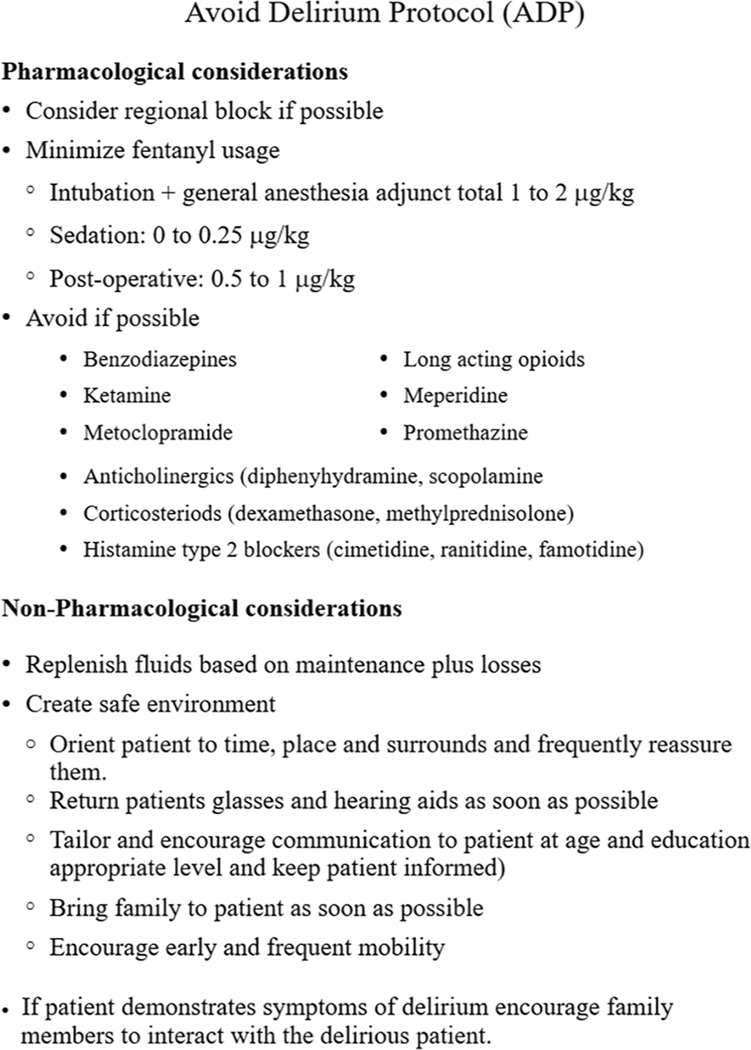 Figure 1
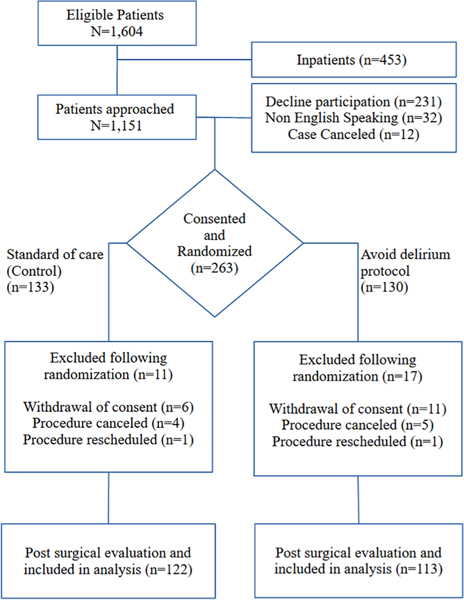 Figure 2
Peer Reviews
No public reviews on file for this paper yet. If you reviewed it on a platform where reviews are public (OpenReview, ICLR, NeurIPS, ICML), you can paste yours below so the community can read it here.
Videos
No videos yet. Explain this paper in a talk, walkthrough, or lecture? Add one.
Taxonomy
TopicsIntensive Care Unit Cognitive Disorders · Anesthesia and Sedative Agents · Anesthesia and Neurotoxicity Research