Comparing closure compliance and ease of use for consumer product packs designed to reduce access to children
Annalise Richmond, David C. Schwebel, Clara Ng Pak Leung, Elke Vallez, Heidi Lesage, Raf Degeyter, Zhiwu Liang, Gerard Stijntjes

TL;DR
This study compares two child-resistant laundry detergent packs to see which is easier for adults to use and better at staying closed, reducing child access.
Contribution
The study introduces an objective sensor-based method to measure closure compliance in child-resistant packaging.
Findings
The 'Press & Lift' pack was rated easier to open and close by users compared to 'Pinch & Lift'.
Sensor data showed higher closure compliance with 'Press & Lift' than 'Pinch & Lift'.
An audible closure signal improved both perceived and actual closure rates.
Abstract
Child impeding packs are difficult for children to open so protect them from unintended access to hazardous contents inside the pack. However, if packs are difficult for adults to open, in normal usage scenarios, this may result in a higher occurrence of packs being left open. This research explores differences in ease of usage and closure compliance between two types of child impeding packs of liquid laundry detergent capsules. The two packs, “Pinch & Lift” and “Press & Lift”, had different opening and closing mechanisms. “Press & Lift” also included an audible “click” signal to confirm complete closure to the user. The research was performed across two studies. In both studies, the packs were used in participants’ homes according to their usual storage and usage practices as replacements to their current liquid laundry detergent capsule pack. All participants had small children living…
Genes, proteins, chemicals, diseases, species, mutations and cell lines named across the full text — each resolved to its canonical identifier and authoritative record.
Click any figure to enlarge with its caption.
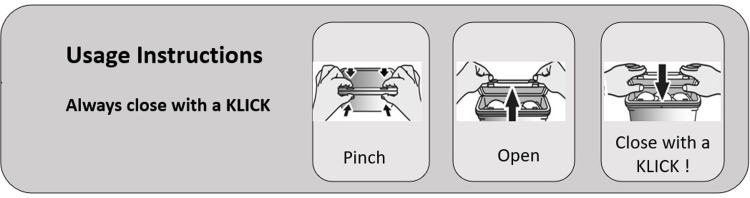 Figure 1
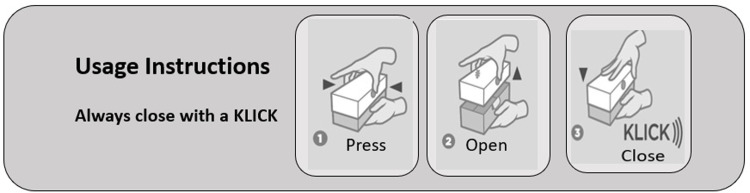 Figure 2
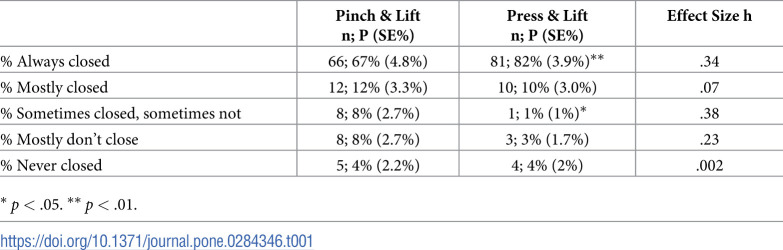 Figure 3
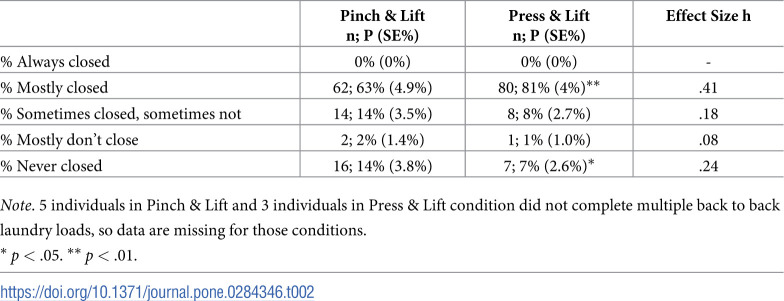 Figure 4
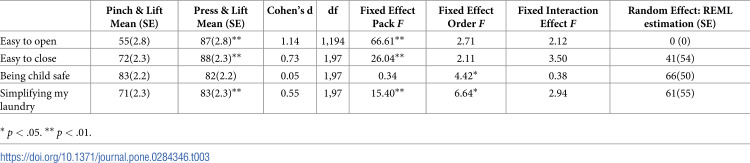 Figure 5
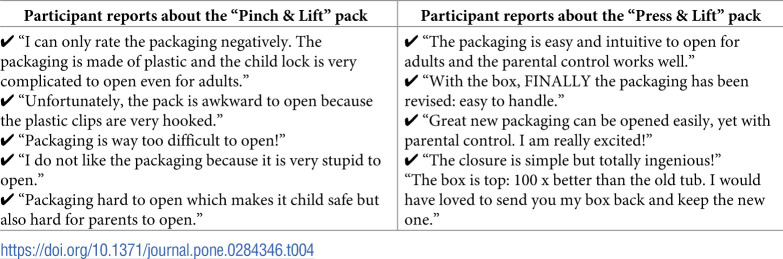 Figure 6
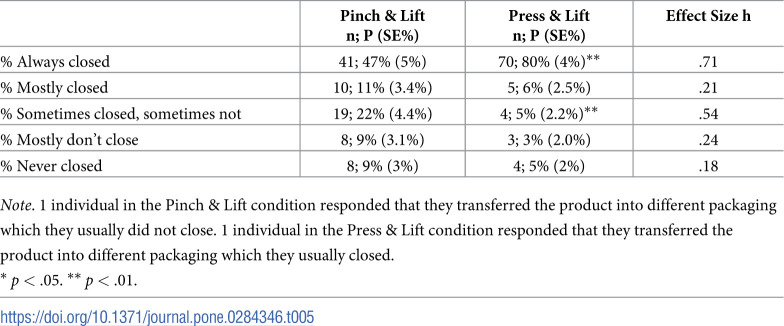 Figure 7
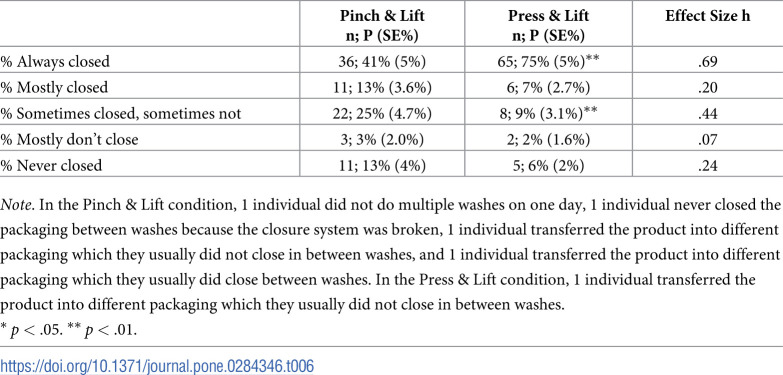 Figure 8
 Figure 9
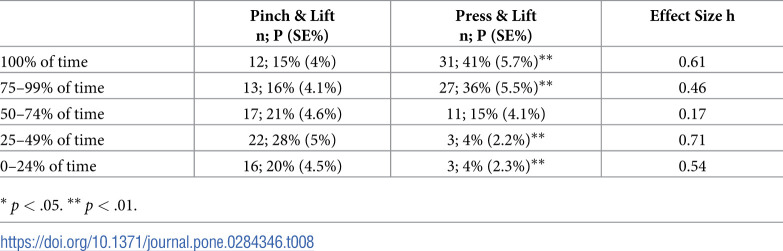 Figure 10
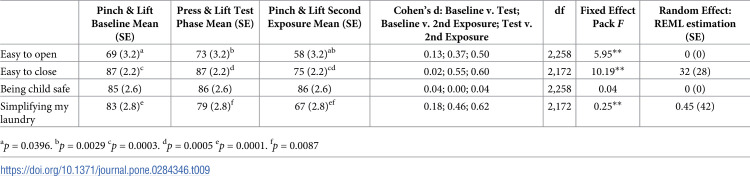 Figure 11
Peer Reviews
No public reviews on file for this paper yet. If you reviewed it on a platform where reviews are public (OpenReview, ICLR, NeurIPS, ICML), you can paste yours below so the community can read it here.
Videos
No videos yet. Explain this paper in a talk, walkthrough, or lecture? Add one.
Taxonomy
TopicsSafety Warnings and Signage · Ergonomics and Musculoskeletal Disorders · Innovative Human-Technology Interaction