An analytical approach for unsupervised learning rate estimation using rectified linear units
Chaoxiang Chen, Vladimir Golovko, Aliaksandr Kroshchanka, Egor Mikhno, Marta Chodyka, Piotr Lichograj

TL;DR
This paper introduces a new method for automatically adjusting learning rates in neural networks using ReLU, improving performance over existing methods.
Contribution
A novel analytical approach for adaptive learning rate estimation in RBMs with ReLU is proposed and theoretically justified.
Findings
The proposed method automatically estimates optimal learning steps to minimize loss.
The approach outperforms constant step and Adam methods in generalization and loss reduction.
Abstract
Unsupervised learning based on restricted Boltzmann machine or autoencoders has become an important research domain in the area of neural networks. In this paper mathematical expressions to adaptive learning step calculation for RBM with ReLU transfer function are proposed. As a result, we can automatically estimate the step size that minimizes the loss function of the neural network and correspondingly update the learning step in every iteration. We give a theoretical justification for the proposed adaptive learning rate approach, which is based on the steepest descent method. The proposed technique for adaptive learning rate estimation is compared with the existing constant step and Adam methods in terms of generalization ability and loss function. We demonstrate that the proposed approach provides better performance.
Genes, proteins, chemicals, diseases, species, mutations and cell lines named across the full text — each resolved to its canonical identifier and authoritative record.
Click any figure to enlarge with its caption.
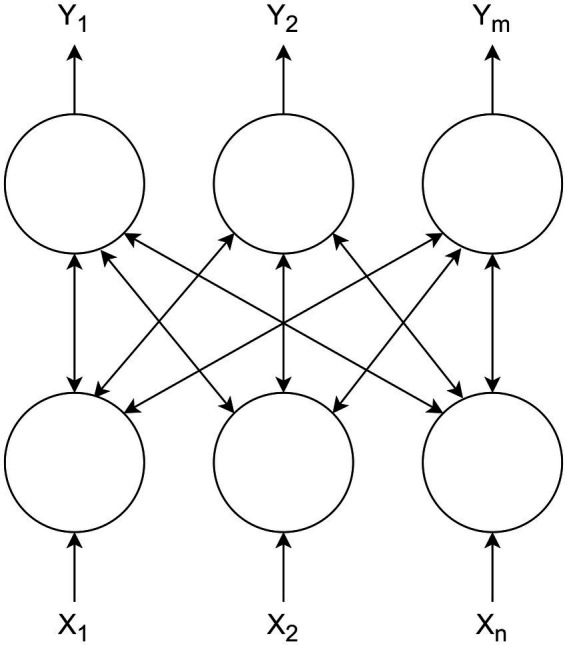 Figure 1
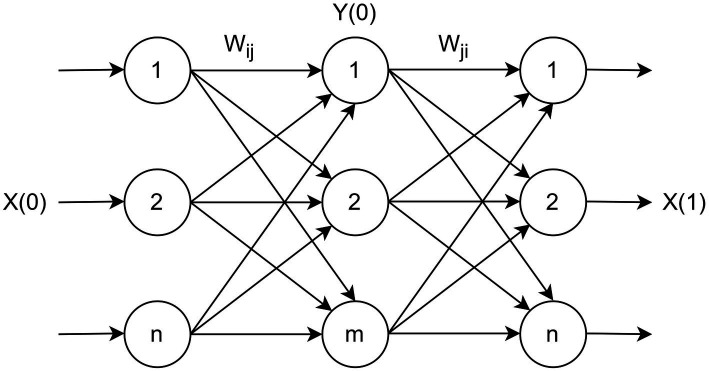 Figure 2
 Figure 3
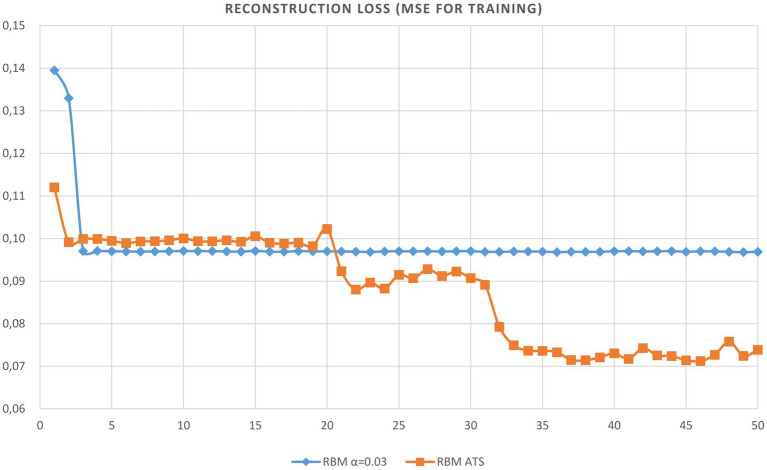 Figure 4
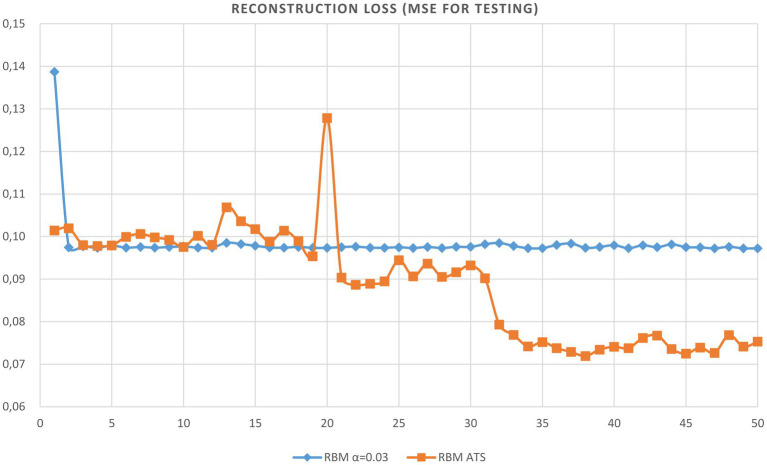 Figure 5
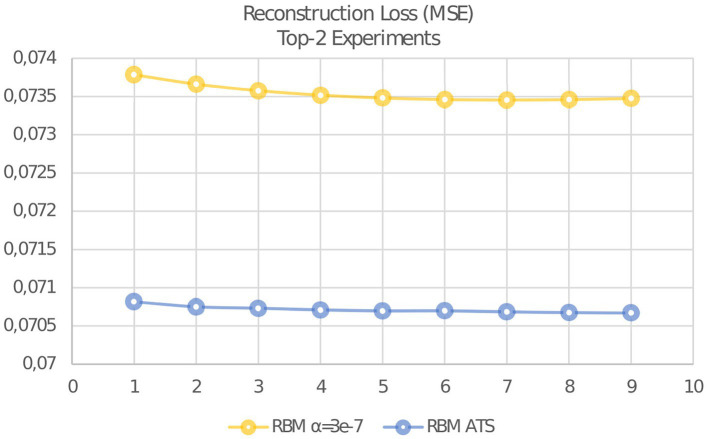 Figure 6
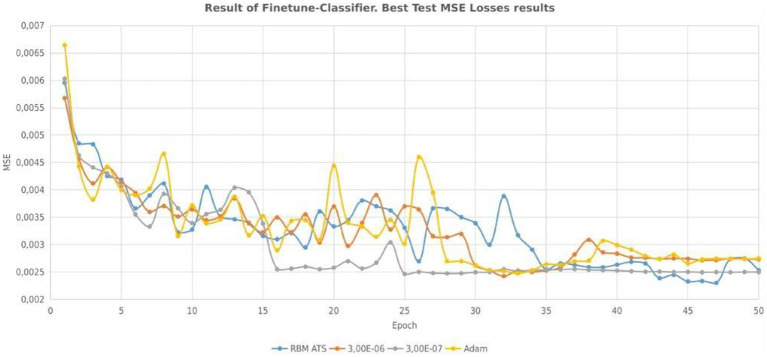 Figure 7
Peer Reviews
No public reviews on file for this paper yet. If you reviewed it on a platform where reviews are public (OpenReview, ICLR, NeurIPS, ICML), you can paste yours below so the community can read it here.
Videos
No videos yet. Explain this paper in a talk, walkthrough, or lecture? Add one.
Taxonomy
TopicsNeural Networks and Applications · Model Reduction and Neural Networks · Generative Adversarial Networks and Image Synthesis