Refined protocol for newly onset identification in non-obese diabetic mice: an animal-friendly, cost-effective, and efficient alternative
Chia-Chi Liao, Chia-Chun Hsieh, Wei-Chung Shia, Min-Yuan Chou, Chuan-Chuan Huang, Jhih-Hong Lin, Shu-Hsien Lee, Hsiang-Hsuan Sung

TL;DR
A new method uses urine glucose testing to identify early diabetes in mice, reducing the need for invasive blood tests and improving animal welfare.
Contribution
Introduces a refined, noninvasive protocol using ultrasensitive urine glucose testing for early diabetes detection in NOD mice.
Findings
Urine glucose testing detected diabetes onset as early as or before elevated blood glucose levels.
The new protocol required 95 blood glucose tests versus over 700 with traditional methods for 37–38 diabetic mice.
The protocol aligns with the 3Rs principle by reducing animal distress and invasive procedures.
Abstract
Therapeutic interventions for diabetes are most effective when administered in the newly onset phase, yet determining the exact onset moment can be elusive in practice. Spontaneous autoimmune diabetes among NOD mice appears randomly between 12 and 32 weeks of age with an incidence range from 60 to 90%. Furthermore, the disease often progresses rapidly to severe diabetes within days, resulting in a very short window of newly onset phase, that poses significant challenge in early diagnosis. Conventionally, extensive blood glucose (BG) testing is typically required on large cohorts throughout several months to conduct prospective survey. We incorporated ultrasensitive urine glucose (UG) testing into an ordinary BG survey process, initially aiming to elucidate the lag period required for excessive glucose leaking from blood to urine during diabetes progression in the mouse model. The…
Genes, proteins, chemicals, diseases, species, mutations and cell lines named across the full text — each resolved to its canonical identifier and authoritative record.
Click any figure to enlarge with its caption.
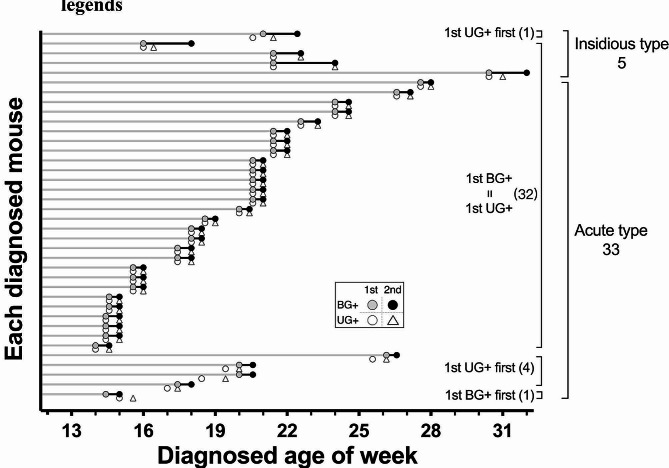 Figure 1
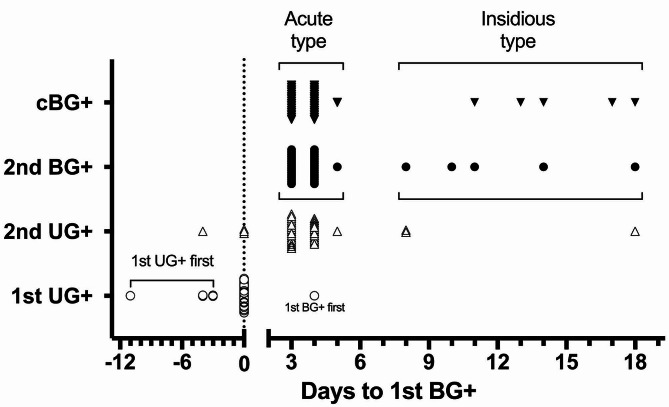 Figure 2
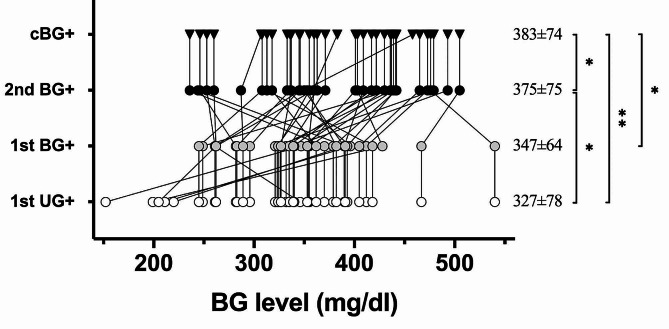 Figure 3
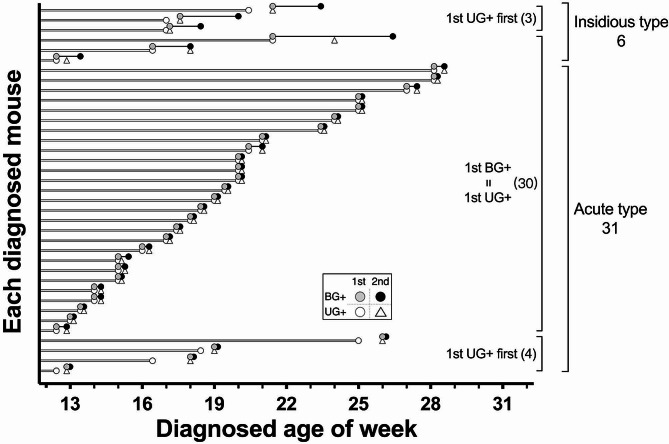 Figure 4
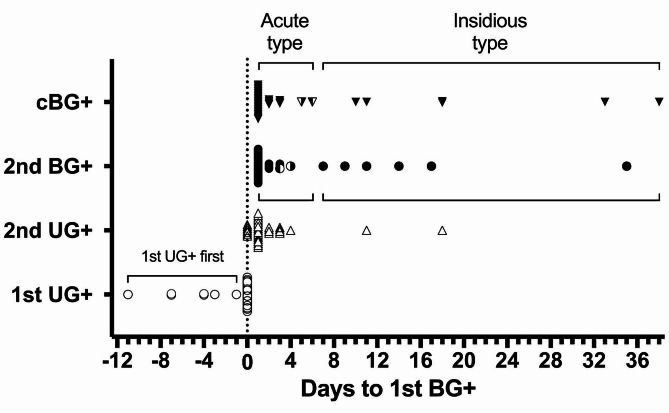 Figure 5
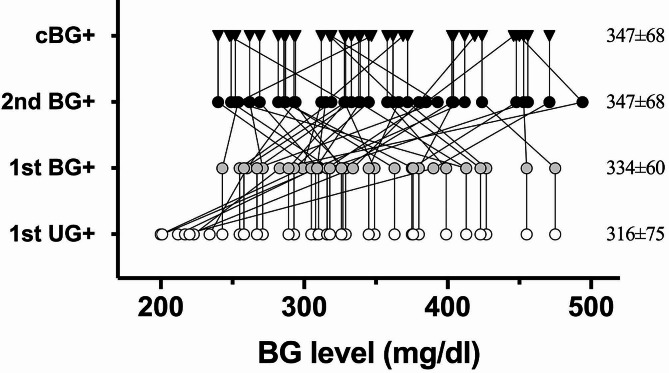 Figure 6
Peer Reviews
No public reviews on file for this paper yet. If you reviewed it on a platform where reviews are public (OpenReview, ICLR, NeurIPS, ICML), you can paste yours below so the community can read it here.
Videos
No videos yet. Explain this paper in a talk, walkthrough, or lecture? Add one.
Taxonomy
TopicsDiabetes and associated disorders · Pancreatic function and diabetes · Diabetes Management and Research