INPP5E Regulates the Distribution of Phospholipids on Cilia in RPE1 Cells
Denghui Zhai, Lamei Li, Cheng Chen, Xue Wang, Ruming Liu, Ying Shan

TL;DR
This paper shows that the INPP5E protein controls how certain fats (phospholipids) are arranged in cell structures called cilia, which is important for their function.
Contribution
The study reveals a new role for INPP5E in regulating phosphoinositide distribution in cilia membranes.
Findings
PI4P is localized at the ciliary membrane, while PI(4,5)P2 is at the base of cilia in RPE1 cells.
INPP5E knockout disrupts phosphoinositide distribution, causing PI(4,5)P2 to appear along the ciliary membrane and PI4P to disappear.
The ciliary membrane labeled by SMO-tRFP contains PI(4,5)P2, suggesting differences in phosphoinositide composition between early and mature ciliary membranes.
Abstract
Primary cilia are static microtubule‐based structures protruding from the cell surface and present on most vertebrate cells. The appropriate localization of phospholipids is essential for cilia formation and stability. INPP5E is a cilia‐localized inositol 5‐phosphatase; its deletion alters the phosphoinositide composition in the ciliary membrane, disrupting ciliary function. The EGFP‐2xP4MSidM, PHPLCδ1‐EGFP, and SMO‐tRFP plasmids were constructed by the Gateway system to establish a stable RPE1 cell line. The INPP5E KO RPE1 cell line was constructed with the CRISPR/Cas9 system. The localization of INPP5E and the distribution of PI(4,5)P2 and PI4P were examined by immunofluorescence microscopy. The fluorescence intensity co‐localized with cilia was quantified by ImageJ. In RPE1 cells, PI4P is localized at the ciliary membrane, whereas PI(4,5)P2 is localized at the base of cilia.…
Genes, proteins, chemicals, diseases, species, mutations and cell lines named across the full text — each resolved to its canonical identifier and authoritative record.
Click any figure to enlarge with its caption.
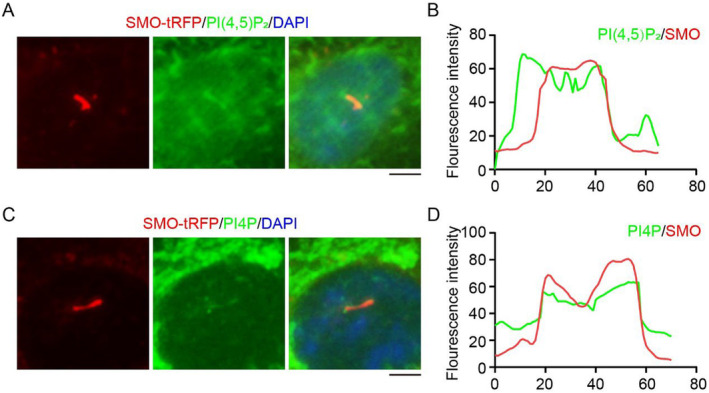 Figure 1
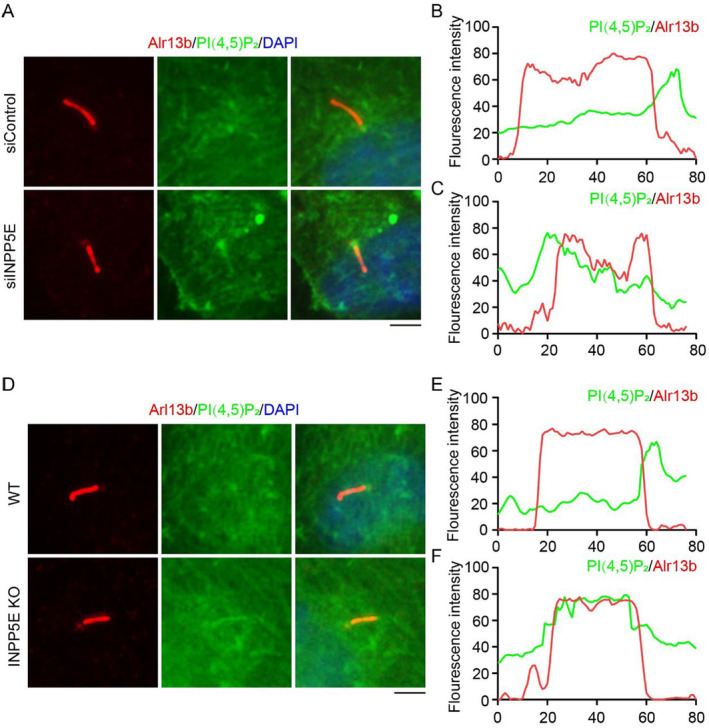 Figure 2
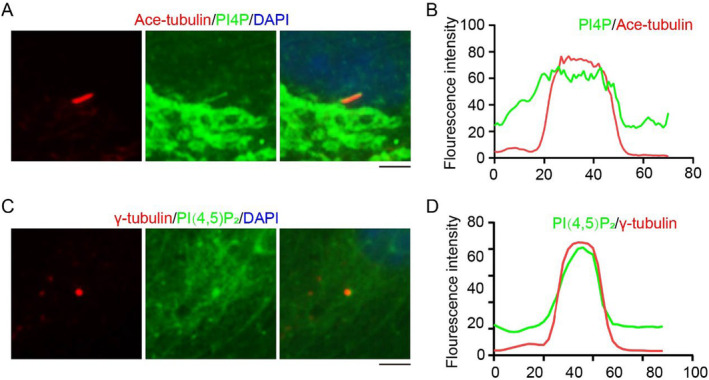 Figure 3
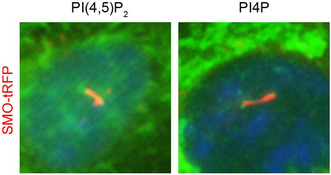 Figure 4
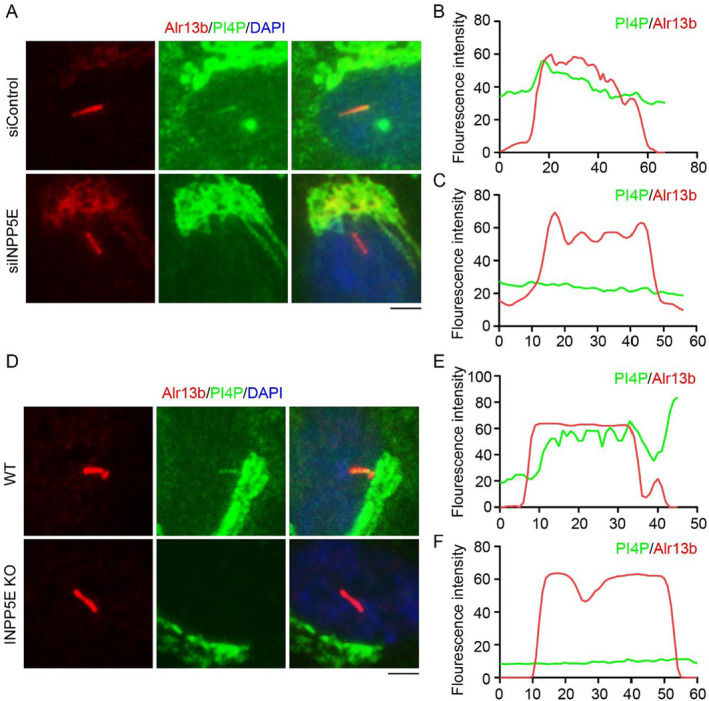 Figure 5
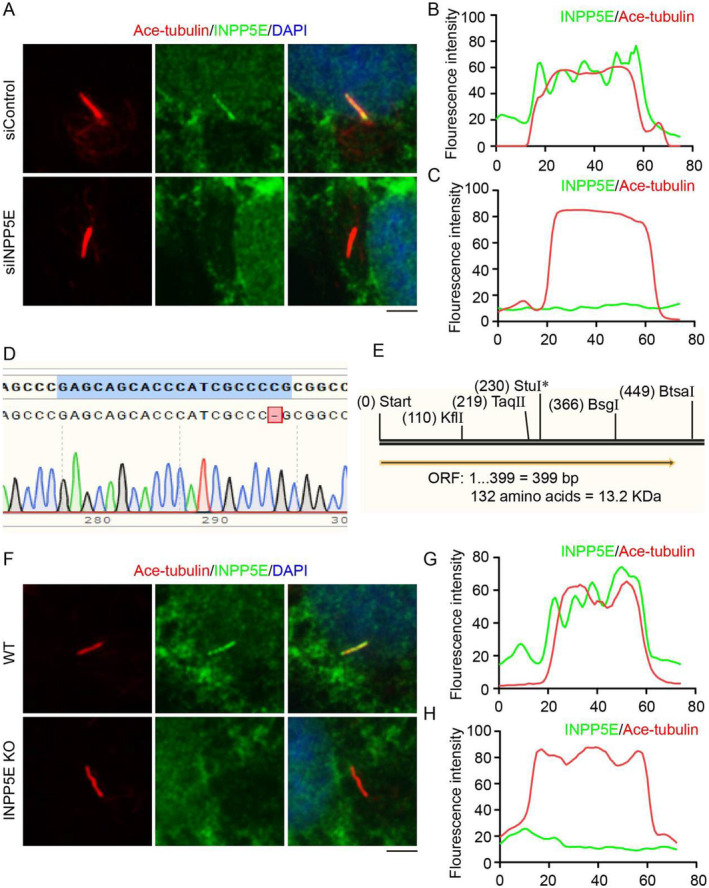 Figure 6
Peer Reviews
No public reviews on file for this paper yet. If you reviewed it on a platform where reviews are public (OpenReview, ICLR, NeurIPS, ICML), you can paste yours below so the community can read it here.
Videos
No videos yet. Explain this paper in a talk, walkthrough, or lecture? Add one.
Taxonomy
TopicsAncient Mediterranean Archaeology and History