Latent tuberculosis infection is associated with an enrichment of short chain fatty acid producing bacteria in the stool of women living with HIV
Suventha Moodley, Elouise Kroon, Charissa C. Naidoo, Georgina R. Nyawo, Benjamin G. Wu, Selisha Naidoo, Tinaye L. Chiyaka, Happy Tshivhula, Shivani Singh, Yonghua Li, Robin M. Warren, Eileen G. Hoal, Erwin Schurr, Jose Clemente, Leopoldo N. Segal, Marlo Möller, Grant Theron

TL;DR
Women with HIV and latent tuberculosis have more short chain fatty acid-producing bacteria in their stool compared to those without the infection.
Contribution
Identifies specific gut bacteria linked to latent tuberculosis in HIV-positive women.
Findings
LTBI-positives had higher levels of Faecalibacterium, Blautia, Gemmiger, and Bacteroides.
LTBI-negatives showed enrichment in pathways related to methylglyoxal and amino acid degradation.
Age and antigen response influenced microbial differences in LTBI-positives but not in LTBI-negatives.
Abstract
Latent tuberculosis infection (LTBI) is common in people living with HIV (PLHIV) in high TB burden settings. Active TB is associated with specific stool taxa; however, little is known about the stool microbiota and LTBI, including in PLHIV. Within a parent study that recruited adult females with HIV from Cape Town, South Africa into predefined age categories (18–25, 35–60 years), we characterised the stool microbiota of those with [interferon-γ release assay (IGRA)- and tuberculin skin test (TST)-positive] or without (IGRA- and TST- negative) LTBI (n=25 per group). 16S rRNA DNA sequences were analysed using QIIME2, Dirichlet Multinomial Mixtures, DESeq2 and PICRUSt2. No α- or β-diversity differences occurred by LTBI status; however, LTBI-positives were Faecalibacterium-, Blautia-, Gemmiger-, Bacteroides-enriched and Moryella-, Atopobium-, Corynebacterium-, Streptococcus-depleted.…
Genes, proteins, chemicals, diseases, species, mutations and cell lines named across the full text — each resolved to its canonical identifier and authoritative record.
Click any figure to enlarge with its caption.
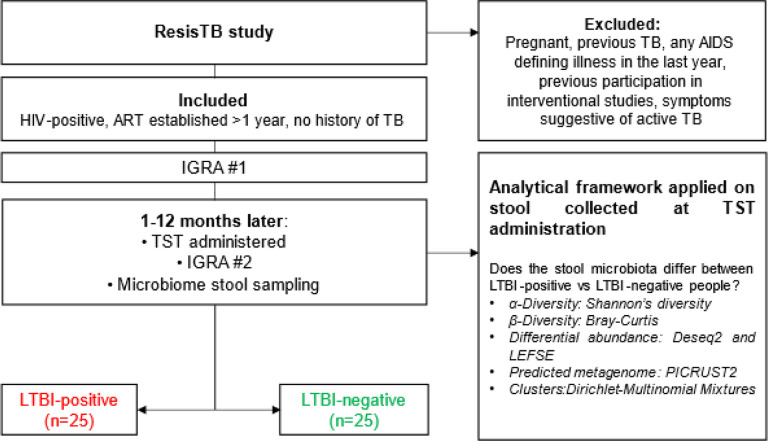 Figure 1
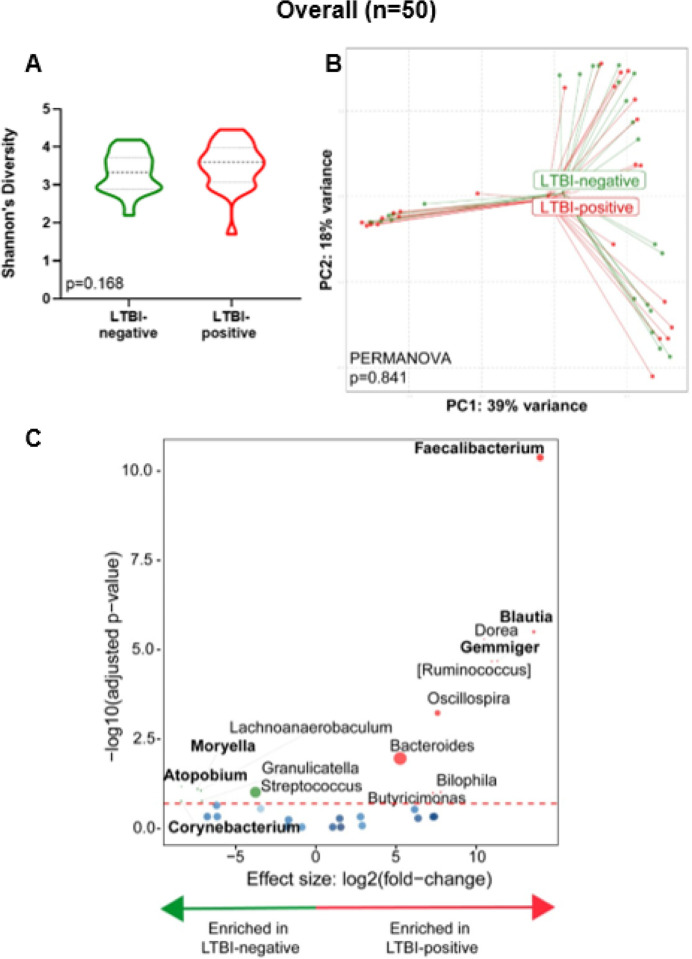 Figure 2
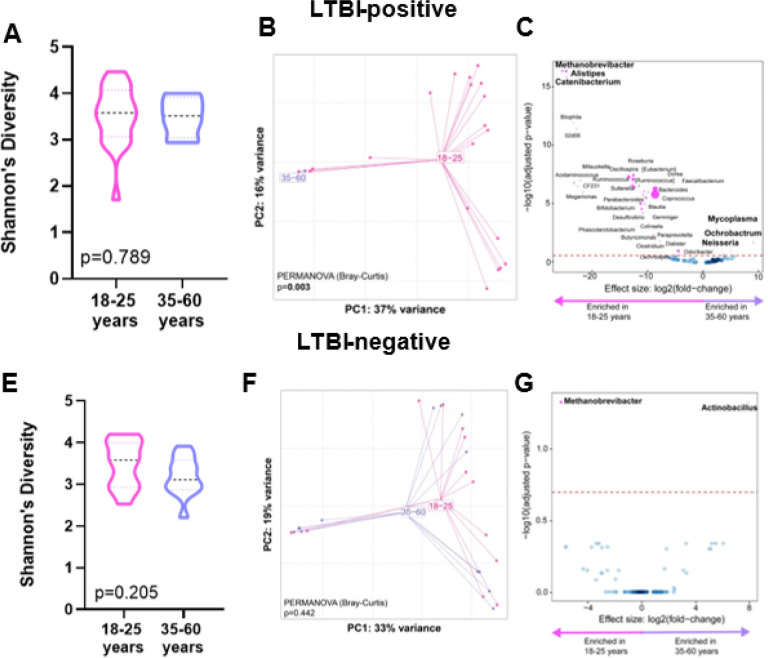 Figure 3
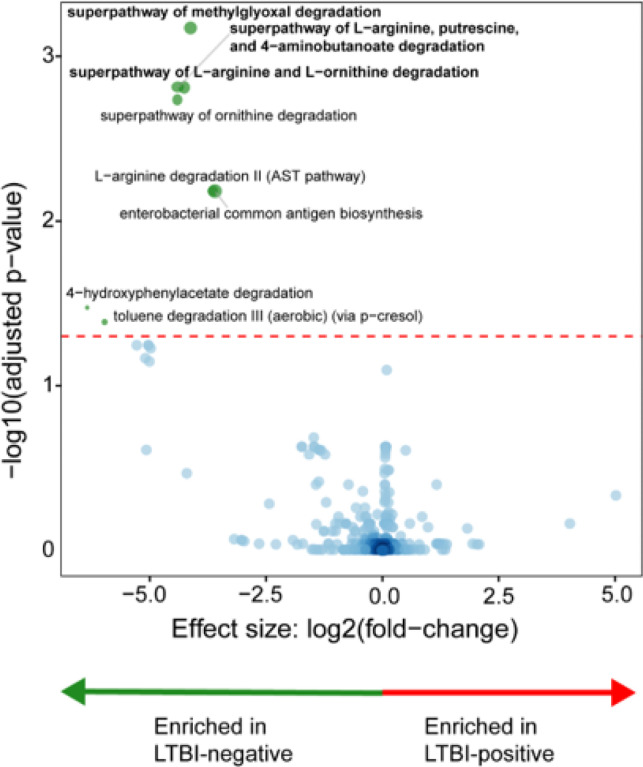 Figure 4
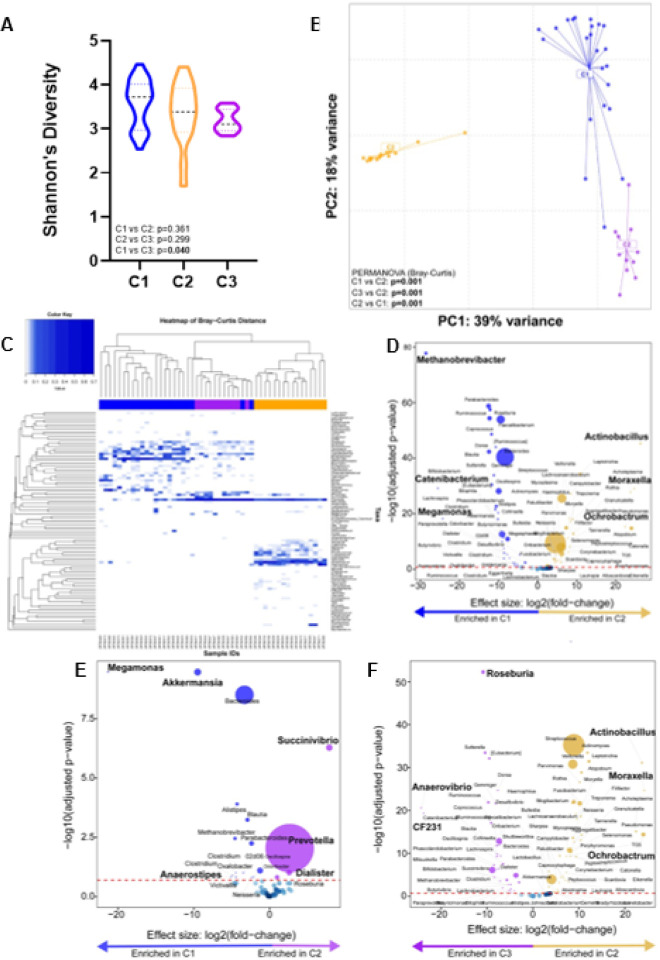 Figure 5
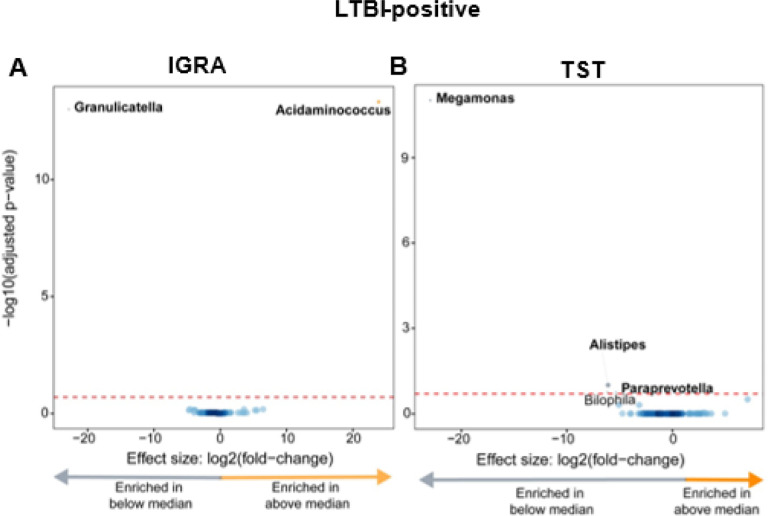 Figure 6
Peer Reviews
No public reviews on file for this paper yet. If you reviewed it on a platform where reviews are public (OpenReview, ICLR, NeurIPS, ICML), you can paste yours below so the community can read it here.
Videos
No videos yet. Explain this paper in a talk, walkthrough, or lecture? Add one.
Taxonomy
TopicsGut microbiota and health · Clostridium difficile and Clostridium perfringens research · Diet and metabolism studies